
China and Iran are expanding their scientific cooperation into the strategically important rare earth sector, according to a recent report, marking a potentially significant development in the relationship between the two countries.
A new joint scientific programme reportedly includes cooperation on the exploration and processing of rare earth elements. The programme was listed by the National Natural Science Foundation of China and its Iranian counterpart as one of several areas selected for bilateral scientific cooperation.
Rare earth elements are a group of minerals that play an important role in modern technology and advanced manufacturing. They are used in permanent magnets, electric vehicles, wind turbines, electronics, defence equipment and several other high technology applications.
The growing interest in rare earth resources has made the sector an increasingly important part of global economic and geopolitical competition. Countries around the world are attempting to secure reliable supplies and develop alternative sources because the global supply chain remains highly concentrated.
China has a particularly strong position in the rare earth industry, especially in processing and refining. The International Energy Agency has highlighted China's dominant position in rare earth processing, while recent analysis has pointed to the strategic importance of reducing dependence on a single country for critical mineral supplies.
The reported expansion of scientific cooperation with Iran is therefore significant. The programme goes beyond simply identifying mineral deposits and includes processing, which is one of the most technologically important stages of the rare earth supply chain.
Iran has geological potential for several mineral resources and has been seeking ways to develop its domestic mining and processing capabilities. Cooperation with Chinese researchers could provide opportunities for scientific knowledge exchange, geological research and the development of processing techniques.
However, the extent of the cooperation and its eventual commercial impact remain unclear. A scientific workshop or research programme does not necessarily mean that large scale mining or industrial processing projects have already been established.
The development comes at a time when China has become increasingly protective of some rare earth related technologies. Beijing has introduced export controls affecting certain rare earth materials and related technologies, reflecting the strategic importance of the sector.
This makes the reported cooperation with Iran particularly noteworthy. China normally seeks to protect important technological capabilities associated with its rare earth industry, while Iran has an interest in developing domestic capabilities that could reduce its dependence on external suppliers.
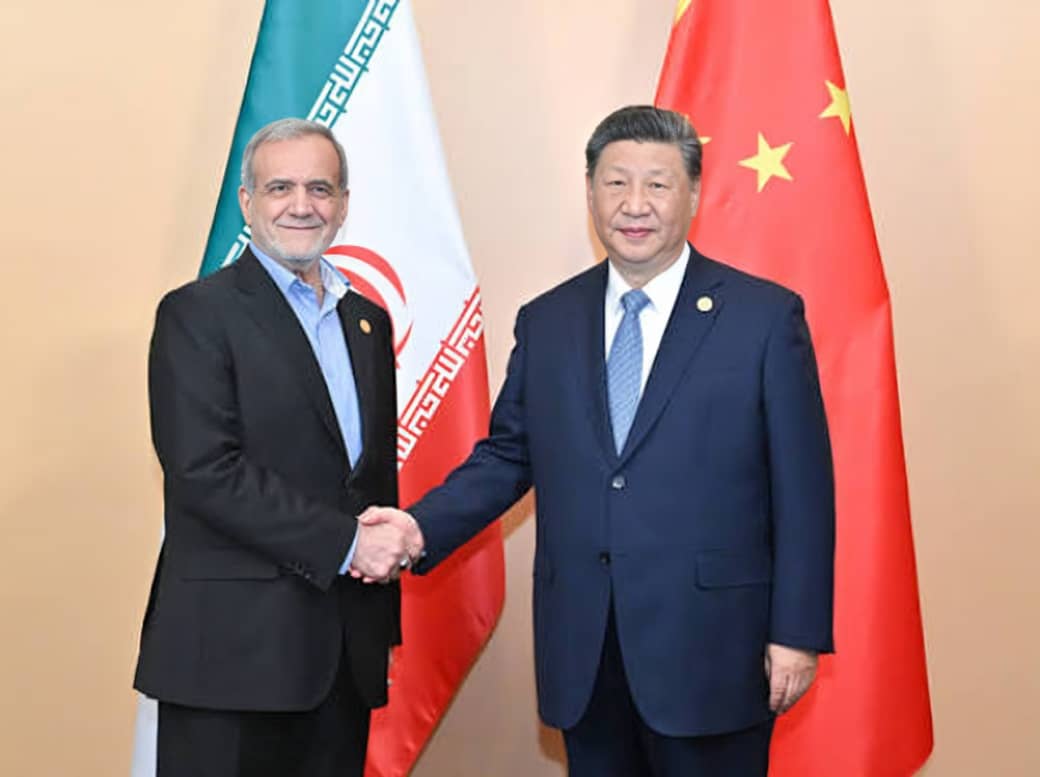
The partnership also needs to be viewed against the broader background of China Iran relations. The two countries have developed closer economic and strategic ties over recent years, including a long term cooperation programme signed in 2021. Their relationship has expanded across energy, trade, infrastructure and other areas.
The current regional conflict and international sanctions against Iran have added another dimension to Tehran's economic strategy. Iran has been seeking stronger relationships with countries willing to maintain economic and scientific cooperation despite pressure from Western governments.
For China, cooperation with Iran could provide access to geological information and potential mineral resources while strengthening scientific and economic ties with an important Middle Eastern partner.
Rare earth elements are increasingly important to the global energy transition. Permanent magnets containing rare earth materials are widely used in electric motors, wind turbines and other clean energy technologies. They are also important in advanced electronics and defence systems.
The concentration of processing capacity in China has become a major concern for governments seeking to strengthen their supply chains. Recent efforts by the United States, European countries, Japan and other economies have focused on developing alternative sources, increasing domestic processing and establishing strategic partnerships.
The International Energy Agency has warned that China's position in rare earth processing creates risks for global supply chains if exports are disrupted or restrictions are introduced.
Iran's potential role in the rare earth supply chain could therefore attract greater international attention if exploration identifies commercially viable deposits.
A report on Iranian mineral resources has noted potential for rare earth elements in areas including the Bafq iron oxide apatite belt. Laboratory research has indicated that certain rare earth elements can potentially be recovered from Iranian mineral material, although commercially established reserves have not been declared based on the available information.
This distinction is important because geological potential does not automatically translate into commercial production. Mining and processing rare earth elements can require significant investment, advanced technology, environmental controls and specialised infrastructure.
Processing can be particularly challenging because rare earth elements often occur together and must be separated through complex chemical processes. Developing economically viable processing facilities therefore requires both technical expertise and substantial capital.
The China Iran scientific partnership could potentially help address some of these technical challenges. Joint research may focus on geological exploration, mineral identification, extraction methods and processing technologies.
At the same time, the strategic nature of rare earth materials means that any significant expansion of cooperation could attract attention from other major economies. Governments are increasingly treating critical minerals as matters of economic and national security because disruptions can affect industries ranging from automobiles to defence.
The reported cooperation does not by itself indicate that China is transferring all of its advanced rare earth technology to Iran. The precise scope of research, technology sharing and future commercial projects will depend on agreements between the participating institutions.
The initiative nevertheless demonstrates how critical minerals are becoming an increasingly important part of international relations. Countries with mineral resources are seeking investment and technology, while technologically advanced economies are attempting to secure access to strategic materials.
For Iran, developing its mineral sector could provide a potential source of economic activity and reduce dependence on imported materials. For China, scientific cooperation could strengthen its relationship with Iran while supporting research into additional sources of rare earth resources.
The wider significance of the development will depend on whether the scientific cooperation progresses into detailed exploration, pilot processing projects or commercial mining operations.
For now, the reported programme represents an expansion of China Iran scientific cooperation into one of the world's most strategically sensitive mineral sectors. The focus on both exploration and processing suggests that the partnership could extend beyond geological research if future projects are developed.
As global demand for rare earth materials continues to grow, the competition for reliable supplies and processing capabilities is expected to intensify. The latest China Iran cooperation could therefore become an important development to watch in the evolving global critical minerals landscape.