China has rejected allegations from Nepal that the collapse of a geological disaster dam on the Chinese side of the border was responsible for the devastating flash floods that struck the Himalayan region.
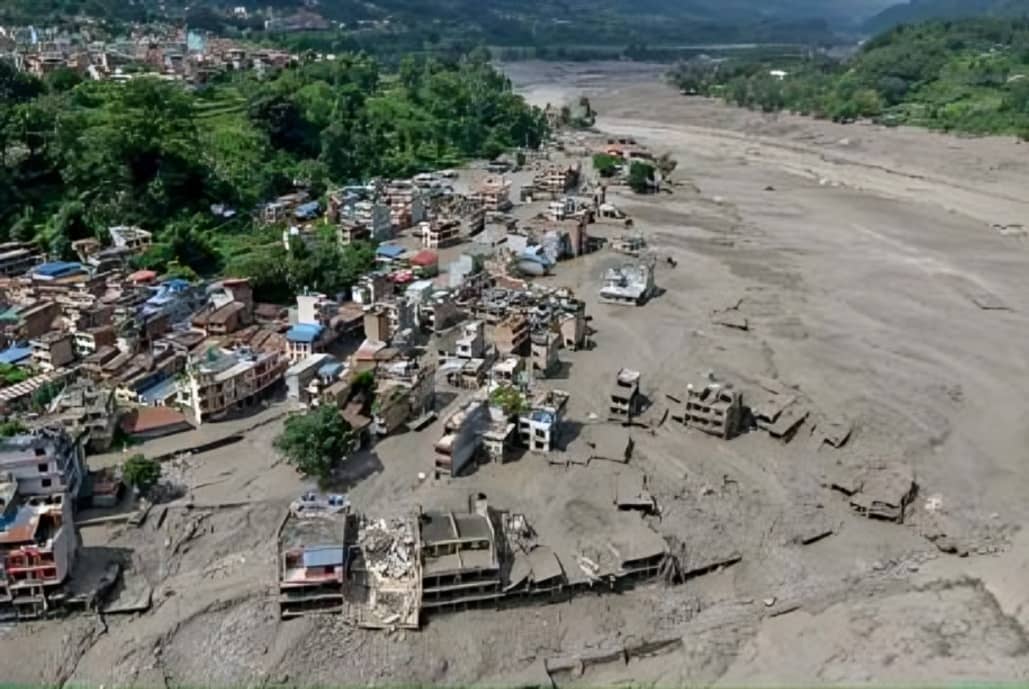
The disaster occurred on August 26 near the Gyirong Rasuwagadhi border area between Nepal and China. The sudden surge of water, mud, rocks and ice caused extensive destruction in several areas of Nepal and also affected infrastructure on the Chinese side.
The Chinese Embassy in Nepal has strongly denied the allegation that a dam or geological disaster dam in China triggered the flooding. The embassy described the claim as fake news and said accusations would not help during the ongoing emergency.
China has also rejected another allegation that authorities failed to provide Nepal with an early warning before the disaster. According to the Chinese Embassy, the claims that a lack of warning contributed to the deaths and disappearances are false and misleading.
In its account of the incident, China said an earthquake or earthquake like glacier collapse occurred on the Nepali side on the morning of August 26. The event reportedly triggered massive mudslides, which then affected both sides of the Gyirong Rasuwagadhi border region.
The Chinese Embassy said the disaster caused casualties and left people missing in both Nepal and China. It ended its statement by emphasizing that accusations would not help the situation and that cooperation was necessary to save lives.
The disagreement comes as rescue teams continue searching for people missing after the devastating flash floods. Nepal has reported at least 162 deaths, according to the latest figures released by Nepal Police on August 27. Hundreds of people remain unaccounted for as rescue and recovery operations continue.
However, the death toll has continued to change as authorities recover bodies and update missing person figures. Later reports have put the number of confirmed deaths even higher, highlighting the rapidly developing nature of the disaster.
The flooding caused extensive damage across the affected Himalayan region. Roads, bridges, houses, power infrastructure and other facilities were swept away or buried under mud and debris.
The disaster also disrupted an important border route connecting Nepal with Tibet. The Gyirong Port area on the Chinese side was affected, while infrastructure and communication links were damaged.
Initial reports from Nepal had raised questions about what triggered the sudden flood. Preliminary assessments have pointed towards an avalanche or glacier related event that caused a huge volume of water and debris to move rapidly downstream.
The International Centre for Integrated Mountain Development has also indicated that an ice and rock avalanche from a glacier was likely responsible for the flash flood. Hydrological observations showed an exceptionally rapid rise in water levels in parts of the affected river system.
The US Geological Survey has also ruled out an earthquake as the direct trigger and attributed the disaster to a glacial collapse. This has added weight to explanations focusing on a natural glacier related event rather than a conventional dam failure.
The situation has nevertheless generated controversy because of the location of the disaster near the Nepal China border. Nepal and China share a difficult mountainous landscape where rivers, glaciers, roads and infrastructure cross or remain closely connected across the border.
Any major landslide, avalanche or glacial collapse in such an environment can have consequences downstream, particularly when large amounts of ice, rocks and sediment suddenly enter a river system.
The flash flood affected the Lhende Khola and Bhote Koshi river system. The powerful flow carried large quantities of mud, rocks and debris into downstream areas, causing widespread destruction.
Entire sections of roads and bridges were damaged, while buildings in affected communities were covered with thick layers of mud. The scale and speed of the flooding left many people with little time to escape.
Rescue operations have been complicated by damaged roads, difficult mountain terrain and continuing risks from landslides and unstable slopes.
Authorities on both sides of the border have deployed emergency personnel and equipment to search for survivors and missing people. Helicopters have also been used in rescue and relief operations in areas where roads have been destroyed.
The number of missing people has become one of the biggest concerns. Reports indicate that hundreds of people remain unaccounted for, including foreign nationals who were travelling or working in the affected region.
The disaster has also affected tourists and pilgrims travelling through the Himalayan region. The area is an important route for people visiting religious and tourist destinations, including routes associated with Mount Kailash.
India has also been monitoring the situation because of the possible downstream impact of floodwaters moving through river systems connected to Nepal. The disaster has therefore become a regional humanitarian and environmental concern.
The Chinese government has maintained that the flood was caused by a natural disaster rather than the collapse of a Chinese dam. Its embassy has called for both countries to concentrate on rescue and relief work rather than exchanging accusations during an emergency.
The disagreement over the cause of the disaster highlights the importance of scientific investigation in determining what happened. In a rapidly developing natural disaster, early reports can sometimes change as satellite images, geological information and field assessments become available.
Experts have emphasized that the Himalayan region is particularly vulnerable to cascading natural hazards. A glacier collapse can trigger an avalanche, which can block a river and subsequently release a powerful surge of water and debris.
Such events can happen extremely quickly, leaving communities downstream with limited time to respond. The latest disaster has therefore renewed concerns about early warning systems in Himalayan river valleys.
The issue of early warnings has become particularly important because China has rejected allegations that it failed to alert Nepal. The Chinese Embassy said the claim was not supported by the facts and maintained that the disaster originated on the Nepali side.
Nepal and China are expected to continue assessing the evidence as rescue and recovery operations proceed. Satellite imagery, geological surveys and hydrological data could help authorities establish the sequence of events.
The distinction between a dam collapse and a glacier or avalanche related event is important because the two scenarios involve different causes and different responsibilities. A confirmed dam failure would raise questions about infrastructure management and warning systems, while a natural glacier collapse would point towards the need for improved monitoring of high mountain hazards.
At present, available scientific assessments point towards a glacier related collapse and debris flow as the major trigger. The US Geological Survey and Himalayan experts have supported this explanation.
The disaster also demonstrates the increasing challenges faced by communities living in vulnerable Himalayan valleys. Climate change and rising temperatures are contributing to changes in glaciers and mountain environments, increasing concern about sudden ice and rock avalanches.
The affected region experienced another serious flash flood event last year, demonstrating that the area remains vulnerable to repeated disasters.
For Nepal, the immediate priority remains finding missing people, treating injured survivors and restoring essential infrastructure. Roads, bridges, electricity and communications will need to be repaired to allow relief supplies to reach affected communities.
For China, restoring connectivity around the Gyirong border area is also a major priority. The flood has damaged infrastructure on both sides of the border and disrupted a strategically important trade and travel route.
The disaster has also prompted international concern. India and other countries have expressed support for Nepal, while international organisations and neighbouring governments are monitoring developments.
As rescue operations continue, the death toll and number of missing people could change. Authorities are continuing to collect information from affected districts and border areas.
The dispute between Nepal and China over the cause of the flooding should therefore be viewed separately from the ongoing humanitarian response. Regardless of the final determination of the trigger, both countries face the immediate challenge of rescuing survivors and assisting affected communities.
China's statement that accusations do not help and that cooperation saves lives reflects the need for cross-border coordination during a major natural disaster. Search and rescue operations in mountainous border areas require communication between authorities, emergency teams and local communities on both sides.
The incident also underlines the importance of reliable disaster warning systems. Even when a disaster is caused by a natural event, effective monitoring and timely communication can help communities prepare and potentially reduce casualties.
The final scientific assessment will be important in establishing exactly how the flash flood began and how the enormous volume of water and debris moved through the river system.
For now, China has firmly rejected Nepal's allegation that a Chinese dam collapse caused the disaster. It has also denied claims that it withheld an early warning.
The Chinese Embassy says the disaster was triggered by a glacier related event and mudslides on the Nepali side of the border. Independent scientific assessments have also pointed towards a glacial collapse as the likely trigger.
With rescue operations still underway, authorities are continuing to search for hundreds of missing people. The disaster has already caused significant loss of life and widespread destruction across the Himalayan border region.
The focus now remains on rescue, relief and recovery. Further geological and scientific assessments are expected to provide a clearer picture of the events that triggered the devastating flash floods.