
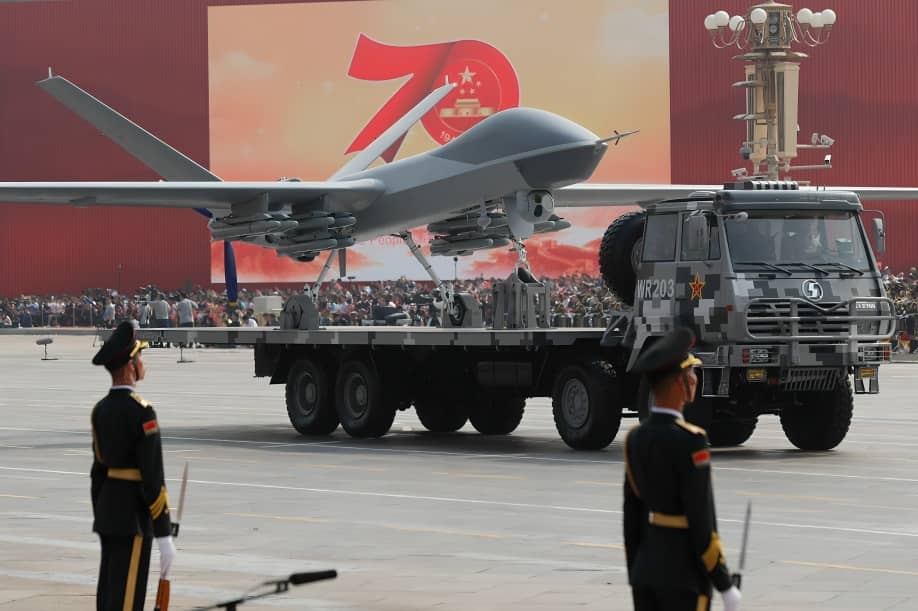
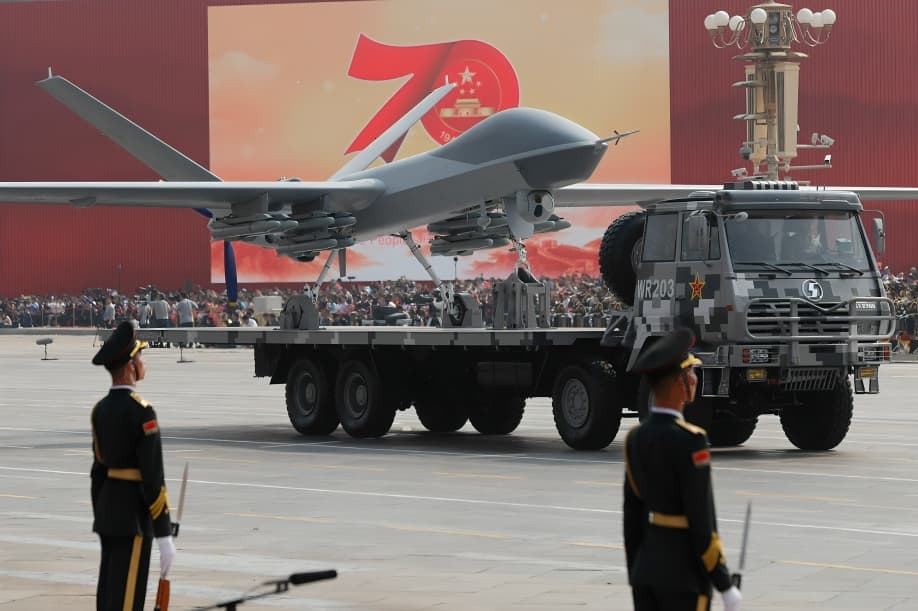
A Chinese military drone identified by the call sign YILO4200 has reportedly been conducting a series of unusual flights over the South China Sea, prompting scrutiny from analysts and regional observers. According to a report by Reuters, flight tracking data from Flightradar24 indicates that at least 23 such missions have been recorded since August.
The drone’s operations have drawn attention due to its apparent use of misleading transponder signals. Instead of broadcasting its true identity, the aircraft reportedly transmitted registration numbers associated with other planes. At times, it appeared on tracking systems as a different type of aircraft, including foreign registered jets. Analysts noted that this form of signal manipulation could complicate airspace monitoring and tracking efforts.
The aircraft is said to originate from Hainan province in southern China. Its flight path typically moves eastward toward the Philippines near the disputed Paracel Islands and then southward along the coastline of Vietnam. The Paracel Islands are part of a region subject to overlapping territorial claims in the South China Sea, an area of strategic importance due to its shipping lanes and natural resources.
Observers have pointed out that the pattern of flights suggests a deliberate operational strategy rather than accidental signal errors. Ben Lewis, founder of the open source intelligence platform PLATracker, was quoted in the Reuters report as saying that the activity appeared to be a form of deception trial carried out in real time. He noted that such actions are not commonly observed and indicated that the behaviour did not seem accidental.
Military analysts suggest that transmitting false transponder information could serve multiple purposes. It may test the effectiveness of regional air defence identification systems, evaluate responses from neighbouring countries or gather intelligence on surveillance capabilities. Modern airspace monitoring relies heavily on accurate transponder signals to identify aircraft, particularly in busy and contested regions.
The South China Sea remains a focal point of geopolitical tensions, with several countries including China, Vietnam and the Philippines asserting claims over various islands and maritime zones. Increased aerial and naval activity in the region has often drawn international attention due to concerns over freedom of navigation and regional stability.
While Chinese authorities have not publicly detailed the purpose of these specific drone flights, such activities align with broader trends of increased unmanned aerial vehicle deployment in contested areas. Unmanned systems offer extended endurance and lower operational risk compared to crewed aircraft, making them suitable for surveillance and reconnaissance missions.
Experts note that technological advancements in drones and electronic warfare capabilities have introduced new complexities into regional security dynamics. Signal spoofing or transponder manipulation, if confirmed, highlights the evolving nature of aerial operations in strategic maritime regions.
As nations continue to monitor developments in the South China Sea, activities involving advanced military platforms are likely to remain under close observation. The reported flights of YILO4200 illustrate how emerging technologies are reshaping airspace management and defence strategies in sensitive geopolitical zones.


