

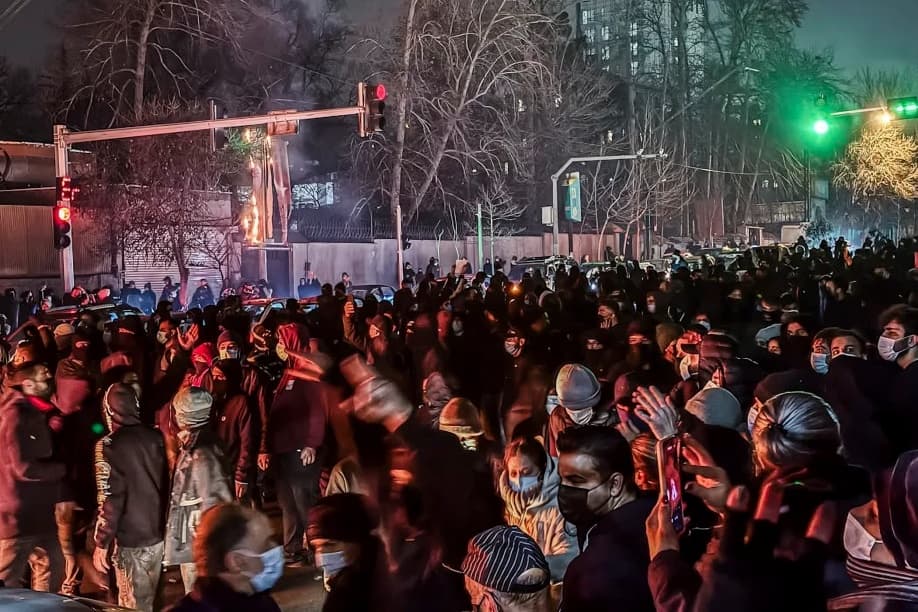
In January 2026, Iran experienced one of its most significant waves of public protest in recent years, triggered by economic hardship, inflation, and the impact of sustained international sanctions. Demonstrations spread across multiple cities as citizens voiced frustration over rising living costs, unemployment, and reduced purchasing power. As the movement expanded, authorities moved quickly to restrict digital communication, implementing nationwide internet slowdowns and regional blackouts.
Iran has a long history of using internet restrictions during periods of unrest, relying on state-controlled telecom infrastructure to limit the flow of information. However, during the January protests, activists and organisers reportedly sought alternatives to bypass these controls. One such alternative was Starlink, the low-Earth orbit satellite internet service operated by SpaceX, which can provide connectivity independent of terrestrial networks.
Starlink terminals had previously been reported inside Iran despite official restrictions, often entering the country through informal channels. The service gained attention during earlier periods of unrest as a tool that could potentially undermine state-imposed internet shutdowns. During the January 2026 protests, reports indicated that Starlink connectivity was used in certain areas to share information, coordinate demonstrations, and communicate with the outside world.
Iranian authorities responded by escalating electronic countermeasures aimed at disrupting satellite communications. According to analysts and open-source intelligence reports, these measures included radio frequency jamming, signal interference, and efforts to locate active terminals. Some assessments suggest that Iran’s capabilities may have been strengthened through technical cooperation with allied countries experienced in electronic warfare, including Russia.
The interference reportedly led to partial disruptions in Starlink connectivity in certain regions. Users experienced unstable connections, slower speeds, and intermittent outages. However, experts note that completely disabling a distributed satellite network like Starlink is extremely challenging. Unlike traditional communication infrastructure, satellite constellations operate across multiple frequencies and orbital paths, making sustained disruption difficult without significant resources.
Conflicting reports have emerged regarding the overall effectiveness of Iran’s countermeasures. While state-linked media suggested that authorities had successfully neutralised unauthorised satellite internet usage, independent analysts and digital rights groups indicated that Starlink continued to function intermittently. They argue that while jamming can degrade service locally, it does not equate to a complete shutdown.
The episode highlights a growing global challenge for governments seeking to control information flows in the era of satellite-based internet. Technologies like Starlink are increasingly viewed as tools that can support connectivity in conflict zones and authoritarian environments, but they also raise questions about regulation, sovereignty, and national security.
For Iran, the January 2026 protests underscored both the resilience of public mobilisation and the evolving technological landscape shaping modern dissent. While electronic warfare measures may have limited the effectiveness of satellite internet in some areas, the events demonstrated that digital control is becoming more complex as communication technologies move beyond national borders.


