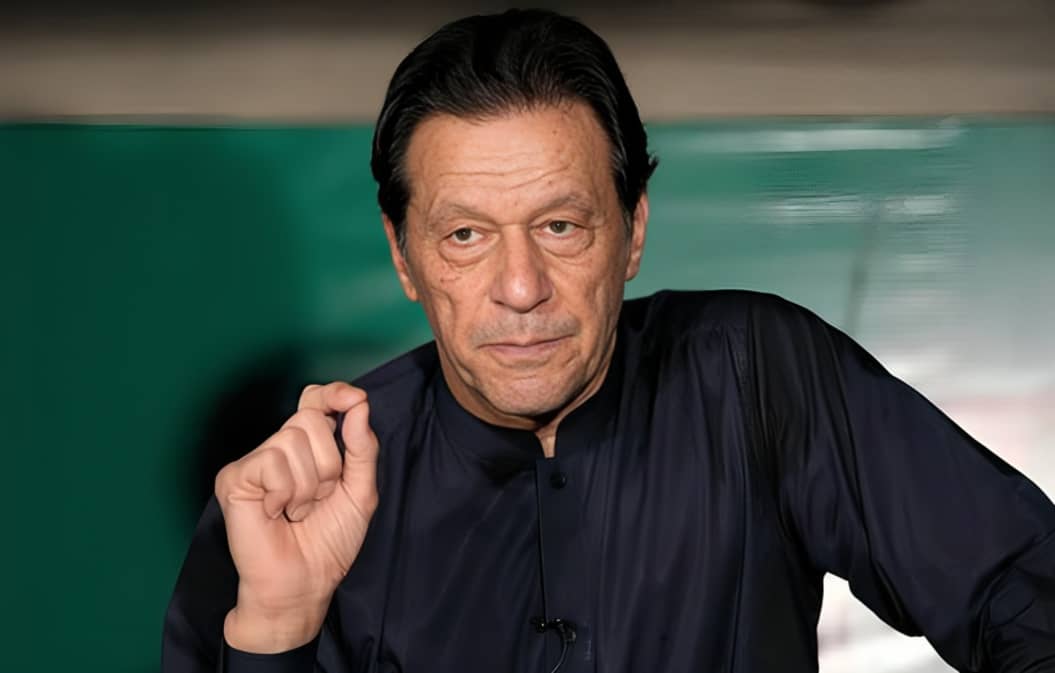
Former Pakistan Prime Minister Imran Khan’s sons have raised fresh concerns over their father’s health and conditions in prison, warning that his prolonged detention without what they consider adequate medical care could have serious consequences.
Khan, who has remained in prison since 2023, has faced continuing legal and political controversy in Pakistan. His family and Pakistan Tehreek e Insaf supporters have repeatedly raised concerns about his health and access to medical treatment.
The latest concerns come amid a dispute between Khan’s family and the Pakistani authorities over his medical care and access to family members. His sons, Sulaiman Khan and Kasim Khan, who are based in the United Kingdom, have publicly expressed alarm about his condition and have sought greater access to their father. Recent reports say they have also faced difficulties obtaining permission to visit him.
The situation intensified after Pakistan’s Supreme Court issued directions concerning Khan’s medical treatment. The court ordered that the former prime minister be taken to a hospital for medical evaluation and allowed arrangements for family contact. The legal development followed concerns raised by Khan’s family and lawyers regarding his health.
According to reports, Khan was subsequently moved from prison for a medical examination. However, the hospital stay was brief and he was returned to Adiala Jail. His family criticised the authorities, arguing that the arrangements did not fully comply with the court’s directions regarding the medical facility and the involvement of doctors associated with his treatment.
Khan’s health has become a particularly sensitive issue because his lawyers and family have repeatedly raised concerns about his eyesight. His legal team has claimed that he has suffered significant loss of vision in one eye and that he requires appropriate specialist treatment. These claims have been disputed by Pakistani authorities, who say that Khan has received medical examinations and that his condition does not justify the allegations being made by his family and political supporters.
The Pakistani government has rejected accusations of medical neglect and mistreatment. Officials have said that Khan is not being subjected to the conditions described by his family and supporters and that he has access to medical professionals, lawyers and family members under prison regulations.
The government has also challenged the Supreme Court’s direction concerning treatment at a private hospital. Pakistani authorities have argued that prisoners should ordinarily be treated at public medical facilities and have raised concerns about granting special arrangements to an individual prisoner.
The disagreement has created another legal and political confrontation between Khan’s supporters and the government.
Khan’s sons have maintained that their primary concern is their father’s health rather than political considerations. They have called for appropriate medical treatment and regular communication with him.
Their concerns have received international attention because Khan is one of Pakistan’s most prominent political figures. Before entering politics, he was internationally known as a cricket star and former captain of Pakistan’s national cricket team. He later became prime minister, serving from 2018 until 2022.
Khan was removed from office following a parliamentary no confidence vote in April 2022. His subsequent arrest and imprisonment became major political issues in Pakistan. His Pakistan Tehreek e Insaf party has repeatedly claimed that the legal cases against him are politically motivated. Pakistani authorities reject those allegations.
Khan has remained behind bars despite developments in several of the cases against him because other convictions and proceedings have continued to keep him imprisoned.
The latest health controversy has therefore added another layer to an already complicated political and legal situation.
Reports about Khan’s prison conditions have varied significantly depending on the source. His family and lawyers have described his detention as highly restrictive and have raised concerns about prolonged isolation and limited access. Pakistani officials, however, have rejected claims that he is being held in the manner described by his supporters.
The disagreement over his medical treatment became more prominent in August after the Supreme Court intervened. The court’s order was intended to address concerns about Khan’s health and provide a mechanism for independent medical evaluation.
However, the government subsequently sought a review of the order concerning treatment at a private hospital. Officials said the government was not opposed to necessary medical care but disagreed with the requirement that treatment be provided at a particular private facility.
The issue has also attracted attention from former international cricketers. A group of former cricket captains has reportedly appealed to Pakistan’s leadership for humane treatment and appropriate medical care for Khan. Their intervention reflects the continuing international interest in the former cricketer’s situation.
The health concerns are particularly significant because Khan is 73 years old and has spent several years in prison. His family believes that prolonged imprisonment combined with inadequate medical attention could worsen his condition.
His sons have reportedly been unable to see him for an extended period and have raised concerns about restrictions on communication. They have urged Pakistani authorities to allow regular family contact in accordance with court directions.
The Pakistani government, meanwhile, has provided a different account. Officials have said Khan has received numerous medical examinations and visits during his imprisonment. They have also denied claims that he is being deprived of basic facilities or family and legal access.
This difference in accounts makes it important to distinguish allegations from verified facts when reporting on Khan’s condition.
The immediate dispute is not only about Khan’s health but also about the authority of the courts and the administration of prisoners’ medical treatment. The Supreme Court’s intervention has placed the government’s handling of Khan’s healthcare under greater scrutiny.
The government’s decision to seek a review of the hospital order indicates that the legal disagreement remains unresolved. At the same time, Khan’s family continues to press for specialist medical attention and regular access to him.
The controversy could have wider implications for the treatment of high profile prisoners in Pakistan. It raises questions about how courts, prison authorities, government agencies and families should coordinate medical care when an incarcerated individual requires specialist treatment.
For Khan’s supporters, the issue has become another example of what they describe as political persecution. For the Pakistani government, the matter concerns the administration of a convicted prisoner and the application of prison rules.
Neither side has accepted the other’s account.
Khan’s sons have nevertheless continued to make public appeals over their father’s condition. Their latest warning has renewed international attention on his imprisonment and health.
The former prime minister remains a central figure in Pakistani politics, and developments surrounding his health are likely to have political consequences. Any deterioration in his condition could further increase pressure on the Pakistani government from his supporters, family members and international figures.
At the same time, the government is expected to continue defending its position on prison management and medical treatment.
The Supreme Court’s involvement means that the issue also remains part of an ongoing legal process. Further court proceedings could determine the extent of medical access available to Khan and whether the authorities must follow specific arrangements concerning his treatment and family contact.
For now, the central development is that Khan’s sons have expressed serious concern about their father’s health and called for appropriate medical care and access. Their statements come amid an ongoing dispute between the family and Pakistani authorities over the implementation of court directions.
The government has rejected accusations of medical neglect and has maintained that Khan is receiving medical attention.
As the legal and political dispute continues, the condition of the former prime minister remains under close scrutiny both inside Pakistan and internationally.
The situation also highlights the importance of careful reporting. Claims made by Khan’s family, lawyers and political supporters should be clearly attributed, while statements from Pakistani authorities should be presented separately. This approach allows readers to distinguish between allegations, official responses and established court decisions.
Overall, Imran Khan’s sons have raised renewed alarm over his health while he remains imprisoned in Pakistan. Their concerns have emerged alongside a legal dispute over medical treatment and family access. Pakistan’s Supreme Court has intervened on the medical care issue, while the government has challenged aspects of that order and rejected allegations of mistreatment.
The continuing disagreement means that Khan’s health, medical treatment and prison conditions are likely to remain significant issues in Pakistan’s political and legal landscape.