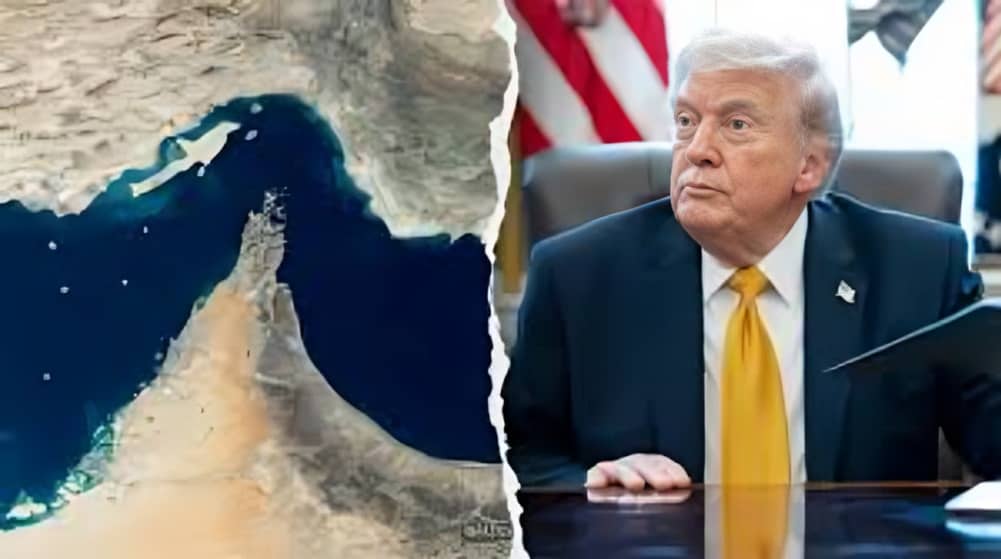
Tensions in West Asia have intensified following remarks by Donald Trump concerning the reopening of the Strait of Hormuz, a key maritime route for global oil shipments. Iran has responded to these remarks with statements that reflect the ongoing strain in relations between the two sides.
The Strait of Hormuz is one of the most important shipping lanes in the world, through which a significant portion of global oil supply passes. Any disruption in this region can have wide ranging effects on international energy markets, trade flows and economic stability.
Following the comments made by Donald Trump, Iranian officials and diplomatic representatives issued responses that appeared to dismiss the statements. These responses, shared through official and semi official channels, highlighted differences in perspective and underscored the complexity of the situation.
The exchange comes at a time when geopolitical tensions in the region are already high. Conflicts and uncertainties in West Asia have contributed to volatility in global markets, particularly in the energy sector. Oil prices often react sharply to developments in this region, given its importance as a major source of supply.
Analysts note that the rhetoric from both sides reflects deeper political and strategic differences. The situation involves not only bilateral relations but also broader regional dynamics, including the involvement of other countries and international organizations.
For global markets, the focus remains on the potential impact of any disruption in the Strait of Hormuz. Even the possibility of restrictions or conflicts in this area can lead to increased shipping costs, insurance premiums and supply chain challenges.
India, like many other countries, closely monitors developments in the region due to its dependence on energy imports. Any increase in oil prices can affect inflation, trade balances and overall economic conditions. As a result, geopolitical developments in West Asia are of significant importance to policymakers and businesses.
Diplomatic efforts are often made to ease tensions and ensure the continued flow of trade through critical routes. However, the situation remains fluid, with developments unfolding rapidly. Statements from political leaders and official responses can influence perceptions and contribute to market reactions.
Experts emphasize the importance of maintaining stability in key global trade routes. International cooperation and dialogue are seen as essential in preventing escalation and ensuring that economic activities are not disrupted.
The recent exchange between Iran and Donald Trump highlights how political statements can quickly become part of broader geopolitical narratives. While the immediate impact may be limited to rhetoric, the underlying issues continue to shape regional and global dynamics.
As the situation evolves, governments and market participants will continue to monitor developments closely. The focus will remain on maintaining stability and minimizing risks associated with geopolitical tensions.
Overall, the developments underscore the interconnected nature of global politics and economics. Events in one region can have far reaching consequences, influencing markets, trade and international relations.