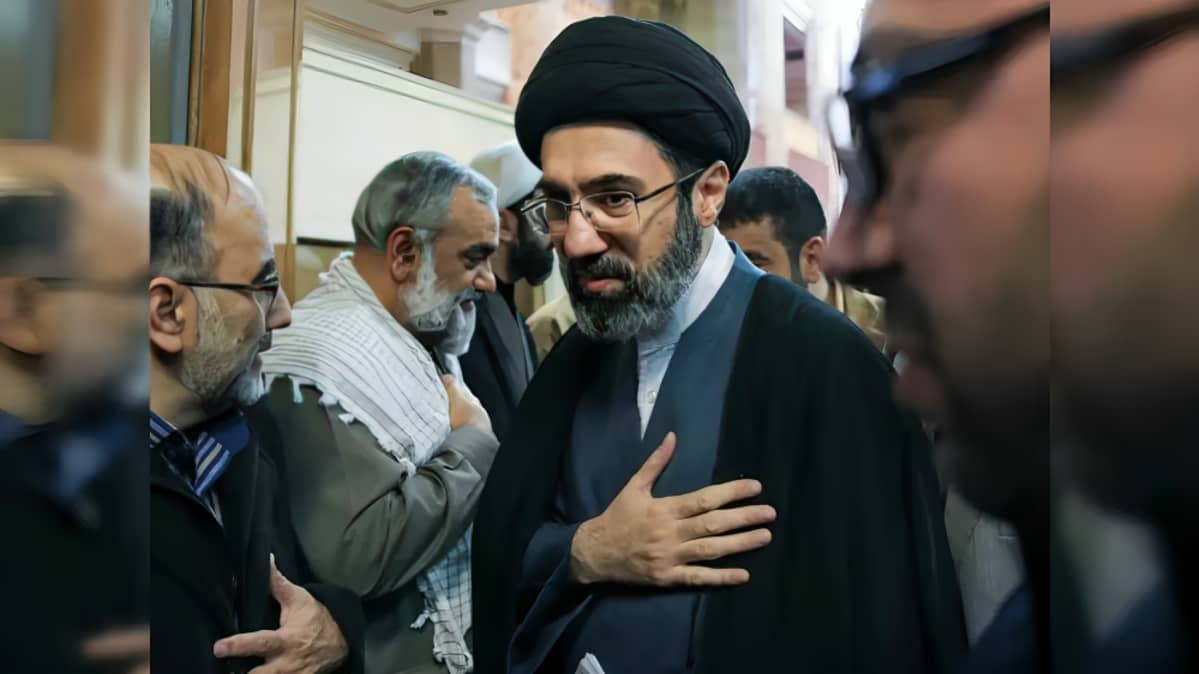
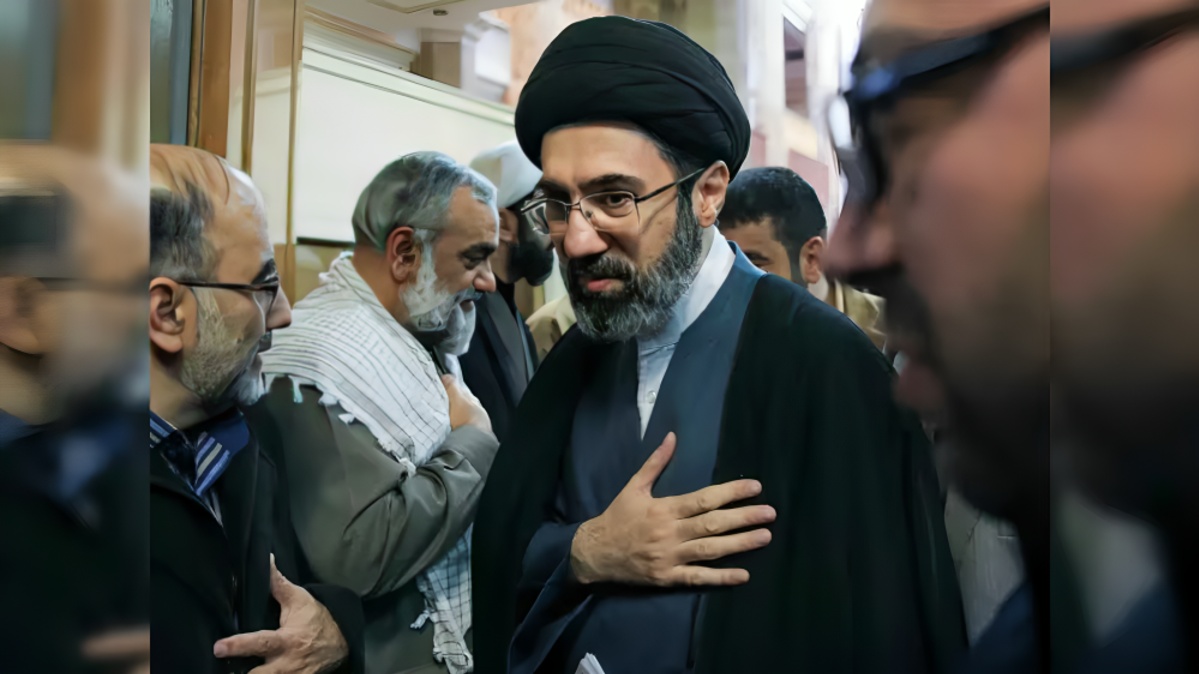
Iran’s Supreme Leader Ayatollah Mojtaba Khamenei has called on the government to strengthen domestic production, reduce reliance on imports and gradually reduce the prominent role of the US dollar in the Iranian economy.
Khamenei made the comments in a written message issued during Government Week. He highlighted economic challenges including inflation, unemployment, price management and the availability of goods and services.
The Iranian leader said greater attention should also be given to economic growth, investment and directing investment towards productive and necessary sectors. He called for increased domestic production and said that the policies associated with Iran’s “Resistance Economy” should become central to the government’s economic approach.
The call for a reduced role for the US dollar comes at a time when Iran is facing intensified American sanctions and severe economic pressure. The country has been dealing with rising prices, currency weakness and disruptions to trade as Washington expands measures aimed at restricting Iran’s access to international financial networks.
Khamenei argued that increasing domestic production is a key way of addressing the country’s economic difficulties. At the same time, he acknowledged that imports remain necessary in areas where domestic production is not sufficient. He said imports should therefore be managed carefully and used when required to ensure adequate supplies of essential and specialised goods.
The policy commonly referred to as the Resistance Economy has been promoted in Iran as a strategy for reducing vulnerability to foreign economic pressure. It emphasises domestic production, investment, economic resilience and the development of alternative trading and financial arrangements.
The latest remarks effectively place these policies at the centre of Iran’s economic response to sanctions. Khamenei’s message also called for stronger management of markets and prices as the government attempts to reduce the impact of the economic crisis on ordinary citizens.
Iran’s currency has come under substantial pressure. The rial recently fell to a new record low against the US dollar, highlighting the financial difficulties facing the country. Reports have also pointed to high inflation and declining foreign trade as major challenges for the Iranian government.
Reuters reported on Saturday that Iran’s economy was under severe strain after six months of war with the United States and Israel. According to the report, Iranian officials acknowledged significant economic difficulties, while President Masoud Pezeshkian said the country’s imports and exports had fallen by about 35 percent because of sanctions and restrictions.
Iran has nevertheless indicated that it intends to pursue both economic resistance and diplomacy. The government has said that diplomacy and defence remain complementary parts of its strategy for protecting national interests.
Diplomatic efforts have continued through regional intermediaries. Qatar’s Prime Minister Sheikh Mohammed bin Abdulrahman Al Thani recently travelled to Tehran and met Iranian leaders as part of efforts to reduce tensions and revive diplomatic contacts.
Qatar has played an important role in attempts to facilitate dialogue between Iran and the United States. Pakistan has also been involved in diplomatic efforts. The two countries helped facilitate a June memorandum of understanding that resulted in a brief reduction in hostilities before disagreements over the Strait of Hormuz led to renewed tensions.
The Strait of Hormuz remains a major issue in the wider confrontation. The strategically important waterway connects the Persian Gulf with the Gulf of Oman and is one of the world's most important routes for energy shipments.
Iran has maintained that it has significant leverage over the waterway, while the United States has said the strait remains open. Shipping activity has nevertheless been significantly affected by the conflict and the security situation.
The economic pressure on Iran has also intensified through new US sanctions. Washington has warned companies and countries maintaining commercial relationships with Tehran that they could face secondary sanctions.
Reuters reported that the US Treasury had recently imposed sanctions on financial entities linked to Iran and warned that Washington intended to increase pressure on Tehran’s remaining economic lifelines.
Against this background, Khamenei’s call to reduce dependence on the dollar has both economic and strategic significance. Iran has previously sought to increase trade using alternative currencies and financial mechanisms to reduce the impact of US sanctions.
Reducing the dollar’s role, however, is a complex process because the US currency remains central to international trade and financial transactions. Iran’s ability to replace dollar-based transactions will depend on its relationships with major trading partners and the availability of alternative payment systems.
Iran has increasingly relied on economic relationships with countries such as China and other regional partners to maintain trade despite sanctions. Alternative currencies, barter arrangements and indirect financial channels have become important components of Tehran’s efforts to keep its economy functioning.
The latest policy message therefore represents a continuation of Iran’s broader strategy of economic self reliance rather than an entirely new approach.
Khamenei also emphasised the importance of maintaining social cohesion. His message called on government officials to consider how economic and political decisions could affect national unity and public confidence.
The economic situation remains one of the most significant challenges facing the Iranian leadership. Inflation, unemployment, currency depreciation and restrictions on international trade are placing pressure on households and businesses.
The government faces the difficult task of maintaining supplies while simultaneously attempting to increase domestic production. Khamenei’s remarks suggest that Tehran wants to achieve this through increased investment in local industries, improved market management and a gradual reduction in dependence on foreign financial systems.
The call to make the Resistance Economy central to government policy also signals that Iran intends to continue pursuing economic policies designed to withstand external pressure rather than relying solely on sanctions relief.
At the same time, Iran has not completely closed the door to diplomacy. Iranian officials have continued engaging with regional mediators, while Qatar has sought to encourage dialogue and de escalation.
The diplomatic track remains complicated by the wider military confrontation and disagreements over the terms of any future agreement. US President Donald Trump has indicated that he is in no hurry to end the conflict or return immediately to the terms of the earlier agreement.
The combination of economic pressure and diplomatic uncertainty means Iran is attempting to prepare for a prolonged period of instability.
For Tehran, reducing dependence on the US dollar could provide greater freedom in conducting international trade if alternative financial channels can be expanded. However, the success of such a strategy will depend heavily on Iran’s ability to maintain relationships with major trading partners and sustain domestic production.
The latest statement from Khamenei therefore places economic self reliance at the centre of Iran’s response to sanctions and the continuing conflict.
While the policy is being presented as a way to strengthen Iran’s resilience, the country continues to face substantial economic challenges. High inflation, a weakened currency and reduced trade are likely to remain major concerns for the government.
The diplomatic efforts led by Qatar could potentially provide another route towards reducing tensions, but no breakthrough has been confirmed.
For now, Iran appears to be pursuing two parallel strategies: strengthening its domestic economy to withstand external pressure while keeping diplomatic channels open through regional intermediaries.
Khamenei’s latest message makes clear that domestic production, investment and reduced dependence on the US dollar are expected to remain important elements of Iran’s economic policy as the country faces continuing sanctions and wartime pressures.