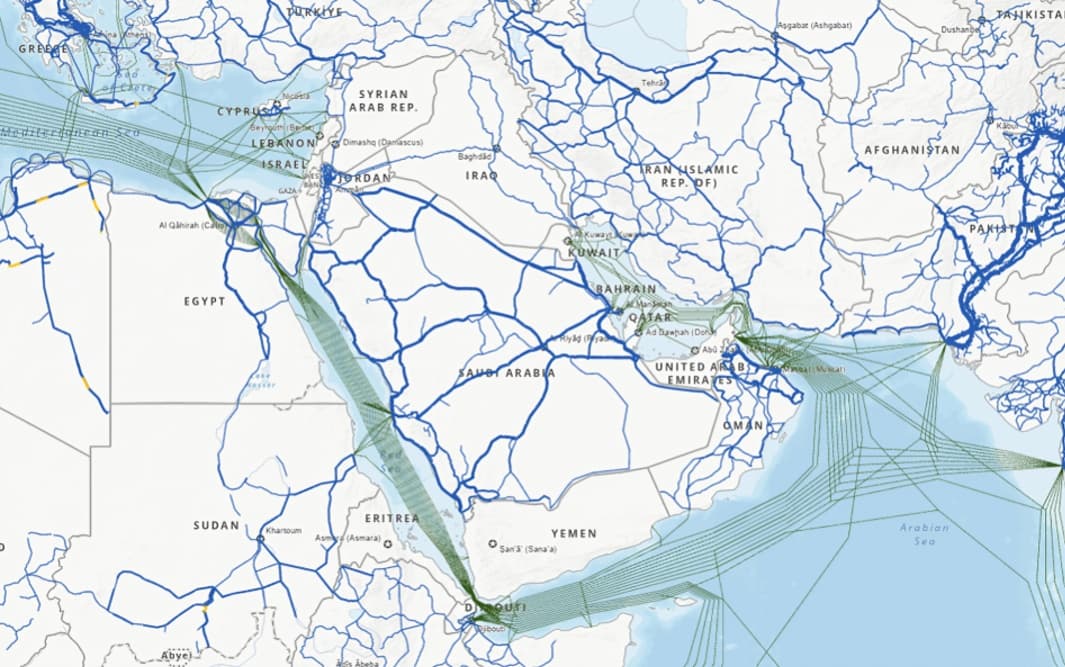
Amid growing concerns over security and stability in the Gulf region, Iraq and Syria have highlighted a potential alternative route for transporting oil that could reduce reliance on the Strait of Hormuz. The proposal involves a land based corridor that would allow oil to be moved through pipelines or other infrastructure, bypassing one of the world’s most critical maritime chokepoints.
The Strait of Hormuz plays a vital role in global energy supply, with a significant portion of the world’s oil shipments passing through it. Any disruption in this narrow waterway can have immediate effects on global oil prices and supply chains. Rising geopolitical tensions in the region have renewed discussions about alternative routes that could ensure continuity of supply.
The idea put forward by Iraq and Syria focuses on creating a land route that connects oil producing regions to export terminals outside the Gulf. Such a route could potentially provide a more secure and stable option in times of conflict or disruption. It could also diversify export channels, reducing the risks associated with over dependence on a single route.
However, experts caution that implementing such a plan would require substantial investment and long term planning. Infrastructure development, including pipelines, storage facilities and transportation networks, would be necessary to make the route operational. In addition, political and security challenges in the region could pose significant obstacles.
Syria has faced prolonged conflict, which has affected its infrastructure and economic capacity. Rebuilding and upgrading facilities to support large scale oil transport would take time and resources. Similarly, coordination between Iraq and Syria would be essential to ensure the smooth functioning of any proposed route.
Economic considerations also play a role in evaluating the feasibility of the project. The cost of constructing and maintaining the required infrastructure must be weighed against the potential benefits. Market conditions, demand for oil and global price trends could influence the viability of such investments.
Despite these challenges, the proposal reflects a broader trend in the energy sector, where countries are exploring ways to enhance resilience and reduce vulnerability to disruptions. Diversification of supply routes is increasingly seen as a strategic priority, particularly in regions with geopolitical uncertainties.
International stakeholders are likely to monitor the development closely, as changes in oil transportation routes can have global implications. Energy markets are interconnected, and any shift in supply chains can impact prices and trade patterns worldwide.
The discussion also highlights the importance of regional cooperation in addressing shared challenges. By working together, countries can explore solutions that benefit their economies and contribute to overall stability. However, achieving such cooperation requires alignment of interests and effective communication.
Analysts note that while the concept of an alternative route is not new, current geopolitical conditions have brought renewed attention to its potential. The success of the proposal will depend on how effectively the involved countries can address logistical, financial and security concerns.
In the near term, the Strait of Hormuz is expected to remain a key route for global oil transport. However, initiatives like the one proposed by Iraq and Syria indicate ongoing efforts to develop additional options that can support long term energy security.
Overall, the proposal underscores the evolving nature of global energy strategies. As countries seek to manage risks and ensure stable supply, the exploration of alternative routes is likely to remain an important area of focus in the years ahead.