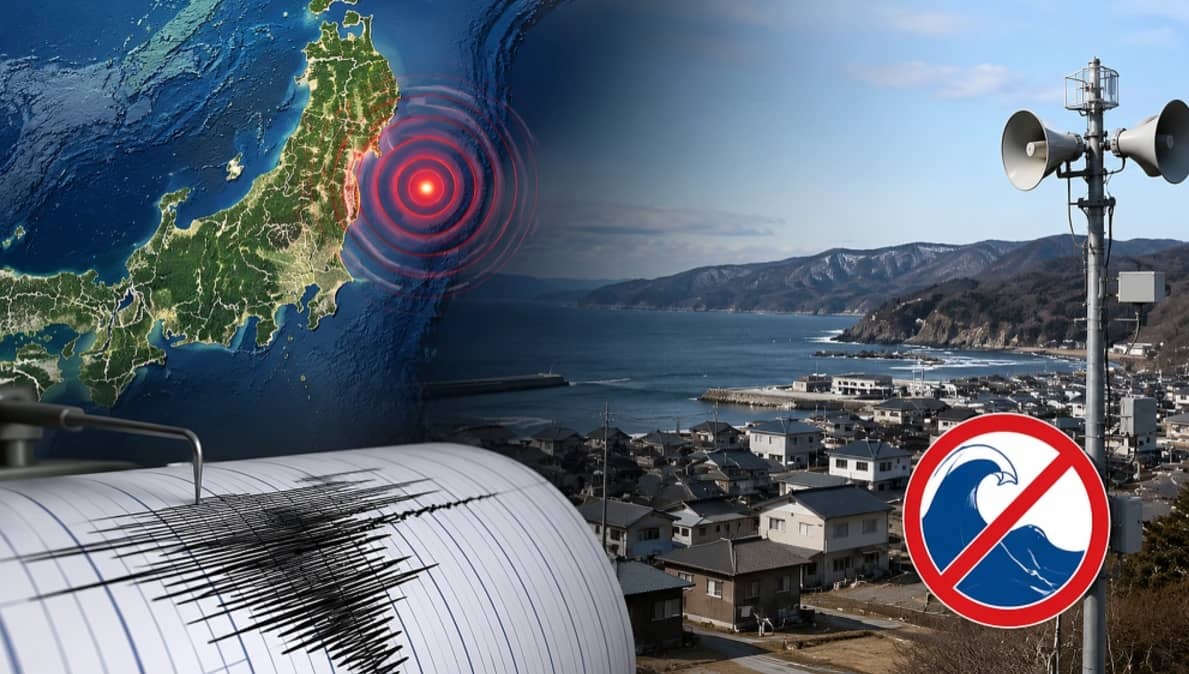
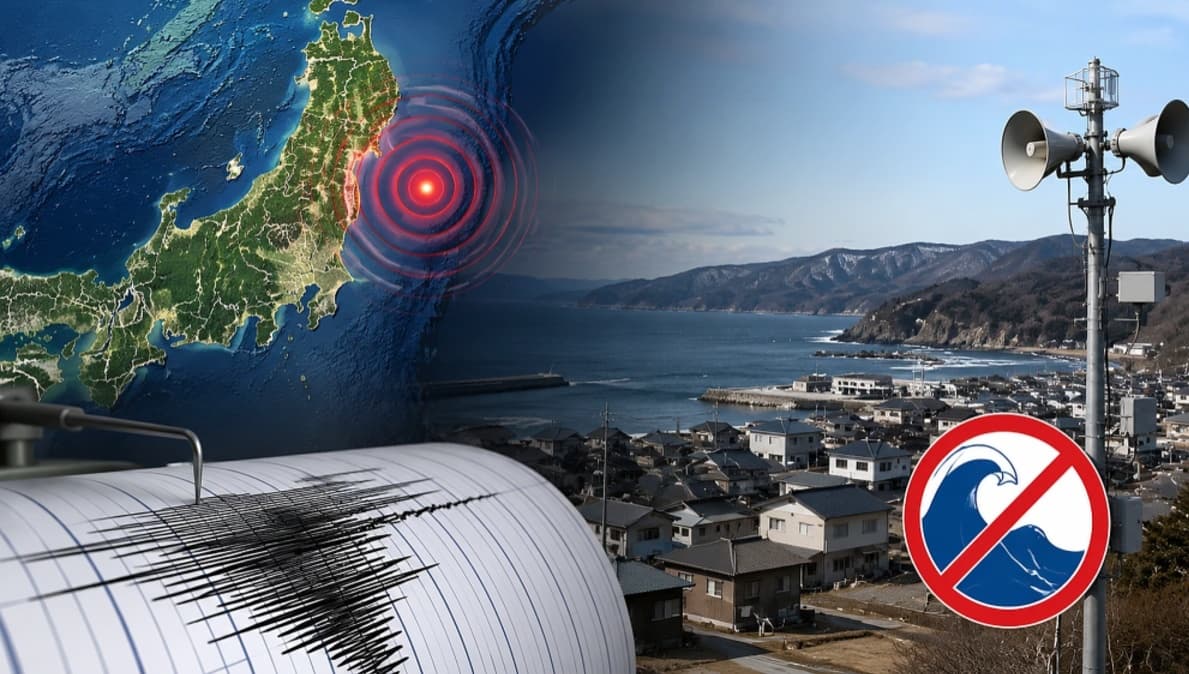
A magnitude 6.1 earthquake struck off the eastern coast of Japan on Friday evening, November 6, 2026, causing tremors that were felt in central Tokyo and several surrounding areas. The Japan Meteorological Agency (JMA) reported that the earthquake occurred at approximately 7:39 pm local time.
According to the preliminary information released by the weather agency, the earthquake originated beneath the waters off Japan's eastern coast at an estimated depth of around 10 kilometres. The epicentre was located at approximately 35.0 degrees north latitude and 142.2 degrees east longitude.
The earthquake recorded a seismic intensity of 3 in parts of Miyagi, Fukushima and Ibaraki prefectures on Japan's 0-to-7 seismic intensity scale. Shaking was also felt in central Tokyo, according to reports.
Japanese authorities did not issue a tsunami alert following the earthquake. Initial reports did not indicate major damage or casualties.
Earthquake Recorded at 7:39 pm Local Time
The earthquake occurred at around 7:39 pm on Friday, according to the Japan Meteorological Agency. The preliminary magnitude was measured at 6.1.
The reported epicentre was located in the Pacific Ocean, off the eastern coast of Japan. Its coordinates were approximately 35.0 degrees north and 142.2 degrees east.
The estimated depth of 10 kilometres classified the earthquake as a shallow event. Shallow earthquakes can produce noticeable ground shaking in nearby areas, although the actual impact depends on several factors, including magnitude, distance from populated locations, geological conditions and the construction of buildings.
The tremor was reported in central Tokyo, while parts of Miyagi, Fukushima and Ibaraki prefectures recorded a seismic intensity of 3.
Earthquake measurements and intensity reports serve different purposes. Magnitude describes the overall size of an earthquake and the energy released at its source. Seismic intensity describes how strongly the ground shakes at a particular location. Therefore, the same earthquake can produce different intensity readings across different regions.
Miyagi, Fukushima and Ibaraki Record Seismic Intensity 3
According to the Japan Meteorological Agency, parts of Miyagi, Fukushima and Ibaraki prefectures recorded an intensity of 3 on Japan's seismic scale.
Japan uses a seismic intensity system ranging from 0 to 7, with some intermediate levels. It measures the strength of shaking experienced at specific locations rather than the total energy released by an earthquake.
An intensity reading of 3 generally indicates noticeable shaking. People indoors may feel the movement, and objects can rattle or move slightly. The level of impact can vary depending on the location and the structure of buildings.
The reported intensity readings indicate that the earthquake was felt across parts of eastern Japan. However, an intensity of 3 does not automatically indicate serious structural damage.
The authorities continue to rely on seismic monitoring networks to assess earthquake activity and provide information to residents. Such monitoring helps determine the extent of shaking and whether further warnings are necessary.
No Tsunami Alert Issued After the Earthquake
Japanese authorities did not issue a tsunami alert following the magnitude 6.1 earthquake.
Tsunamis can occur when underwater earthquakes cause significant vertical movement of the seabed and displace large volumes of water. However, not every earthquake beneath the ocean generates a tsunami.
The Japan Meteorological Agency assesses factors such as earthquake magnitude, depth, location and possible seabed displacement before issuing tsunami information.
In this case, no tsunami alert was announced after the tremor. The absence of an alert indicated that authorities had not identified a need for a tsunami warning based on the available assessment.
Residents in coastal areas are generally advised to follow official information from the Japan Meteorological Agency and local authorities after significant offshore earthquakes. They should avoid relying on unverified social media reports for emergency instructions.
Shaking Felt in Central Tokyo
The earthquake also attracted attention because tremors were felt in central Tokyo, Japan's capital and one of the world's largest metropolitan areas.
Tokyo is located in a region where several tectonic plates interact, making earthquakes a regular part of the country's natural environment. The city and surrounding areas have extensive earthquake monitoring systems and building safety measures.
Even earthquakes with epicentres some distance from the capital can produce noticeable shaking, depending on their magnitude, depth and direction of movement.
The November 6 earthquake occurred offshore, but its effects were reported in central Tokyo. The available information indicated that the tremor was felt without an immediate report of major damage.
Residents and visitors in the affected areas are generally advised to remain alert after an earthquake, check official announcements and follow local safety instructions.
Japan's Earthquake Monitoring and Preparedness System
Japan is among the countries most exposed to earthquake activity because it lies along the Pacific Ring of Fire. Several major tectonic plates meet around the Japanese archipelago, creating conditions that frequently produce earthquakes.
The country has developed an extensive system for monitoring seismic activity, issuing alerts and preparing communities for natural disasters.
The Japan Meteorological Agency operates monitoring networks that collect information from seismic stations across the country. These systems help authorities identify earthquakes, estimate their magnitude and determine the intensity of shaking in different locations.
Japan also has earthquake-resistant building standards, public evacuation procedures and regular disaster-preparedness programmes. Schools, workplaces and local communities conduct drills to help people understand how to respond during emergencies.
People are generally advised to take protective action during shaking by getting under sturdy furniture, protecting their heads and staying away from windows and heavy objects. After the shaking stops, they should check for injuries and follow instructions from emergency authorities.
For coastal communities, official tsunami information is particularly important after offshore earthquakes. Residents should move to higher ground if authorities issue an evacuation instruction.
What Is Known About the November 6 Earthquake?
The Japan Meteorological Agency's preliminary report placed the earthquake at magnitude 6.1, with an estimated depth of approximately 10 kilometres. The tremor occurred at 7:39 pm local time off the eastern coast of Japan.
The reported epicentre coordinates were approximately 35.0 degrees north and 142.2 degrees east. Parts of Miyagi, Fukushima and Ibaraki prefectures recorded seismic intensity 3, and shaking was felt in central Tokyo.
No tsunami alert was issued following the earthquake. Initial reports did not indicate major damage or casualties.
The information available after the event was preliminary, and earthquake measurements can sometimes be revised as additional data is analysed.
The November 6 tremor once again highlighted Japan's exposure to seismic activity and the importance of its earthquake monitoring and preparedness systems. Residents were advised to follow official updates and remain attentive to any further instructions from local authorities.