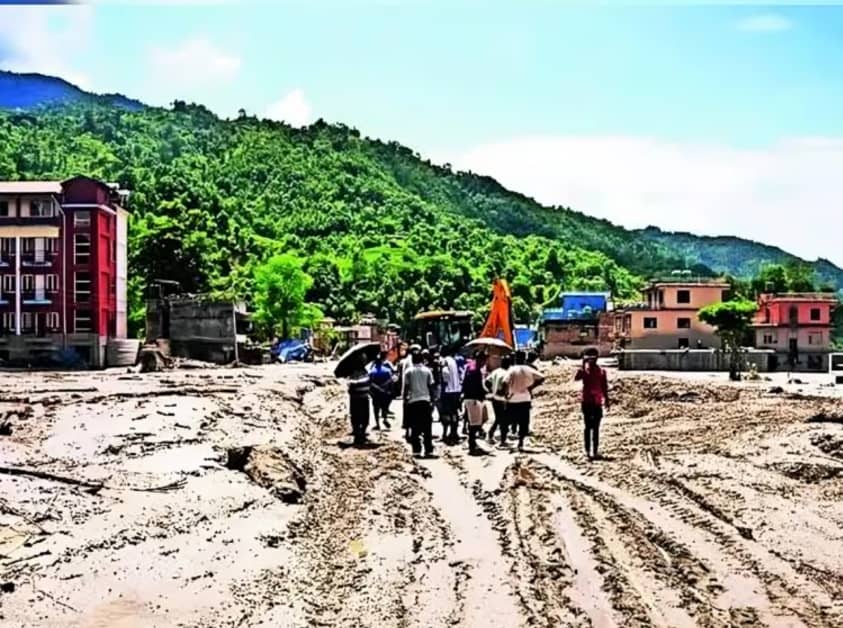
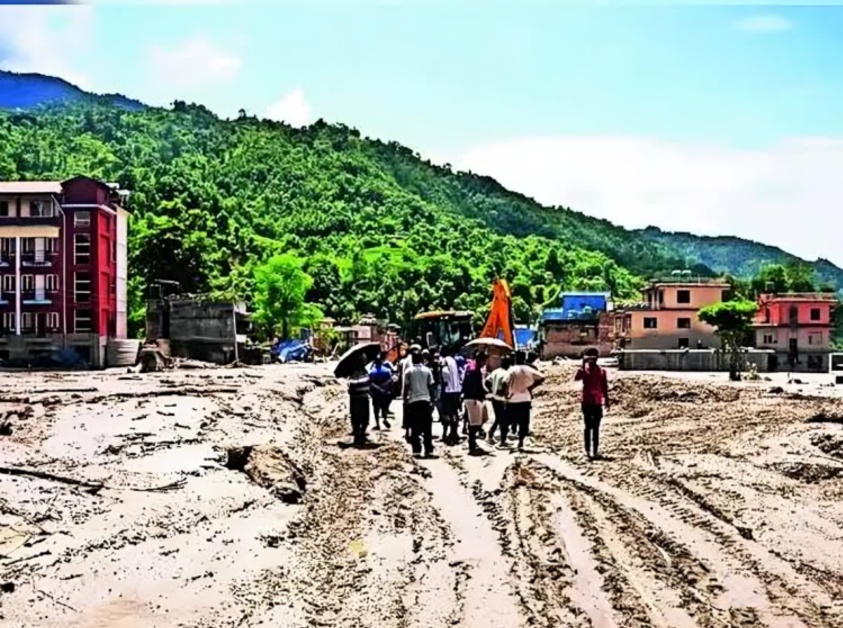
The devastating flooding that recently struck parts of the Nepal China border region has renewed attention on the environmental challenges associated with infrastructure development in the Himalayas. The disaster caused extensive damage to roads, bridges, buildings and other critical infrastructure, highlighting the vulnerability of transport corridors that pass through steep and geologically sensitive mountain terrain.
The Himalayan region is one of the most environmentally fragile mountain systems in the world. Rapid changes in temperature, melting glaciers, unstable slopes, intense rainfall and geological activity can combine to create serious risks for communities and infrastructure.
The recent disaster has also prompted renewed scrutiny of construction activity along the China Nepal transport corridor. Roads connecting the two countries are strategically and economically important because they support cross border trade, tourism and movement of goods and people. However, building highways through steep mountain terrain presents significant environmental and engineering challenges.
The China Nepal transport network includes several important corridors crossing the Himalayas. A scientific study published in 2024 examined four major transportation corridors and assessed their exposure to glacial lake outburst floods. The study identified 2,688 glacial lakes with an area of at least 0.001 square kilometres within the wider study region. It found that potential GLOF events could have cross border consequences for transport infrastructure.
According to the study, potential glacial lake outburst floods could affect around 103 kilometres of China Nepal highways, 103 bridges, two major dry ports and more than 3,300 buildings. These findings highlight the importance of assessing disaster risks before and during infrastructure development in high altitude areas.
A glacial lake outburst flood occurs when water stored in or around a glacier suddenly escapes, potentially releasing a large volume of water downstream. Such events can destroy roads, bridges, settlements and hydropower facilities within a short period.
However, the latest disaster on the Nepal China border should not automatically be classified as a GLOF. Recent reports indicate that an ice and rock avalanche or glacier collapse triggered the catastrophic flooding. Scientists are continuing to assess the precise sequence of events and the factors that contributed to the collapse.
The distinction is important because Himalayan floods can have several different triggers. Glacial lake outbursts, glacier collapses, landslides, avalanches, extreme rainfall and combinations of these hazards can all generate sudden floods in mountain valleys.
The recent event demonstrated how quickly such hazards can destroy infrastructure. Roads, bridges and other facilities in the affected region were damaged or swept away. Critical cross border infrastructure was also affected, disrupting transport and trade between Nepal and China.
Environmental concerns surrounding road construction in the Himalayas are not limited to flooding. Large scale construction can involve excavation of mountain slopes, removal of vegetation, movement of large quantities of soil and rock and alteration of natural drainage systems.
When vegetation is removed from steep slopes, soil can become more vulnerable to erosion. Road cuts can also destabilise slopes if they are not properly engineered and protected. During heavy rainfall, loose soil and construction debris can enter rivers and streams, potentially increasing sediment loads downstream.
At the same time, it would be inaccurate to attribute the latest disaster solely to highway construction. Scientists have pointed to broader geological and climatic factors behind the recent glacier collapse. Reports indicate that warmer temperatures and changing conditions in the high mountains may be contributing to increasing instability in the Himalayan cryosphere.
Climate change is becoming an important factor in discussions about Himalayan disaster risk. The region has experienced significant glacier loss in recent decades, while warming temperatures can weaken ice and frozen ground. These changes can increase the likelihood of avalanches, landslides and other high mountain hazards.
The combination of climate change and infrastructure expansion therefore creates a complicated risk environment. Roads and other infrastructure are necessary for economic development and connectivity, particularly in remote Himalayan communities. At the same time, projects in high risk areas require detailed environmental assessment and disaster planning.
Researchers have emphasised the need to identify potentially dangerous glacial lakes and vulnerable infrastructure in advance. The study covering the China Nepal transport corridors provides an example of how satellite imagery, geographic information systems and hydrodynamic modelling can be used to assess potential GLOF impacts.
Early warning systems could also play an important role. Monitoring glacier movement, glacial lakes, rainfall, river levels and slope stability can provide valuable information before a disaster reaches downstream communities.
Cross border cooperation is equally important because many Himalayan rivers and glaciers are connected across national boundaries. A hazard originating in a high altitude area can affect communities and infrastructure far downstream, sometimes crossing international borders.
The recent disaster has demonstrated this transboundary nature of Himalayan risks. Damage occurred on both sides of the Nepal China border, affecting transport infrastructure and communities. Rescue and relief operations have consequently required coordination among different authorities.
For Nepal, roads connecting the country with China are economically significant. They provide access to international trade routes and can reduce the isolation of remote mountain communities. However, maintaining these roads can be difficult because landslides, floods, snowfall and other hazards frequently disrupt transport.
The challenge is therefore to balance infrastructure development with environmental protection and disaster resilience. Engineers and policymakers need to consider not only the immediate construction cost of a highway but also its long term exposure to natural hazards.
Environmental safeguards can include stabilising road slopes, maintaining vegetation where possible, controlling construction debris, improving drainage systems and avoiding particularly vulnerable locations. Regular monitoring can also help identify changes in slopes, glaciers and waterways.
The 2,688 glacial lakes identified in the scientific study demonstrate the scale of the potential hazard across the wider China Nepal transportation region. Not every glacial lake represents an immediate danger, but the large number shows why systematic risk assessment is important.
The latest flooding has therefore brought renewed attention to the relationship between climate change, Himalayan geology and infrastructure development. The disaster does not establish that road construction caused the flood, but it highlights the consequences that natural hazards can have on infrastructure built in highly sensitive mountain environments.
As construction and connectivity projects continue across the Himalayas, experts and authorities face the challenge of ensuring that development does not increase vulnerability to existing natural hazards. Stronger environmental assessments, scientific monitoring, early warning systems and cross border disaster coordination could become increasingly important.
The recent Nepal China border disaster serves as a reminder that the Himalayas are a rapidly changing and highly sensitive environment. Infrastructure development can provide major economic benefits, but projects in such terrain require careful planning and continuous assessment of geological, ecological and climate related risks.
The focus on the China Nepal highway corridor is therefore likely to continue as authorities, scientists and environmental experts examine how infrastructure can be made safer and more resilient in the face of growing Himalayan hazards.