
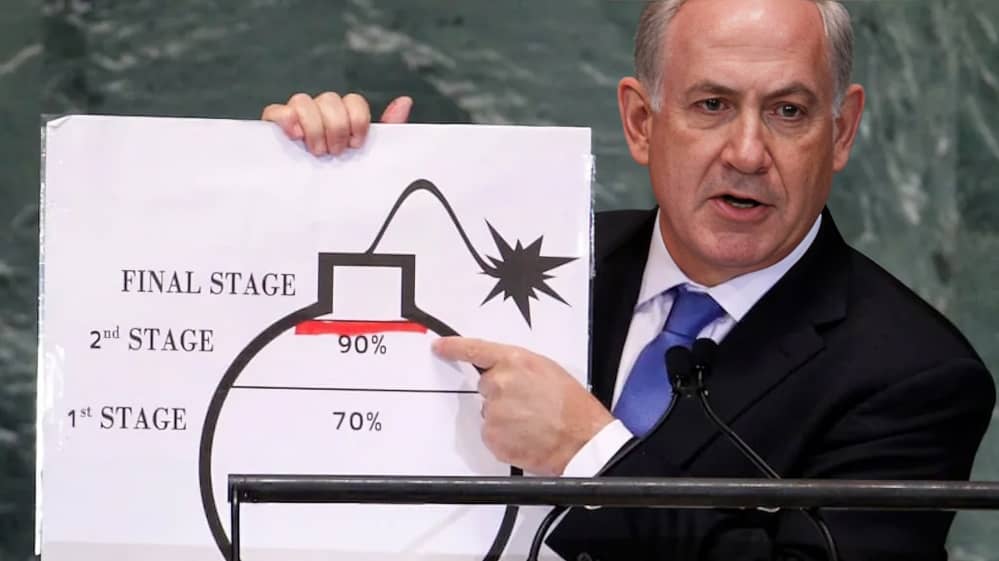

Israeli Prime Minister Benjamin Netanyahu delivered a televised address to the nation following joint military operations carried out by Israel and the United States against targets in Iran. The address came amid rising regional tensions and widespread international attention on the unfolding developments.
In his speech, Netanyahu stated that the coordinated strikes were aimed at eliminating what he described as an existential threat to Israel’s security. He said the operations were designed to prevent Iran from advancing capabilities that could pose risks beyond the region. The Israeli leader emphasized that national security considerations guided the decision to act.
Netanyahu also expressed gratitude to Donald Trump, acknowledging the support of the United States in what he described as a joint effort. According to his remarks, cooperation between the two countries played a significant role in the execution of the operation.
During the address, Netanyahu criticized Iran’s leadership, referring to decades of hostility between the two nations. He stated that for many years the Iranian government had adopted an adversarial posture toward both Israel and the United States. He further alleged that the actions of Iran’s ruling establishment had caused harm domestically and internationally.
The Prime Minister also addressed the Iranian population directly, calling for change and expressing hope for what he described as a future peaceful nation. He referenced various ethnic communities within Iran and said that long term stability could emerge through internal transformation.
The speech followed reports of strikes on Iranian facilities, which Iranian media and international observers said resulted in explosions in multiple locations. While operational details remain limited, both countries have issued statements outlining their respective positions. Iranian authorities have not publicly confirmed all aspects of the reported operation but have criticized the actions and warned of potential consequences.
Global reactions have been mixed, with several nations urging restraint and dialogue. Analysts note that direct military coordination between Israel and the United States marks a significant development in the ongoing tensions surrounding Iran’s regional influence and strategic capabilities. Concerns about escalation have prompted diplomatic engagement among major global powers seeking to prevent further instability.
Security experts observe that the situation remains fluid, with the possibility of retaliatory measures contributing to uncertainty in the region. Airspace restrictions and heightened military readiness have been reported in parts of West Asia as precautionary steps.
The broader geopolitical context includes longstanding disputes related to nuclear policy, regional alliances and security doctrines. Israel has consistently stated that it will act to prevent perceived threats to its sovereignty, while Iran has maintained that its strategic programs are defensive in nature.
As the situation develops, international observers are closely monitoring official statements and diplomatic initiatives. The coming days are expected to play a critical role in determining whether tensions escalate further or shift toward negotiations.


