Netanyahu Leads Israeli Election but Falls Short of Majority as Opposition Considers Coalition Options
Israel's 2026 parliamentary election has produced an uncertain political outcome, with neither Prime Minister Benjamin Netanyahu's bloc nor the opposition alliance led by Gadi Eisenkot securing a clear majority in preliminary results. The developing figures indicate that Netanyahu's bloc could obtain 53 seats, while Eisenkot's alliance is projected to win 48 seats in the 120 member Knesset, Israel's parliament.
The results leave both political camps short of the 61 seats required to form a government with a parliamentary majority. Arab led political parties are projected to secure 19 seats, making their position potentially important in the negotiations that will follow the final vote count.
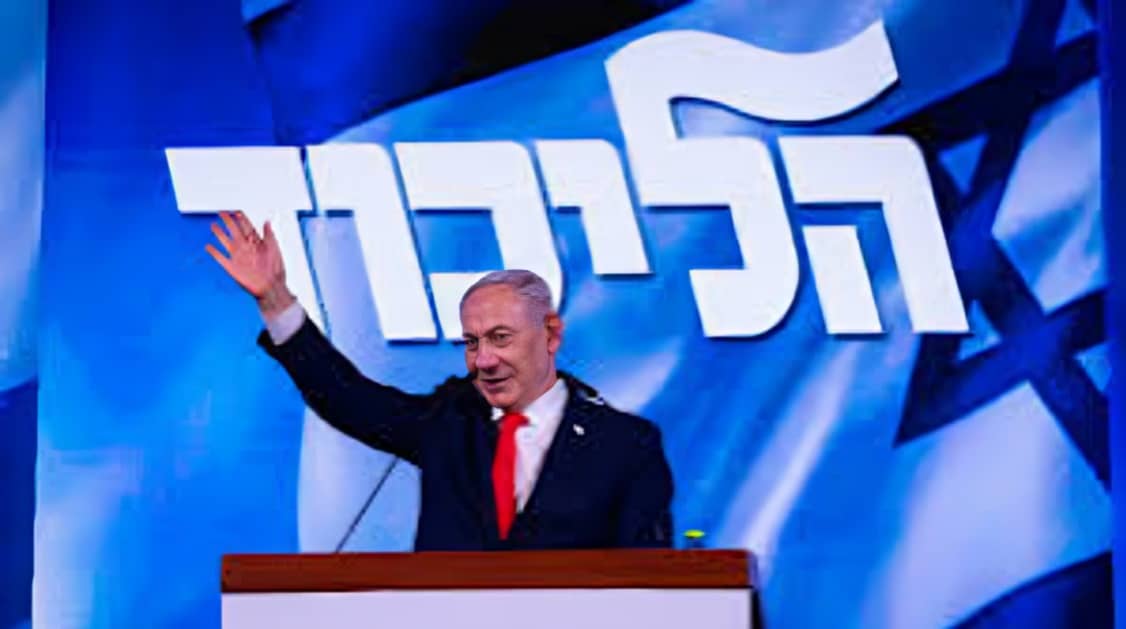
The election has become a significant test for Netanyahu, who has remained a central figure in Israeli politics for many years. Although his bloc is projected to emerge as the largest of the two main political groupings, it has not secured enough seats to govern independently. The outcome means that Netanyahu and his political allies will need to consider coalition arrangements if they want to continue leading the government.
For the opposition, the result presents a different challenge. Eisenkot's alliance has a substantial number of seats but still needs additional parliamentary support to reach the majority threshold. Cooperation with Arab led parties could provide a possible route towards forming a government, but such an arrangement may prove politically difficult because of disagreements among potential partners.
Netanyahu's bloc leads but lacks a majority
Preliminary election figures place Netanyahu's bloc at 53 seats, leaving it eight seats short of the majority threshold. His Likud party is reported to have emerged as the largest individual party, strengthening his position in the immediate post election negotiations.
However, the number of seats held by a political bloc does not automatically determine who will ultimately lead the government. Israel follows a proportional representation system in which parties receive parliamentary seats according to their share of the vote. Since no single party typically governs alone, political leaders must negotiate with other parties to assemble a governing majority.
Netanyahu's next steps may include discussions with parties that share some of his political priorities or negotiations aimed at forming a broader coalition. The final outcome will depend on the willingness of potential partners to cooperate and the agreements they can reach on government policies and responsibilities.
The preliminary figures also represent a change from some earlier expectations. Initial exit poll projections had suggested a stronger performance for the opposition, but subsequent vote counting placed Netanyahu's bloc ahead. This difference highlights why exit polls and early projections should not be treated as final election results.
Eisenkot explores possible coalition arrangements
The opposition alliance led by Gadi Eisenkot is projected to secure 48 seats. Although this puts the alliance behind Netanyahu's bloc, it remains a major force in the negotiations over Israel's next government.
Eisenkot and his political partners face the challenge of identifying additional parties willing to support an opposition led administration. The 19 seats projected for Arab led parties could become particularly important if the opposition seeks to reach the 61 seat majority threshold.
However, cooperation may involve difficult political choices. Some opposition parties have expressed reservations about working with Arab led political groups, while the positions and conditions of the potential partners may differ on important national issues. Negotiators will need to determine whether a common programme can be developed and whether the parties can agree on the structure of a government.
The negotiations could also involve discussions about national security, military service, relations with the Palestinian territories and the direction of Israel's domestic policies. These issues have been prominent in Israeli politics and could influence the willingness of parties to join a coalition.
If the opposition cannot secure sufficient support, Netanyahu may retain a path to forming a government despite falling short of a majority in the preliminary results. A broader unity arrangement involving rival political figures is another possible scenario, although it would require substantial compromise.
Arab led parties could influence the outcome
Arab led parties are projected to win 19 seats, giving them the potential to play a decisive role in coalition negotiations. Their combined parliamentary strength could help an alliance reach a majority if an agreement is reached with the opposition.
The projected result represents an important development in the distribution of seats in the Knesset. However, the number of seats alone does not guarantee that these parties will join a particular coalition. Their leaders would need to assess the terms of any proposal, including policy commitments and their role in a possible government.
The main political blocs also face internal differences over whether and how to cooperate with Arab led parties. These disagreements could complicate negotiations and make it more difficult to form a stable administration.
The coming discussions will therefore focus not only on seat totals but also on political compatibility, policy commitments and the ability of parties to maintain support after a government is formed.
What happens after the election
Israel's president, Isaac Herzog, plays a formal role in the process of government formation. After considering the election results and consultations with political representatives, the president can assign a candidate the task of forming a government.
The candidate must then build sufficient parliamentary support. If negotiations fail, the country could face a prolonged political stalemate and the possibility of another election under the applicable legal procedures.
The final distribution of seats remains important because outstanding ballots and official verification can affect the confirmed result. Political parties may also need time to decide whether to negotiate with rivals, support a minority administration or seek an alternative arrangement.
The uncertainty comes at a time when security and foreign policy remain central issues in Israel. The country's recent conflicts and regional tensions have influenced political debate, while questions about government accountability, military service requirements and relations with the Palestinians remain significant.
The election has therefore left Israel with two main challenges. The first is to complete the official counting process and confirm the parliamentary composition. The second is to translate the results into a workable government that can command sufficient support in the Knesset.
For now, Netanyahu's bloc leads the preliminary count but does not have a majority. Eisenkot's opposition alliance remains short of the numbers needed to govern independently, while Arab led parties could influence the outcome of negotiations. The next stage will depend on the final results and whether the competing political groups can reach agreements to form a government.