Vessel Fire Reported Near Oman as Israel Election Deadlock Continues Amid Regional Tensions
Security concerns across the Middle East remained in focus after a vessel was reported on fire near Oman's Khasab in the Strait of Hormuz, while Israel faced an uncertain election outcome. The developments came amid continuing regional tensions, diplomatic contacts involving the United States and Iran, and reports of military activity in several parts of the region.
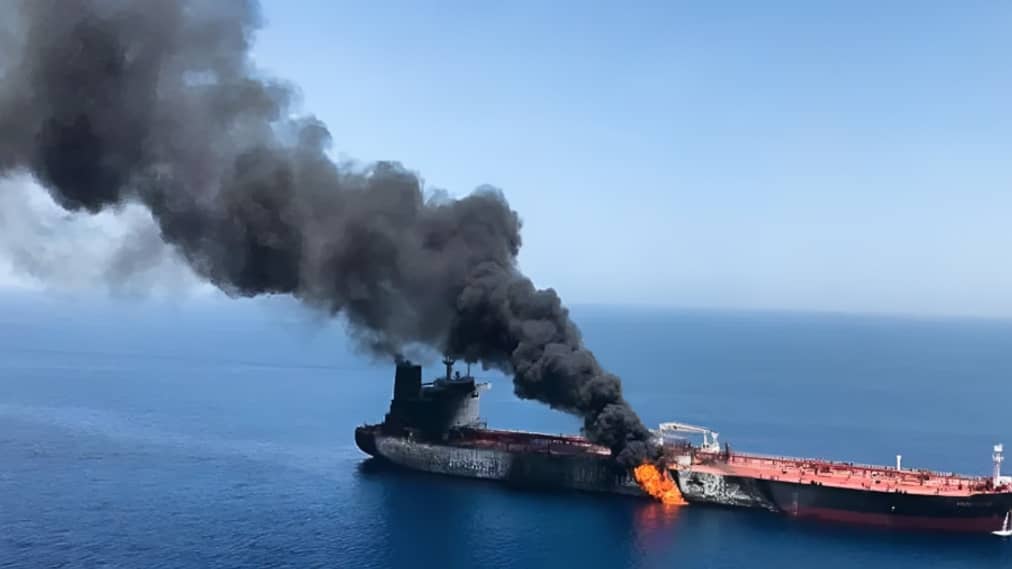
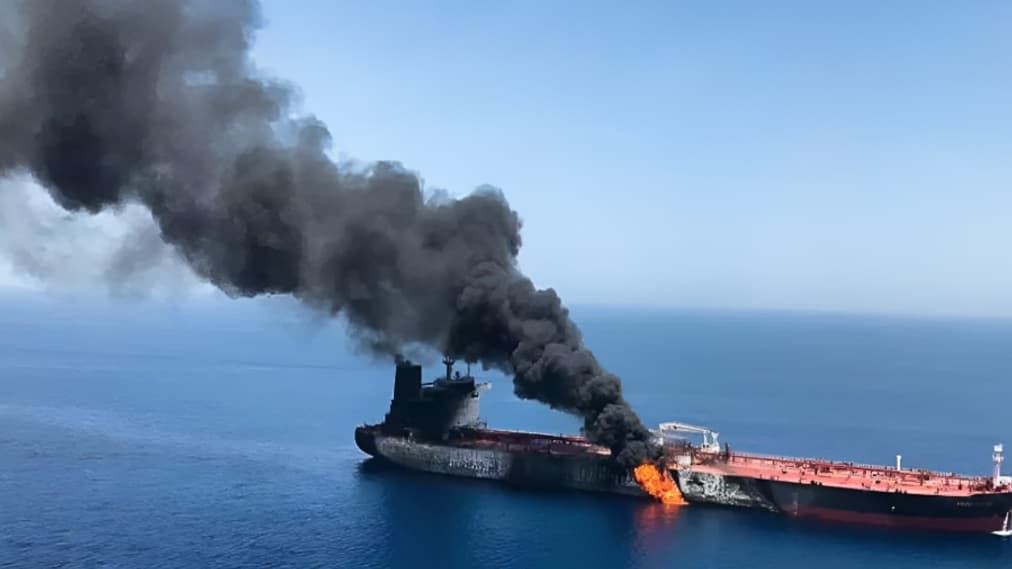
The United Kingdom Maritime Trade Operations, known as UKMTO, reported that a vessel had caught fire approximately 17 kilometres, or nine nautical miles, north of Khasab, Oman. According to the report, the master of another vessel had observed the ship on fire and informed the maritime monitoring agency.
The circumstances surrounding the incident were not immediately clear. At the time of the report, details about the identity of the vessel, the extent of the damage and the condition of its crew had not been confirmed. Although the incident was reported amid heightened tensions in the region, the available information did not establish the cause of the fire or confirm whether the vessel had been deliberately attacked.
The location is significant because the Strait of Hormuz is one of the world's most important maritime routes. It connects the Persian Gulf with the Gulf of Oman and the wider Arabian Sea. Commercial vessels use the passage to transport energy supplies and other goods between major international markets.
Any security incident in or near the strait can raise concerns among shipping companies, vessel operators, insurers and governments. Uncertainty over maritime safety can also lead to closer monitoring of shipping movements and increased attention to navigation warnings. However, the impact of a particular incident depends on its severity, the circumstances involved and any subsequent official instructions.
The reported fire also emerged against the backdrop of tensions involving the United States and Iran. According to the supplied report, contacts between the two countries were continuing through diplomatic channels, with discussions reportedly involving medical supplies and the reopening of the Strait of Hormuz. The precise terms, status and outcome of these discussions were not established in the available information.
Diplomatic engagement can be important during periods of military and regional uncertainty because it may provide channels for communication, humanitarian arrangements and efforts to reduce the risk of further escalation. Nevertheless, the existence of contacts does not necessarily indicate that an agreement has been reached or that tensions have eased.
At the same time, Israel's election produced an uncertain political picture. Preliminary exit poll projections reportedly showed Prime Minister Benjamin Netanyahu's coalition narrowly ahead but short of the parliamentary majority needed to govern independently. The figures were projections rather than final certified results, and the outcome remained subject to the counting process.
According to the report, approximately 400,000 double-envelope ballots were awaiting counting. These special ballots included votes cast by Israeli soldiers, personnel serving at diplomatic missions abroad and eligible voters who used special arrangements because they could not reach ordinary polling stations.
Israeli media reports cited in the supplied article indicated that around 30,000 of these ballots had been counted at that stage, with Likud securing a majority among the votes counted. The Central Elections Committee was reportedly expecting the process to be completed by midday. The final distribution of seats could depend on the remaining ballots, although the report suggested that the outstanding votes were unlikely to fundamentally alter the overall political picture.
Netanyahu claimed that the right-wing bloc had secured a decisive majority, while preliminary projections also suggested that Arab parties could win between 18 and 19 parliamentary seats. The reported turnout was described as reaching its highest level in nearly 30 years. These claims and figures require confirmation against official election data and final results.
The election outcome matters because Israel's parliamentary composition determines the formation of its government and influences the direction of domestic and foreign policy. If no bloc secures the necessary majority, political parties may need to negotiate with potential coalition partners. The final outcome therefore depends not only on the initial projections but also on the certified seat count and any subsequent coalition negotiations.
The supplied report also referred to continuing security developments elsewhere in the region. These included reports of Houthi missile activity, the interception of a missile by a Saudi-led coalition, disruptions to flights at Aden airport and Israeli strikes in Gaza and Lebanon. It also reported that Hezbollah opposed disarmament. The specific circumstances and latest status of these incidents were not fully detailed in the information provided.
Taken together, the developments illustrate the range of political, diplomatic and security issues affecting the Middle East. The reported vessel fire raises questions about maritime safety near a strategically important shipping route, while the Israeli election could influence the country's political leadership and policy direction. Meanwhile, diplomatic contacts involving Washington and Tehran remain relevant to efforts to manage regional tensions.
Further official updates will be needed to establish the cause of the vessel fire, confirm the condition of those on board, clarify the progress of US Iran discussions and determine Israel's final election results. Until those details are confirmed, preliminary projections and reports should be treated with caution.