Pakistan has issued an unusually large Notice to Air Missions restricting a significant stretch of its airspace, covering approximately 750 kilometres, during August 19 and 20. The development has attracted attention from defence observers because of the size of the restricted area and its location across parts of Punjab, Sindh and Balochistan.
A NOTAM is an official notification issued to alert aircraft operators and pilots about temporary changes, restrictions or hazards affecting flight operations. Such restrictions can be issued for a variety of reasons, including military exercises, weapons testing and other activities that could pose a risk to aircraft.
In this case, the Pakistani notification has not publicly identified the specific nature of the activity behind the restriction. Consequently, reports and defence observers have begun speculating about a possible missile or rocket test.
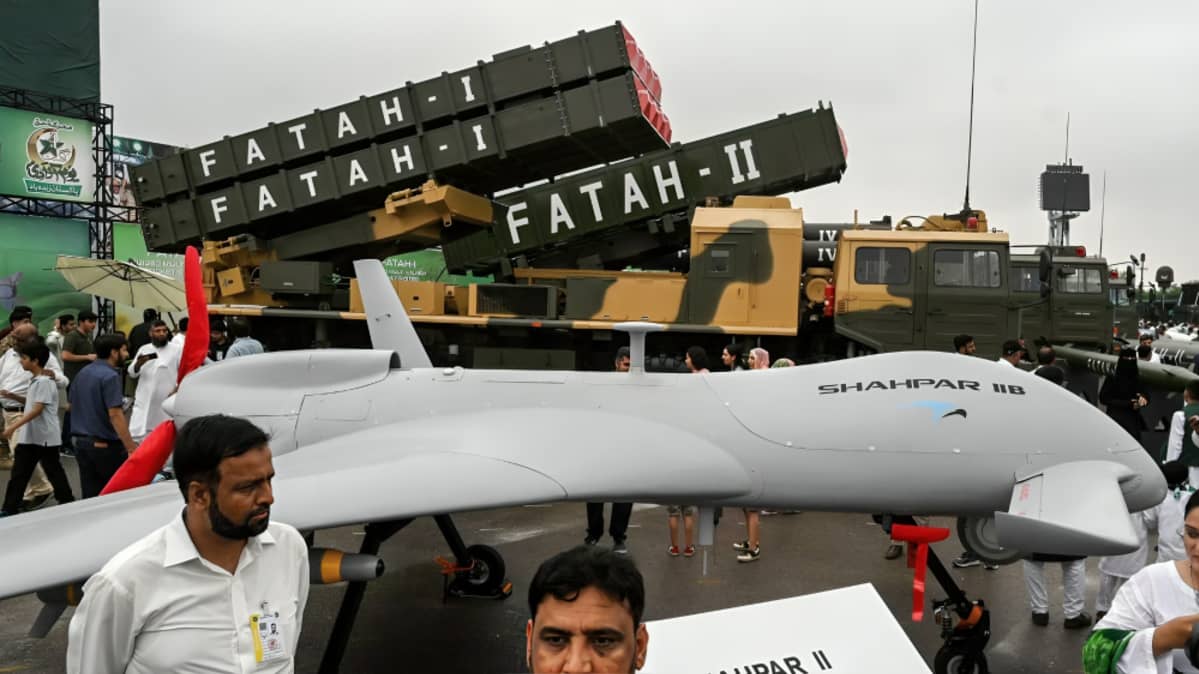
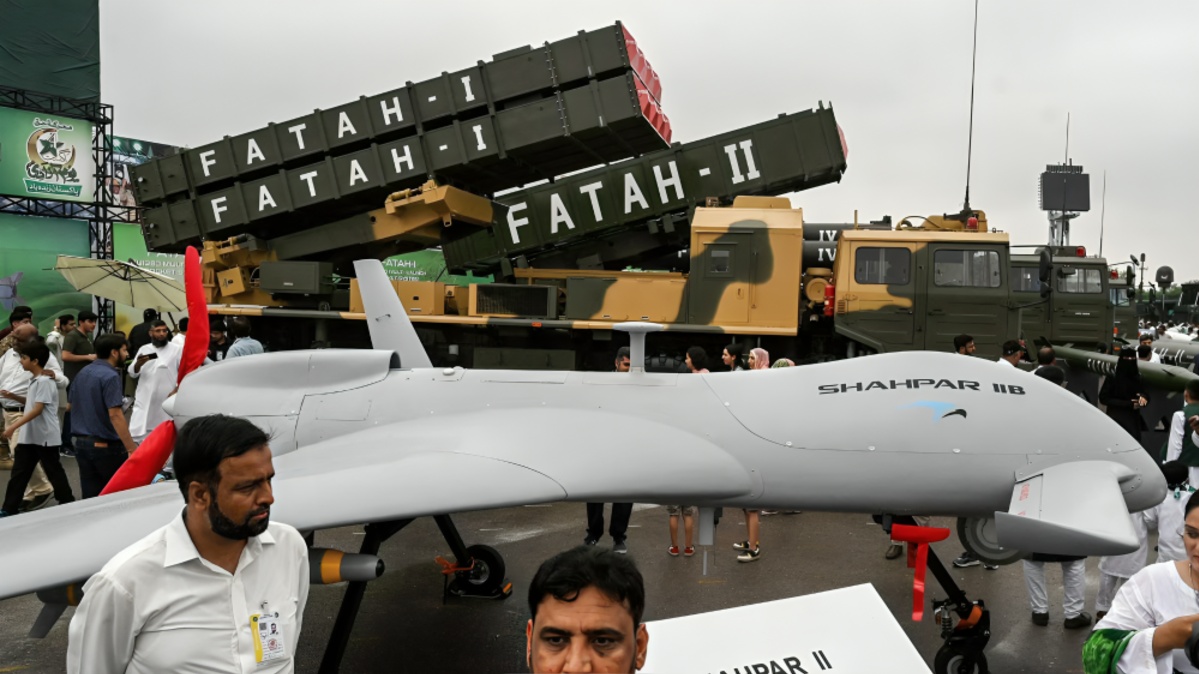
One of the systems attracting attention is Pakistan's Fatah missile family. In particular, speculation has focused on the Fatah 3, although there is no official confirmation that this particular system is scheduled for testing.
The development is also being closely watched because the restricted area reportedly includes territory near the Sonmiani Flight Test Range in Balochistan. Sonmiani has historically been associated with rocket and missile testing activities in Pakistan.
The unusually broad geographical area covered by the airspace restriction has therefore raised questions about whether Pakistan could be preparing for a significant military activity. However, the size of a restricted airspace area alone cannot establish what type of test or exercise may be taking place.
Defence reports have suggested that the activity could involve Pakistan's growing conventional precision strike capabilities. The Fatah family forms part of Pakistan's efforts to develop and deploy domestically produced guided strike systems.
Pakistan has publicly demonstrated the Fatah 1 and Fatah 2 systems in previous years. The Fatah 2, for example, was test fired in December 2023, with Pakistan describing it as a guided rocket system with a range of up to 400 kilometres.
The Fatah 3 has attracted additional attention because it has been described in recent reports as a newer supersonic cruise missile. Pakistan publicly revealed the system in May 2026, but detailed official specifications and a publicly confirmed flight test have remained limited.
According to a recent report, Pakistan's military displayed the Fatah 3 mounted on a road mobile launcher but did not announce a successful flight test at the time of its unveiling. This has contributed to speculation that a future test could be possible.
However, it is important to distinguish between reported speculation and confirmed information. The current airspace restriction does not itself confirm that Pakistan will test the Fatah 3.
The Fatah 3 is reportedly being developed as part of Pakistan's conventional precision strike capability. Open source assessments have described it as a potential supersonic cruise missile intended for land attack and anti ship missions. Pakistan has not publicly released a comprehensive set of specifications for the weapon.
The reported activity is also significant because it comes amid continued military competition between India and Pakistan. Both countries have been developing and testing increasingly sophisticated missile and defence systems.
Pakistan has been expanding its conventional strike capabilities through the Fatah family and other missile programmes. India, meanwhile, continues to develop a range of ballistic missiles, cruise missiles and advanced defence systems.
The two countries have also invested heavily in improving precision strike capabilities. Such developments have increased the importance of surveillance, early warning systems and air defence capabilities in the region.
The Sonmiani area has a long association with rocket testing. The Sonmiani Flight Test Range in Balochistan was established in 1961 and has historically been used for rocket launches and later military-related testing activities.
Its location near the Arabian Sea makes the surrounding area suitable for certain types of aerospace and missile testing. Temporary airspace and maritime restrictions can be used to create safety zones during such activities.
Nevertheless, the presence of an airspace restriction near a known test range does not necessarily mean that a particular missile is being tested. Military authorities can issue restrictions for different activities, including training, exercises and other operations.
The reported 750 kilometre restriction has nevertheless attracted considerable attention because of its unusually large geographical footprint.
Reports have also noted that the restricted area extends across multiple provinces and includes portions of Punjab, Sindh and Balochistan. Such a broad restriction can affect civilian aviation routes and therefore requires advance notification to aircraft operators.
The restriction reportedly applied on August 19 and 20. As of the available reports, there has been no official Pakistani announcement confirming a Fatah 3 launch associated with the notification.
This distinction is particularly important because defence-related reports can sometimes rely on satellite imagery, flight restrictions, social media observations and open source intelligence. These sources can provide useful indications but do not necessarily establish the purpose of a military activity.
The current development has therefore been described as speculation rather than a confirmed missile test.
Pakistan's Fatah programme has become an important part of its conventional strike modernisation. The Fatah 1 and Fatah 2 systems have already been publicly acknowledged, while newer variants have attracted attention because of their potential range and performance.
Pakistan has also established the Army Rocket Force Command to oversee elements of its missile and rocket capabilities. The development reflects Islamabad's increasing emphasis on precision strike and rapid-response capabilities.
The reported airspace restriction is therefore being examined in the broader context of Pakistan's missile modernisation programme.
India is also closely monitoring developments in Pakistan's missile capabilities because of the two countries' geographical proximity and long-standing security tensions.
Any major missile test in the region can attract international attention because India and Pakistan are both nuclear armed states. At the same time, the Fatah systems discussed in the current reports are generally described in the context of conventional precision strike capabilities.
The current situation also demonstrates the importance of NOTAMs in monitoring military activity. Temporary airspace restrictions can provide an indication that an exercise or test may be taking place, but they rarely reveal the complete nature of the activity.
Aviation authorities issue such notices primarily for flight safety. Military authorities may use restricted zones to ensure that civilian aircraft remain clear of areas where potentially hazardous activities could occur.
The 750 kilometre restriction has therefore generated questions because of its scale rather than because the notification explicitly identified a missile test.
Defence observers are particularly interested in whether Pakistan will make an official announcement regarding any test activity. If a missile test takes place, Pakistan's military would normally be expected to provide details through its official communication channels.
Until such confirmation is available, reports linking the restriction specifically to the Fatah 3 should be treated as unconfirmed.
The development nevertheless highlights the rapid evolution of missile technology in South Asia. Both India and Pakistan are working to improve the accuracy, range, mobility and survivability of their missile systems.
For Pakistan, the Fatah family represents an effort to strengthen conventional precision strike capabilities. For India, the development of missile defence, long-range strike systems and advanced surveillance remains an important part of its broader defence planning.
The two countries' missile programmes are closely followed by regional security analysts because developments in one country can influence defence planning in the other.
The current airspace restriction also comes amid wider security tensions in South Asia. Military activities and exercises can lead to temporary restrictions on civilian aviation routes, particularly when they involve missile or rocket testing.
Airlines and pilots rely on NOTAMs to avoid restricted zones and maintain safe flight operations.
If the reported restriction was related to a missile test, the large area could potentially reflect the anticipated flight path or safety requirements associated with the activity. However, this cannot be established without official information.
The possible involvement of Sonmiani has added to the speculation because of the range's historical role in Pakistan's aerospace and missile testing activities.
The Fatah 3 has also received attention because it represents a newer generation of Pakistan's precision strike systems. Public information about the weapon remains limited, meaning that many assessments about its range, speed and operational role remain subject to uncertainty.
Reports have described the Fatah 3 as a supersonic cruise missile, but Pakistan has not publicly provided all technical details. Therefore, claims regarding its exact performance should be treated cautiously.
The latest development is likely to remain under observation by regional defence analysts. Satellite imagery, aviation notices and official military announcements could provide additional information about any activity associated with the restricted airspace.
For now, the confirmed fact is that Pakistan issued a large airspace restriction covering roughly 750 kilometres for August 19 and 20. The reported connection to a Fatah 3 missile test remains speculation, with no official confirmation identified in the available reporting.
The incident highlights how military preparedness and missile development continue to influence aviation and security conditions in South Asia. Any confirmed missile test would likely attract further attention from neighbouring countries and international defence observers.
Until an official announcement is made, the most accurate description is that Pakistan's unusually large airspace restriction has triggered speculation about possible missile-related activity, rather than stating that a Fatah 3 test has definitely been conducted or scheduled.