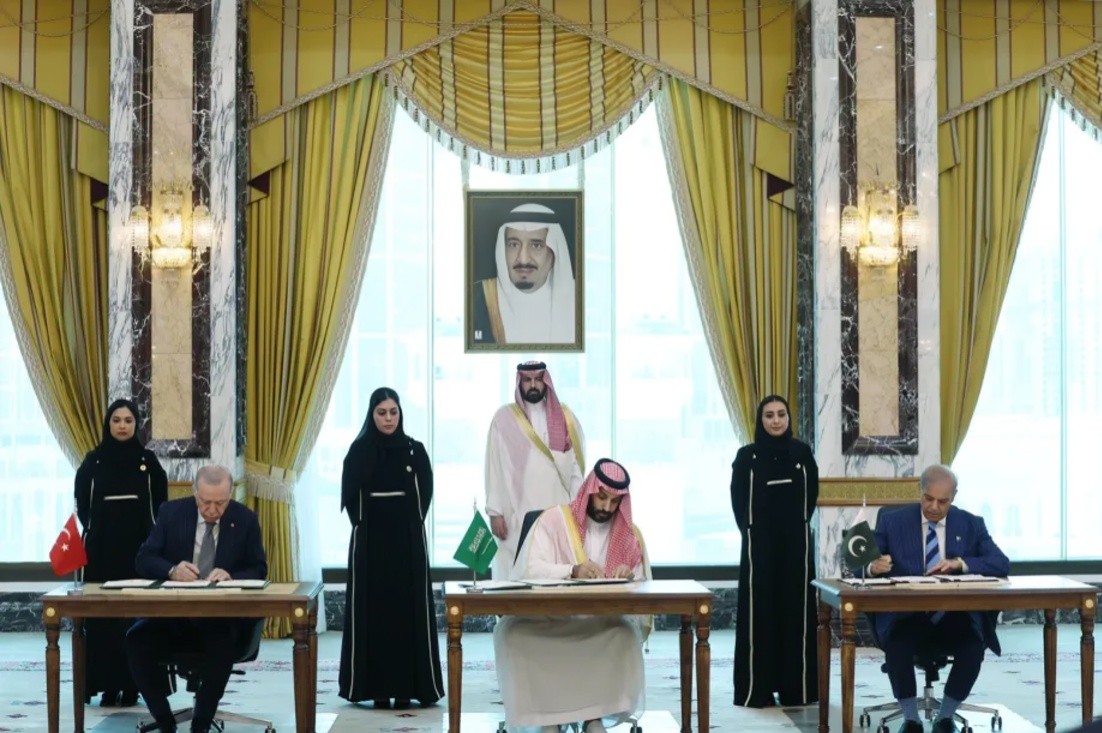
Saudi Arabia, Pakistan and Turkey are holding a key meeting in Riyadh under the Strategic Political and Defence Committee established by their Mecca Joint Defence Agreement. The meeting comes at a sensitive time as tensions involving Saudi Arabia, Yemen and the Houthi movement have intensified.
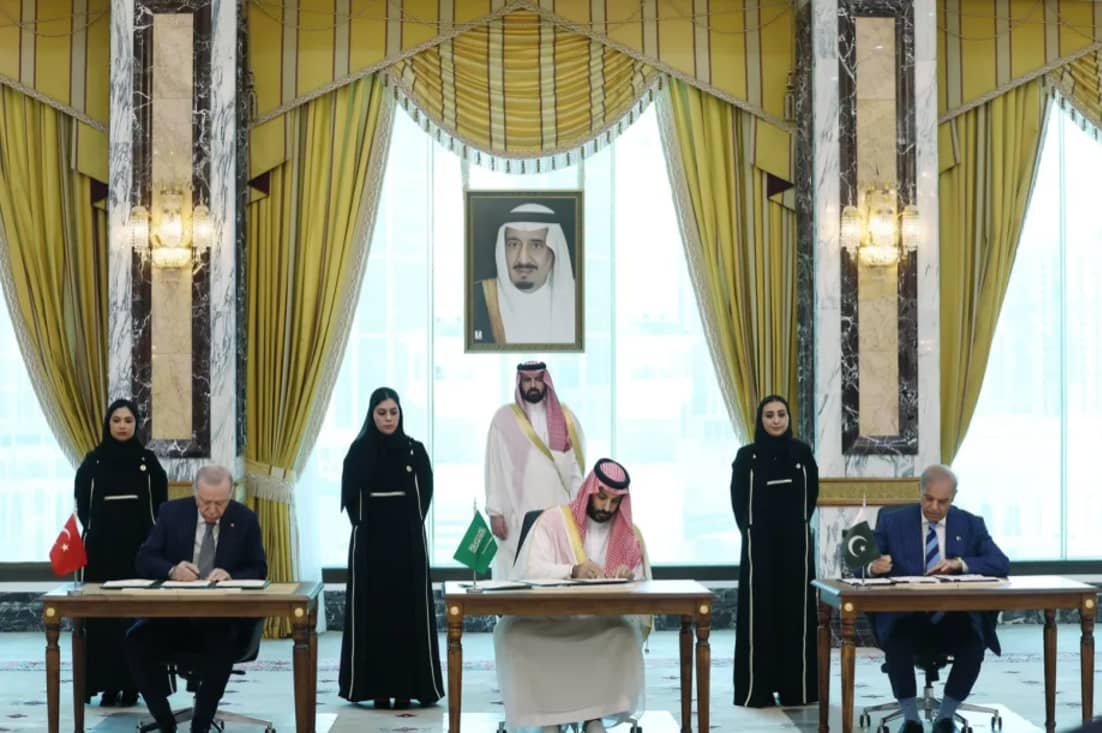
The three countries signed the Mecca Joint Defence Agreement on August 7, 2026. The agreement establishes a framework for collective security and defence cooperation, including a provision that an armed attack against one member would be regarded as an attack against all three members.
The Riyadh meeting is focused on recent developments in the region and the progress made in institutionalising the alliance. The Turkish Foreign Ministry confirmed that Foreign Minister Hakan Fidan, Defence Minister Yasar Guler and Chief of the General Staff General Selcuk Bayraktaroglu are participating in the meeting along with officials from Saudi Arabia and Pakistan.
Pakistan's delegation includes Deputy Prime Minister and Foreign Minister Ishaq Dar, Defence Minister Khawaja Asif and Chief of Defence Forces and Army Chief Field Marshal Asim Munir. Saudi and Turkish foreign and defence ministers and military chiefs are also taking part.
The meeting is taking place against the backdrop of growing tensions involving the Iran aligned Houthi movement in Yemen. Yemen's internationally recognised government announced a major military campaign aimed at retaking territory controlled by the Houthis.
The escalation has increased pressure on Saudi Arabia, which has reported repeated Houthi attacks involving missiles and drones. The attacks have also raised concerns about the security of Saudi infrastructure and important regional shipping routes.
The Houthi issue is expected to be one of the main subjects discussed by the three member states. Pakistan's Foreign Minister Ishaq Dar previously said Iran had suggested exploring political engagement with the Houthis. Dar said the proposal was not a formal written offer but rather an idea discussed between officials. The possibility of pursuing political engagement is expected to be considered alongside other options at the Riyadh meeting.
Dar has also said that Iran's President Masoud Pezeshkian and Foreign Minister Abbas Araqchi want the issue resolved. According to Dar, Tehran has sought to distance itself from the Houthis and Iraqi militias. These statements reflect Pakistan's account of diplomatic discussions and do not establish that Iran has formally agreed to a new settlement with the Houthis.
The political proposal is significant because the Mecca defence agreement is being tested at an early stage. The agreement was created only recently, and the three countries are still developing the institutions and mechanisms required to implement it.
The first meeting of the Strategic Political and Defence Committee was held in Istanbul on August 31. Officials discussed the institutional structure of the alliance and technical arrangements, including plans to establish a secretariat in Riyadh. A Pakistani retired lieutenant general, Nauman Mahmood, was nominated to serve as the alliance's first secretary general.
The military chiefs of the three countries subsequently met in Riyadh on September 25. The meeting came as concerns over Houthi attacks against Saudi Arabia were growing.
The three countries have also continued diplomatic coordination. Their foreign ministers met in New York on September 24 on the sidelines of the United Nations General Assembly. According to Turkey's Foreign Ministry, the ministers discussed regional developments and cooperation under the defence agreement.
Turkey has indicated that it is prepared to support Saudi Arabia within the framework of the defence agreement. Turkish Foreign Minister Hakan Fidan previously said Saudi Arabia could have military requirements because of the Houthi attacks and that Turkey was prepared to help with certain technical needs.
Pakistan has also expressed support for Saudi Arabia's security. Defence Minister Khawaja Asif recently said Pakistan would defend Saudi Arabia under the commitments of the agreement, although he did not confirm specific military operations or whether Riyadh had formally requested Pakistani forces.
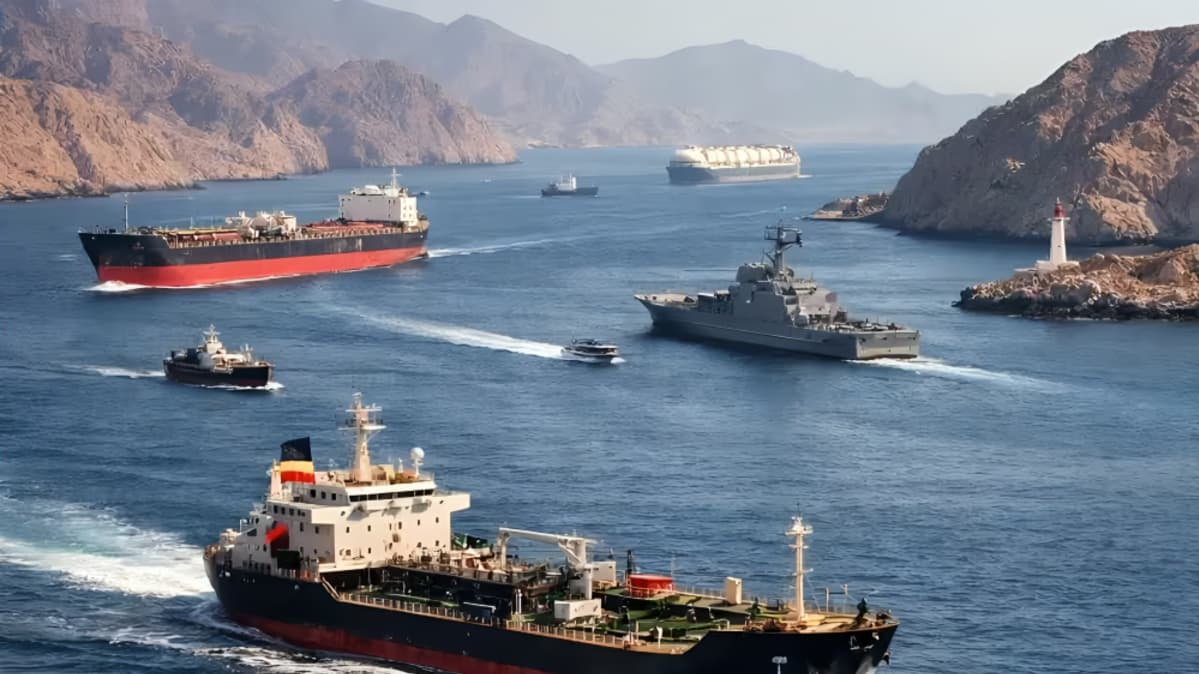
The situation is complicated by the wider regional conflict. The Houthi escalation has implications beyond Yemen and Saudi Arabia because attacks on shipping can affect important international trade routes.
The Bab el Mandeb Strait, which connects the Red Sea with the Gulf of Aden, is a particularly important maritime passage. Any prolonged insecurity in the area can force shipping companies to reconsider routes and increase transportation and insurance costs.
Saudi Arabia is also concerned about the protection of its civilian and economic infrastructure. Houthi attacks have previously targeted areas associated with energy infrastructure and other strategic locations.
The Mecca defence agreement therefore has both a military and political dimension. While the pact promises collective security, the three countries must still determine how the alliance will operate in practice, including decision making, military coordination and responses to specific threats.
The Riyadh meeting could provide an indication of how quickly the alliance can develop a coordinated response to a regional security crisis. However, the meeting itself does not automatically mean that the three countries will launch joint military action against the Houthis.
The inclusion of a possible political engagement with the Houthis also shows that diplomacy remains part of the discussion. Pakistan has presented the Iranian suggestion as a possible alternative to further military escalation. Whether such an approach can produce concrete results remains uncertain.
For Saudi Arabia, the immediate priority is protecting its territory and infrastructure from further attacks. For Pakistan and Turkey, the meeting provides an opportunity to demonstrate their commitment to the defence agreement while also assessing the wider consequences of further escalation.
The three countries have repeatedly emphasised regional stability and collective security. Turkey's Foreign Ministry has also said that resolving regional disputes through peaceful means remains a priority and that actions that could further increase tensions should be avoided.
The Riyadh meeting is therefore taking place at a critical stage for the newly formed alliance. The partners are simultaneously building the alliance's institutions, responding to an active regional security challenge and considering diplomatic options.
The outcome could influence how the Mecca Joint Defence Agreement develops in the coming months. If the members establish effective coordination mechanisms, the pact could become an important component of their regional security policies. At the same time, any decision involving military action would carry wider consequences for the Middle East.
For now, the focus remains on reviewing the latest developments, strengthening cooperation between the three countries and assessing possible responses to the Houthi threat.
The Riyadh discussions are expected to demonstrate whether the newly established defence arrangement can move quickly from an agreement on paper to a functioning regional security framework while keeping diplomatic channels open.