

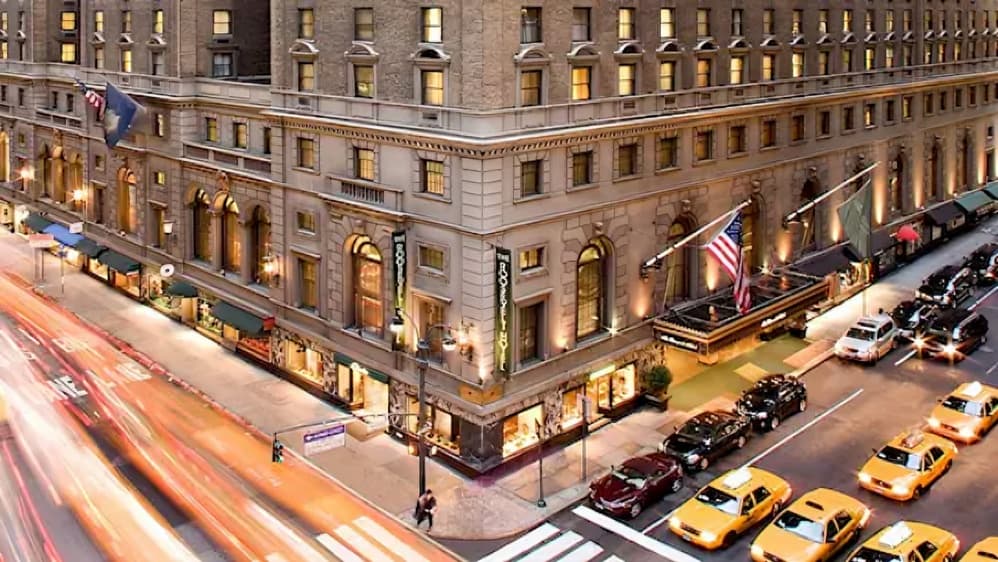
Pakistan is pursuing a valuation of at least $1 billion for the Roosevelt Hotel in New York as it seeks a redevelopment partner instead of conducting an outright sale of the property, according to senior government officials. The hotel, located in one of Manhattan’s most valuable commercial districts, is viewed as one of Pakistan’s most significant overseas assets and is central to Islamabad’s ongoing efforts to monetise state holdings under a broader privatisation strategy.
The Roosevelt Hotel, named after former United States President Theodore Roosevelt, is a century-old property in Midtown Manhattan that Pakistan International Airlines (PIA) acquired in 2000. With over 1,000 rooms, the hotel has historically generated revenue for the airline, but mounting operational losses led to its closure in 2020. Since then, it has remained unused for regular hotel operations and was briefly used as a migrant shelter under a lease agreement with New York City authorities.
As part of its privatisation push supported by a $7 billion Extended Fund Facility with the International Monetary Fund, the Pakistani government approved a transaction structure for the Roosevelt Hotel that stops short of a full sale. Instead, Islamabad plans to retain ownership and equity in the property while seeking a joint venture partner to participate in its redevelopment. The government has appointed global real estate firm Jones Lang LaSalle (JLL) to oversee the partner selection process, which is expected to span six to nine months.
Officials familiar with the confidential process said Pakistan hopes to unlock value far beyond the $1 billion benchmark by repositioning the site for mixed-use development. The 42,000-square-foot parcel, situated near landmarks such as Grand Central Terminal, Times Square and Fifth Avenue, is considered prime real estate with potential for residential, office and retail space developments that could attract substantial long-term investment.
A senior Pakistani official told Reuters that the interest level among prospective global developers and investors has been “extremely high” due to the strategic location and long-term commercial appeal of the property. Under the proposed model, Pakistan would bring in an initial payment — estimated at around $100 million by June 2026 — while planning major redevelopment over four to five years. This strategy aims to generate significant foreign investment and reduce the financial burden of maintaining an unproductive asset.
The Roosevelt Hotel’s redevelopment plan aligns with Islamabad’s broader economic objectives, which include strengthening foreign exchange reserves and fulfilling fiscal targets agreed under IMF programmes. Monetising high-value assets like the Roosevelt has become a priority for the government as it seeks to improve its external finances without triggering domestic economic disruption.
Despite its current non-operational status, the Roosevelt Hotel remains a valuable symbol in global real estate, and Pakistan’s strategy to reposition the asset through a joint venture reflects its effort to maximise return while retaining a stake in future profits. The redevelopment initiative could prove to be a significant milestone in Pakistan’s state privatisation efforts and international investment engagement


