
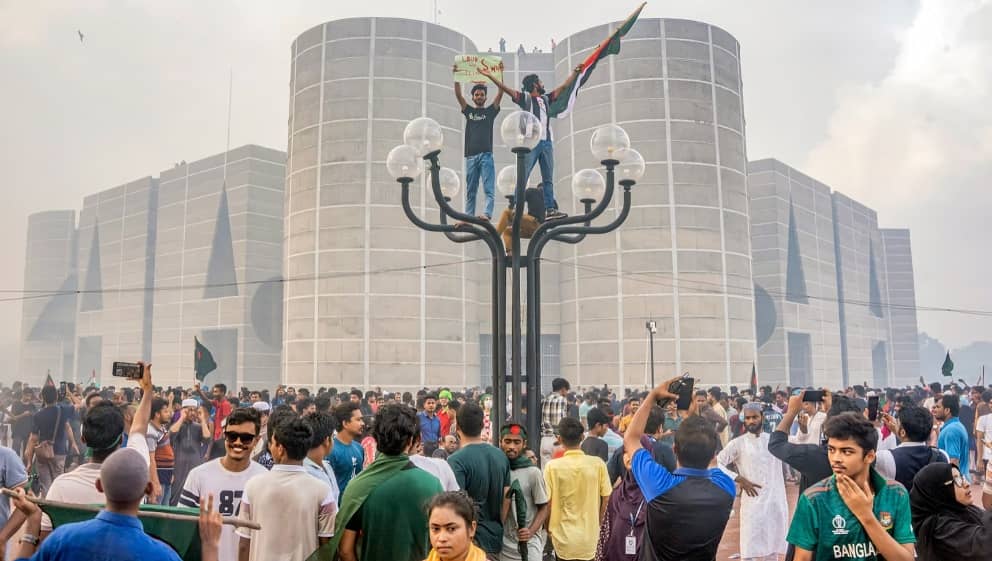
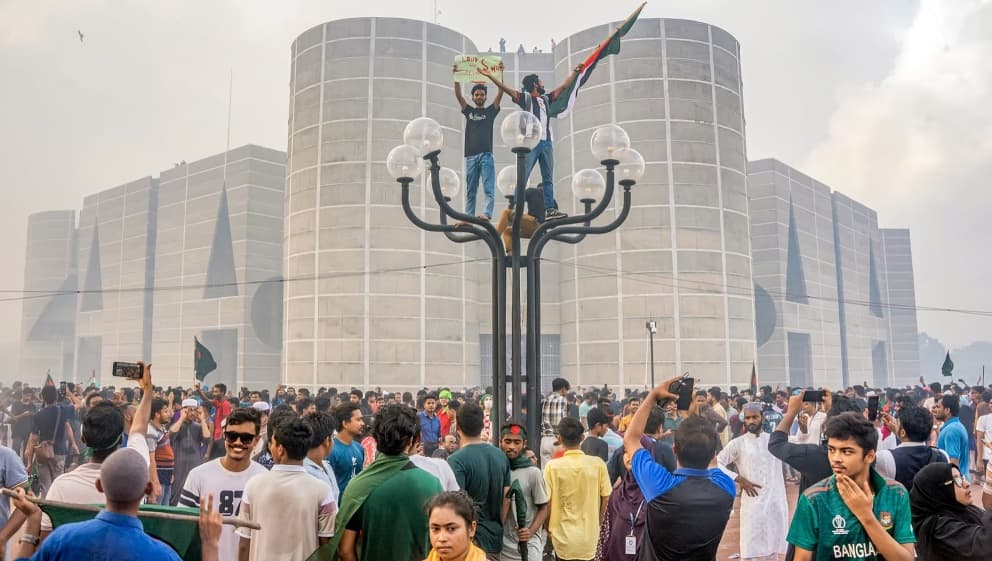
Bangladesh is facing a period of heightened political instability following violent protests linked to the killing of youth leader Sharif Osman Hadi. The incident has triggered widespread demonstrations, escalating tensions across several parts of the country and raising concerns about law and order ahead of crucial national elections. The unrest has also drawn close attention in India, given the deep strategic and security ties between the two neighbours.
India and Bangladesh share a long and sensitive border, extensive trade relations, and cooperation on security, water sharing, and connectivity projects. Any prolonged instability in Bangladesh has the potential to directly impact India’s strategic interests, particularly in eastern and northeastern regions. Analysts note that political uncertainty in Dhaka could strain existing bilateral mechanisms that rely on stable governance and coordinated policymaking.
One of India’s primary concerns relates to border security. Political unrest can weaken administrative control, increasing the risk of cross border crime, illegal migration, and the movement of extremist elements. Over the past decade, cooperation between Indian and Bangladeshi security agencies has significantly reduced insurgent activity in India’s northeast. A breakdown in this cooperation could reverse some of those gains.
There are also concerns about the potential resurgence of radical groups during periods of political instability. Experts point out that internal unrest can create space for extremist ideologies to spread, particularly if governance structures become distracted or weakened. This remains a sensitive issue for India, which has consistently emphasised the importance of counter extremism collaboration with Dhaka.
Economically, Bangladesh is one of India’s key trading partners in South Asia. Instability could disrupt supply chains, cross border trade, and infrastructure projects that aim to improve regional connectivity. India has invested in several development initiatives in Bangladesh, including rail, road, and energy projects, all of which depend on political continuity and administrative stability.
The evolving political situation also raises questions about Bangladesh’s future foreign policy orientation. Observers suggest that prolonged unrest could lead to shifts in regional alignments, with implications for India’s strategic position in South Asia. New Delhi has traditionally maintained close ties with Dhaka, viewing Bangladesh as a vital partner in maintaining regional balance and cooperation.
Diplomatic sources indicate that India is monitoring developments closely while maintaining a cautious and non intrusive approach. India has historically supported democratic processes and stability in Bangladesh, emphasising dialogue and peaceful resolution of political disputes.
As Bangladesh approaches its next electoral phase, the trajectory of the current unrest will be critical. For India, a stable and cooperative Bangladesh remains essential for regional security, economic integration, and long term strategic interests. Any widening political distance between New Delhi and Dhaka could have lasting consequences for South Asian geopolitics.


