
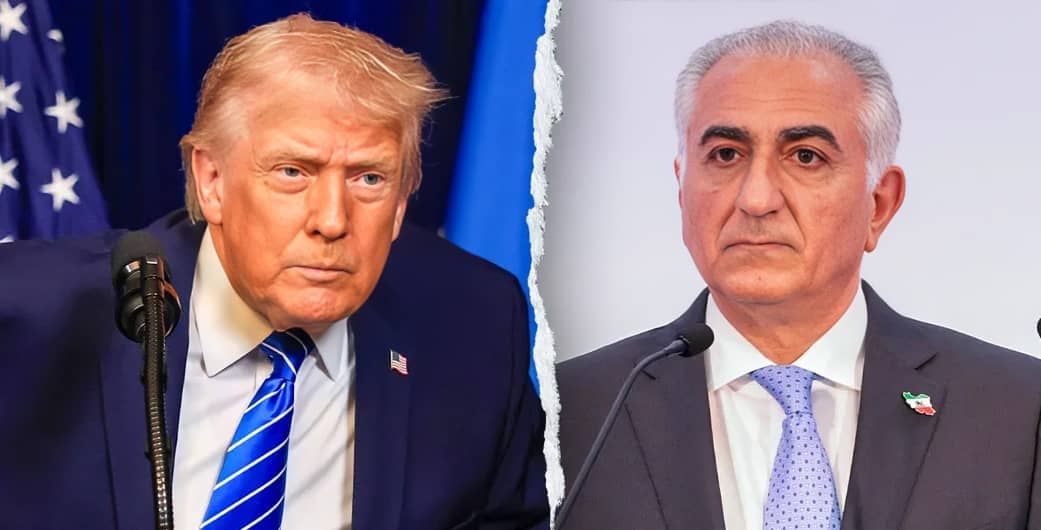
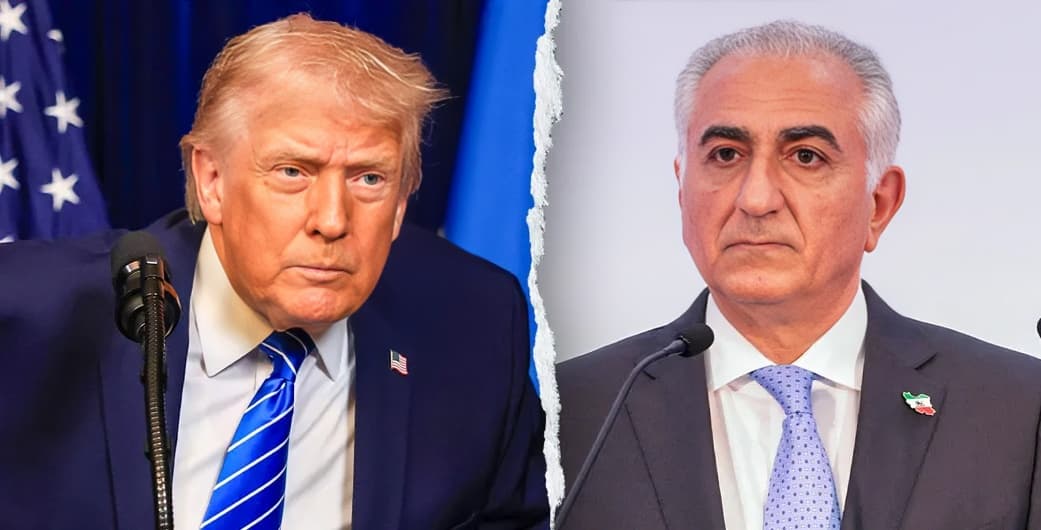
In the aftermath of the US-Israel operation that resulted in the death of Iran’s Supreme Leader Ayatollah Ali Khamenei, former US President Donald Trump addressed the question of Iran’s future leadership, commenting on exiled royal Reza Pahlavi. While acknowledging Pahlavi’s public appeal, Trump emphasized that Washington would prefer a successor emerging from within Iran, someone with domestic credibility and broad support among the Iranian population.
Trump described Reza Pahlavi as a “very nice person” but noted that the challenges of governing a complex nation like Iran would require a leader grounded in the country’s political, social, and cultural realities. “Some people like him, and we haven’t been thinking too much about that,” Trump said, adding, “It would seem to me that somebody from within maybe would be more appropriate.” These comments underline US caution regarding direct endorsement of an exiled figure whose legitimacy may be questioned domestically.
Reza Pahlavi, son of the late Shah of Iran, has lived in exile since the 1979 Iranian Revolution and has maintained a high international profile, advocating for human rights and political reform in Iran. Supporters abroad see him as a symbol of democratic aspirations, but his decades outside the country make his potential leadership controversial within Iran. Analysts note that Pahlavi’s international recognition could influence external diplomatic dynamics, but domestic legitimacy is crucial for stability and governance.
Trump’s remarks also reflect US concerns about the emergence of another hardline leader in Tehran. By prioritizing a domestic successor, Washington signals a preference for continuity in engagement with Iran that balances reformist or moderate elements while avoiding unpredictable extremism. The comments come amid heightened Middle East tensions, with ongoing military operations and the potential for wider regional escalation.
The succession question is complex, with factions in Iran competing for influence, including conservative clerics, reformist elements, and technocratic leaders. Trump’s cautious stance suggests that the US intends to monitor developments carefully, recognizing that premature support for any candidate could backfire. The emphasis on an internal leader demonstrates an awareness of Iran’s domestic political landscape and the need to avoid interventions that lack local legitimacy.
International observers have pointed out that the death of Khamenei opens an unprecedented power vacuum in Iran, which could have significant geopolitical repercussions. Neighboring countries, global powers, and regional alliances will closely watch who rises to fill the leadership gap. While Pahlavi remains a symbolic figure for reformists and the Iranian diaspora, the realpolitik of Iran’s succession will likely favor someone embedded in the country’s political institutions.
Trump’s comments thus provide insight into US strategic thinking: acknowledging external figures like Pahlavi without committing to their leadership, while signaling support for a domestically legitimate successor. This approach reflects the delicate balance of promoting stability, minimizing regional conflict, and preparing for potential shifts in Iran’s internal power dynamics.


