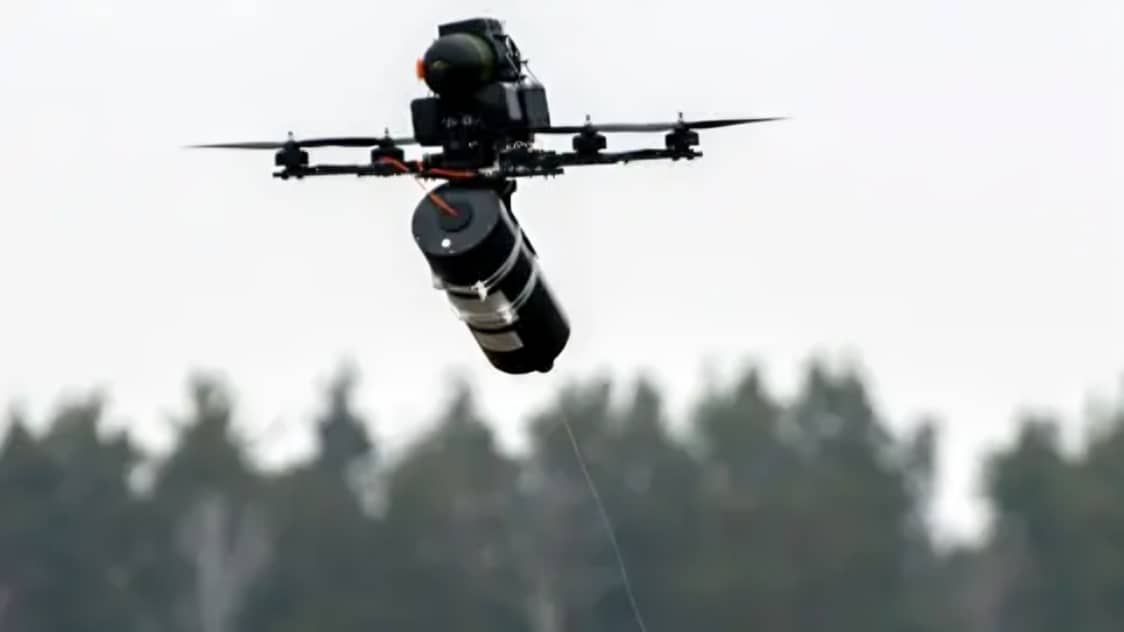
The ongoing Russia Ukraine war is continuing to demonstrate how unmanned systems are changing modern warfare, particularly in the maritime domain. Russian naval and commercial vessels are increasingly being equipped with improvised protective structures as Moscow seeks to reduce the risk posed by Ukrainian drone attacks.
Recent reports indicate that anti drone nets, metal cages and other temporary structures are being installed on vessels operating in and around the Black Sea. Some ships have also been seen carrying unusual protective equipment, reflecting the growing concern over attacks by unmanned aerial and maritime systems.
The measures are particularly notable because similar improvised protection was initially associated with military vehicles operating on land. Metal cages and mesh structures became common on armoured vehicles during the war as Russian and Ukrainian forces attempted to protect equipment from small drones.
The same concept is now increasingly being adapted for maritime use. Nets and protective frames can provide an additional physical barrier around vulnerable parts of vessels. They are not a complete defence system, but they represent a relatively simple method of attempting to reduce the effectiveness of drone attacks.
Reports have also described protective structures being installed on Russian naval assets. Satellite imagery has indicated that Russia has been adapting the defences around submarines and other vessels at the Novorossiysk naval base on the Black Sea. These measures are believed to be intended to reduce the vulnerability of vessels to drone attacks.
The developments come as Ukraine has increasingly relied on unmanned systems to challenge Russian naval and maritime infrastructure. Ukrainian drone units have targeted Russian vessels and other maritime assets in the Black Sea and Sea of Azov. Reuters reported in July that Ukrainian drone units had attacked a large number of Russian maritime targets as part of a campaign aimed at disrupting Russian logistics and operations.
The threat is not limited to military ships. Commercial and oil carrying vessels linked to Russian maritime activity have also faced increased security concerns. Recent reports have shown tankers travelling with extensive netting and other improvised protection. One tanker photographed in the region had its superstructure covered with netting as crews sought protection from potential drone strikes.
The situation has also created wider concerns for maritime trade. The Black Sea is an important route for the transportation of oil, grain and other commodities. Any increase in the perceived risk to commercial vessels can affect shipping decisions, insurance costs and the movement of goods.
The impact has been particularly significant around major Russian ports. Novorossiysk serves both as an important commercial export centre and as a base for Russian naval forces. Ukrainian attacks in the area have demonstrated that maritime facilities can face threats from multiple directions.
Russia's response illustrates the changing nature of naval defence. Traditional warships rely on sophisticated radar, electronic warfare systems, air defence weapons and other specialised technologies. However, the increasing use of relatively inexpensive drones has encouraged operators to supplement these systems with simpler physical protection.
The effectiveness of improvised defences remains difficult to assess independently. Nets and cages may provide additional protection in some circumstances, but they cannot eliminate the threat posed by modern drones. Their presence instead demonstrates the extent to which drone warfare is forcing military planners and commercial operators to rethink vessel protection.
The developments also underline the growing importance of unmanned technology in the conflict. Both Ukraine and Russia have expanded their use of drones, with unmanned systems increasingly playing roles in surveillance, reconnaissance, attacks and defence.
As the conflict continues, naval vessels, commercial ships and port facilities are likely to remain important targets and strategic assets. The appearance of improvised anti drone structures on Russian vessels therefore represents more than a temporary modification. It reflects a broader adaptation to a battlefield in which relatively small unmanned systems can pose serious challenges to much larger and more expensive platforms.
The Russia Ukraine conflict has consequently become an important example of how drone technology is reshaping military operations at sea, with traditional naval forces increasingly required to adapt to a rapidly changing threat environment.