

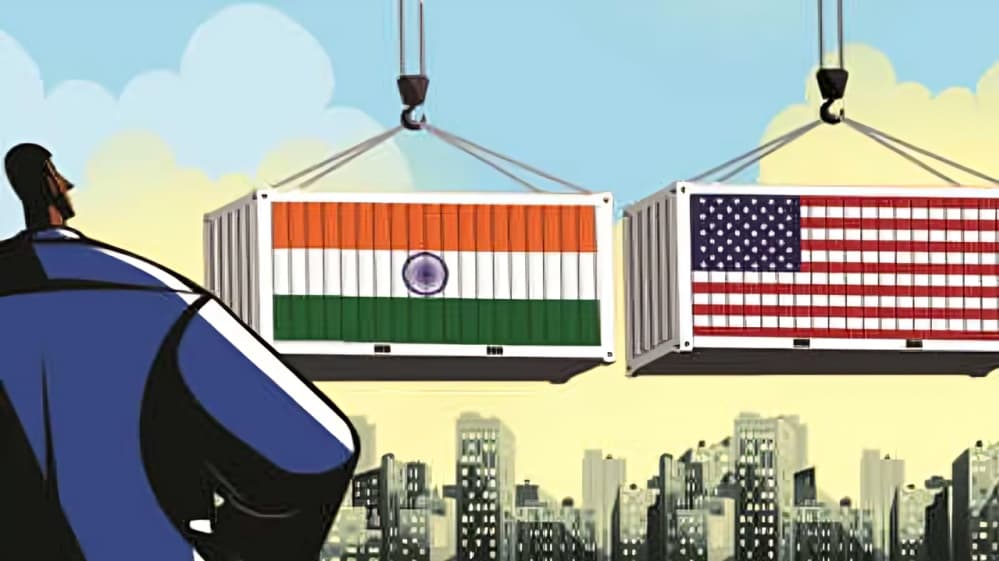
US Deputy Secretary of State Christopher Landau emphasised that the United States will not give India the same kind of strategic and economic leverage that was extended to China in the past, a decision that eventually contributed to China’s emergence as a major global competitor. Speaking at the Raisina Dialogue on Geopolitics and Geoeconomics, Landau underlined that Washington is keen to engage with India while carefully balancing strategic interests to ensure that the partnership benefits both countries without repeating previous policy missteps.
Landau’s remarks come at a critical time as India and the United States are finalising negotiations on a bilateral trade agreement. The deal, which was first announced last month, aims to strengthen economic ties, expand market access, and enhance collaboration in sectors such as technology, defence, energy, and infrastructure. The US seeks to leverage India’s growing economy and innovation potential while avoiding policy errors that contributed to China’s rapid rise as a global competitor over the last two decades.
The Deputy Secretary of State said, “The United States wants to unlock India’s limitless potential, but we are careful not to make the same mistakes we made with China.” He added that while India has enormous capabilities and strategic importance, Washington’s engagement is being designed to encourage growth and cooperation without unintentionally creating geopolitical competition that could work against US interests.
Landau’s comments also reflect the broader geopolitical context in which India-US relations are evolving. India is increasingly positioned as a key partner in the Indo-Pacific region, and cooperation in trade and defence is expected to strengthen strategic ties. At the same time, the United States is mindful of lessons learned from its relationship with China, particularly in areas such as technology transfer, trade agreements, and industrial growth policies, which inadvertently contributed to China’s rise as a global competitor.
Officials note that the forthcoming trade agreement could include measures to enhance investment opportunities, reduce barriers to trade, and promote collaboration in high-tech sectors, while maintaining strategic safeguards. Analysts say the agreement is likely to balance economic gains with national security concerns and could serve as a blueprint for managing future partnerships with other emerging economies.
India, on its part, is expected to leverage the deal to boost exports, attract investment, and strengthen technological and industrial capabilities. Indian officials have repeatedly emphasised the country’s strategic autonomy and intent to pursue trade and defence partnerships that align with national interests while maintaining independence in decision-making.
As India-US discussions move forward, Landau’s statement highlights the careful balancing act that both nations are attempting: promoting cooperation, unlocking economic potential, and ensuring that lessons from past global engagements are considered. The final agreement is expected to set the stage for a deeper, long-term partnership that is mutually beneficial while being mindful of global strategic dynamics.


