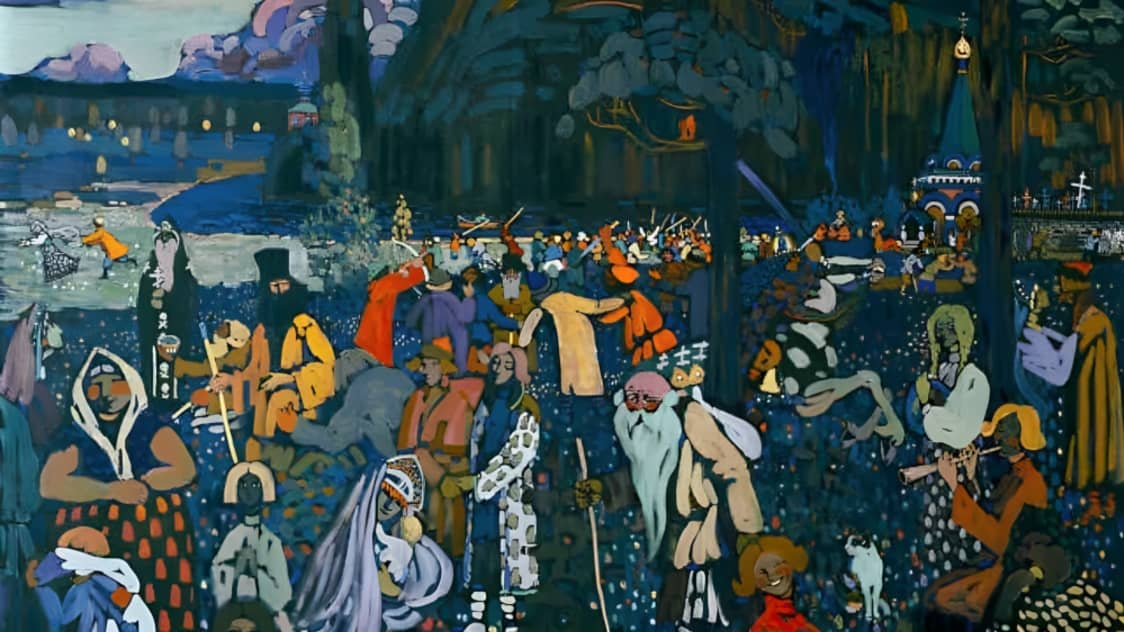
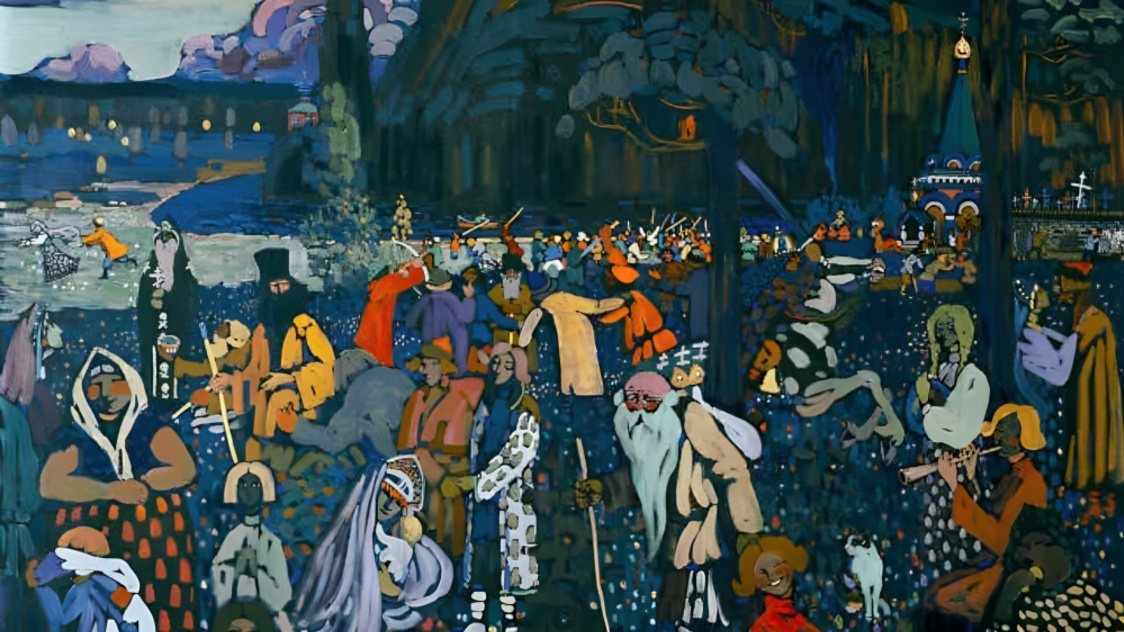
A painting by Russian artist Wassily Kandinsky, which was sold during the Nazi occupation of the Netherlands in 1940 and later returned to the heirs of its former Jewish owners, has fetched £31.56 million at an auction in London.
The painting, titled Das bunte Leben, meaning The Colorful Life, was created in Paris in March 1907. It achieved the highest price among the works featured in Christie’s London evening sales on October 14, 2026. The final price included the buyer’s premium and was reported at approximately 42 million US dollars.
The sale marks another significant development in the history of artworks displaced during the Second World War. The painting had belonged to a Dutch Jewish family before being sold in Amsterdam under circumstances that later became the subject of a prolonged restitution dispute.
The artwork was returned to the family’s heirs in June 2023 following a recommendation by a German advisory commission examining cultural property lost as a result of Nazi persecution.
The Painting’s Original Owners
Das bunte Leben was part of the art collection of Emanuel Albert Lewenstein and his wife, Hedwig Lewenstein-Weyermann, a Jewish couple who lived in Amsterdam. The family acquired the painting in November 1927, and it became part of their collection of modern European art.
The painting was deposited at the Stedelijk Museum in Amsterdam for safekeeping in 1933. After the deaths of Emanuel and Hedwig, the artwork passed to their children, Robert and Wilhelmine Lewenstein.
Their family history became closely connected to the wider persecution of Jewish communities in Europe during the Nazi era. Germany invaded the Netherlands in May 1940, and the occupation authorities introduced measures that stripped Jewish residents of rights and property.
In October 1940, the Kandinsky painting was included in an Amsterdam auction. The precise circumstances surrounding the sale and the question of whether the family had freely authorised it remained disputed for decades.
The artwork was acquired at the auction by Salomon Bernhard Slijper. In 1972, it was purchased by Bayerische Landesbank, a German state-owned bank, and subsequently loaned to the Lenbachhaus museum in Munich, where it remained on display for many years.
Decades of Disputed Ownership
The Lewenstein family’s heirs pursued the painting’s return after questions arose over the circumstances in which it had left the family’s collection. The dispute reflected a broader challenge faced by descendants of Jewish families seeking to recover artworks sold, confiscated or transferred during the Nazi period.
Establishing the history of an artwork, known as provenance research, involves examining ownership records, auction catalogues, museum documentation and other historical evidence. In cases involving Nazi-era transactions, researchers must also consider whether the owners were able to make decisions freely under the conditions of persecution.
The Lewenstein heirs sought restitution through legal and advisory processes. Their claim focused on the 1940 sale, which took place only months after Nazi Germany occupied the Netherlands.
In June 2023, Germany’s Advisory Commission on the return of cultural property seized as a result of Nazi persecution recommended that Bayerische Landesbank return Das bunte Leben to the heirs of Hedwig Lewenstein-Weyermann and Irma Lewenstein Klein.
The commission considered the historical context of the sale and concluded that there were substantial grounds to regard the loss as connected to Nazi persecution. The painting was subsequently returned to the family’s heirs in June 2023, ending a dispute that had lasted for decades.
Artistic Importance of The Colorful Life
Created in Paris in 1907, The Colorful Life is regarded as an important work from Kandinsky’s early artistic development. The painting combines vivid colours, expressive figures and a dreamlike composition influenced by Russian cultural traditions and the artistic movements he encountered in Europe.
The large canvas depicts a collection of figures and scenes arranged within a richly coloured landscape. Its imagery includes elements associated with folklore, religious themes and everyday life.
Kandinsky later became one of the leading figures in the development of abstract art. His experiments with colour, form and visual expression helped shape modern painting in the early twentieth century.
The 1907 painting offers insight into a period when the artist was exploring ways to move beyond conventional representation. Although it retains recognisable figures and narrative elements, its colour and composition suggest the direction of his later work.
The painting’s historical importance is therefore connected to both its artistic qualities and its journey through successive owners, institutions and restitution proceedings.
Record Auction Result in London
Christie’s offered the painting during its London evening sale on October 14, 2026. It achieved £31.56 million after several minutes of bidding and became the highest-value lot sold during that evening’s auction.
The result exceeded the painting’s pre-sale estimate of £18 million to £25 million. The final figure included fees paid by the buyer. The identity of the successful purchaser has not been publicly disclosed.
The sale also drew attention to the market for significant artworks with complex ownership histories. Restituted paintings can attract considerable interest because of their artistic importance, rarity and documented historical background.
However, the result did not establish a new auction record for Kandinsky. Another painting by the artist, Murnau mit Kirche II, sold for approximately £37.2 million at Sotheby’s in London in 2023.
The latest sale demonstrates the substantial financial value attached to major works of modern art, while also highlighting the importance of resolving ownership disputes linked to wartime persecution.
A Wider Legacy of Nazi-Looted Art
The history of The Colorful Life reflects the continuing efforts to identify and return cultural property displaced during the Holocaust and the Second World War. Many artworks were confiscated, sold under pressure or transferred from Jewish owners during Nazi rule and the occupation of European countries.
Restitution cases often require detailed historical investigation because records may be incomplete and the circumstances of individual transactions can be difficult to establish. Museums, public institutions, governments, auction houses and descendants of former owners may all be involved in these processes.
The return of Kandinsky’s painting in 2023 represented a significant outcome for the Lewenstein heirs. Its subsequent auction in 2026 brought renewed public attention to the artwork and the history behind it.
Although the painting has now entered a new ownership, its documented history remains an important part of its significance. The auction result is not only a major event in the international art market but also a reminder of the lasting consequences of wartime persecution and the continuing work required to address the loss of cultural heritage.