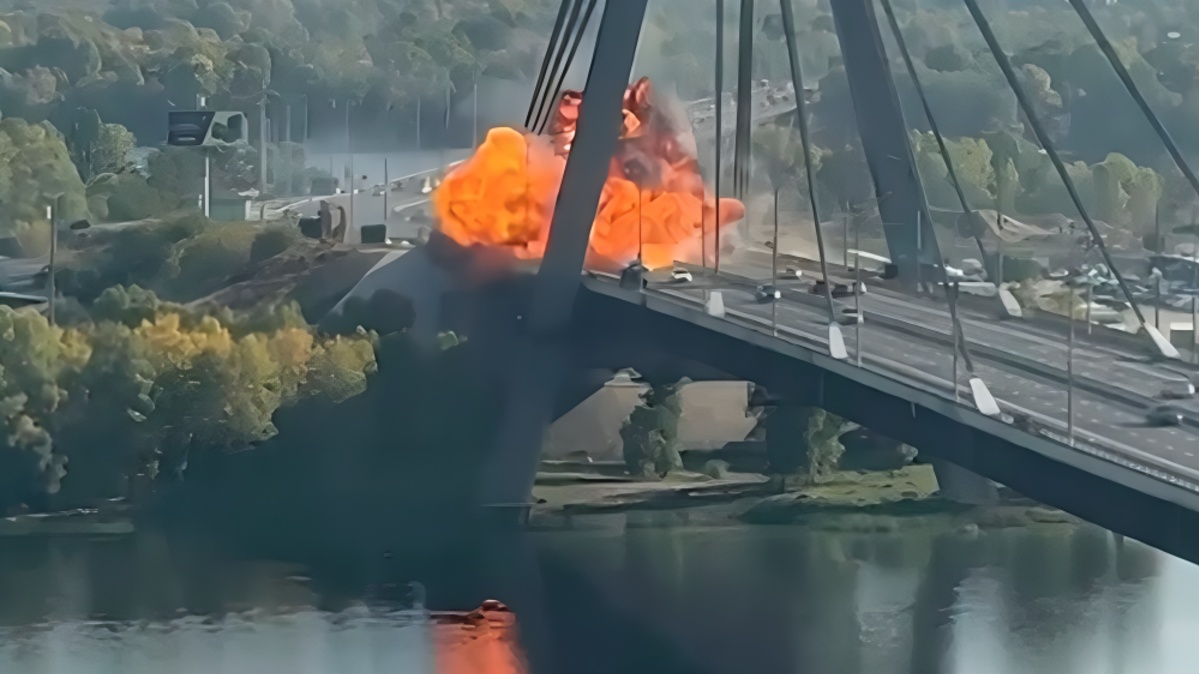
A Russian drone strike damaged a major bridge in Kyiv as German Chancellor Friedrich Merz arrived in the Ukrainian capital for an unannounced visit aimed at demonstrating Germany's continued support for Ukraine.
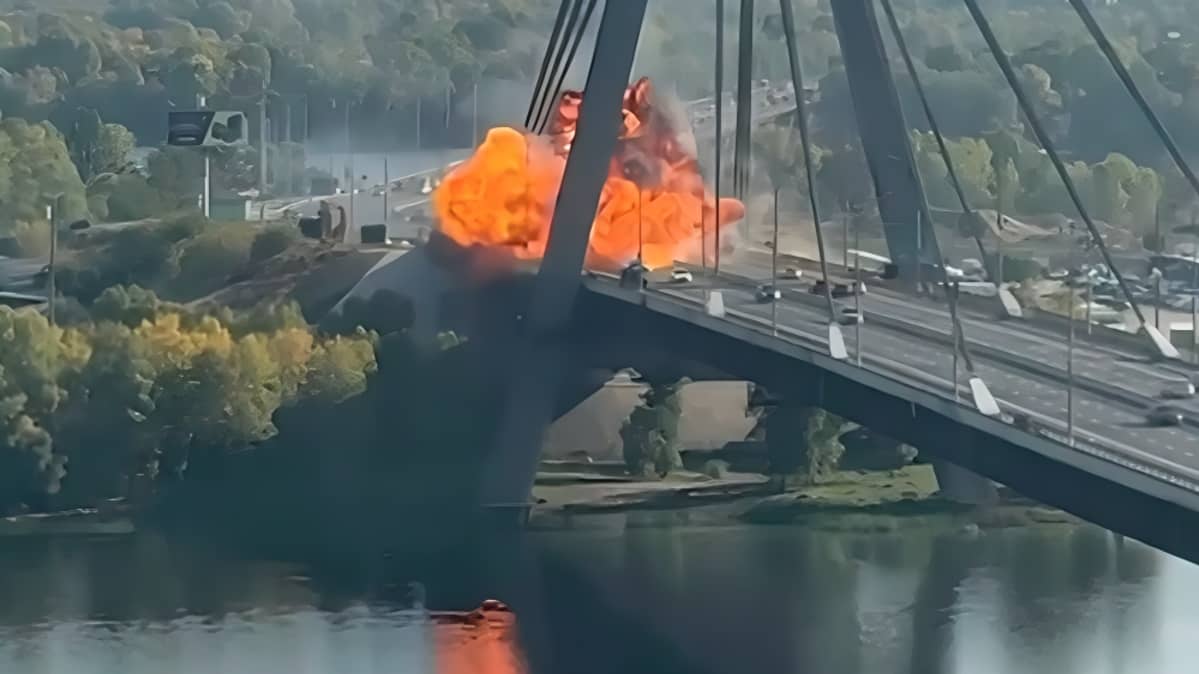
The Northern Bridge over the Dnipro River was struck on October 4, according to Ukrainian officials and international media reports. The incident took place while Merz was in Kyiv for meetings with Ukrainian President Volodymyr Zelenskyy.
Air raid sirens and explosions were reported across the capital during the German leader's visit. Kyiv Mayor Vitali Klitschko said the strike damaged the roadway of the bridge and injured two people. A hot water supply system in the area was also reported to have been damaged.
Russia's Defence Ministry said the Northern Bridge was targeted because it was being used for transporting troops and military equipment. Reuters noted that claims from both sides regarding the conflict could not be independently verified.
The strike was the latest in a series of attacks affecting bridges and infrastructure in Kyiv. Ukrainian officials said Russian forces had targeted bridges over the Dnipro River in recent days. The attacks have raised concerns about transport links between different parts of the capital and the movement of supplies.
The timing of the latest strike attracted particular attention because it occurred during Merz's visit. The German chancellor travelled to Kyiv to demonstrate continued European support for Ukraine amid an intensification of Russian drone attacks.
Merz met Zelenskyy during the visit and visited sites damaged by previous Russian attacks. The two leaders discussed military cooperation, air defence, energy infrastructure and efforts to strengthen Ukraine's ability to respond to drone attacks.
Germany announced a new package of assistance worth more than 1.3 billion euros. Around 1 billion euros of the package was allocated for military assistance, including long range weapons, combat drones and satellite technology. Another 350 million euros was earmarked for energy infrastructure and repairs ahead of the winter season.
The two countries also announced agreements covering defence cooperation, weapons production and drone technology. Germany said it would support the production of systems designed to intercept Russian jet powered drones.
Zelenskyy has described air defence as one of Ukraine's most urgent military requirements. Ukrainian authorities have reported an increase in Russian drone attacks against cities and infrastructure in recent weeks.
According to the Associated Press, Zelenskyy said Russia had launched about 900 jet powered drones during the week and that Ukraine had intercepted roughly half of them. The figures were presented by the Ukrainian president and have not been independently verified.
The attacks have also affected civilian infrastructure. Russian strikes have targeted transport facilities, energy systems, telecommunications infrastructure and other sites across Ukraine. Moscow has said its attacks are retaliatory and has accused Ukraine of carrying out attacks against Russian territory and infrastructure.
The latest escalation comes amid continued diplomatic efforts to find a path towards ending the war.
During his Kyiv visit, Merz called on Russian President Vladimir Putin to end what he described as a senseless war. He also said Germany would continue supporting Ukraine and argued that European security was directly connected to the outcome of the conflict.
Zelenskyy also indicated that Ukraine remained open to further diplomatic discussions. He said the United States had proposed technical level talks involving Ukraine and Russia before the end of October. According to Zelenskyy, Kyiv was prepared to participate, while Russia's response remained awaited.
The United States has been attempting to encourage renewed negotiations between the two sides. However, continued attacks and military operations have made diplomatic progress difficult.
The situation around Kyiv remains particularly sensitive because the capital has repeatedly been targeted by Russian missile and drone attacks since the beginning of the full scale invasion in 2022.
The Northern Bridge is an important transport connection across the Dnipro River. Damage to such infrastructure can create traffic disruptions and complicate movement between the eastern and western sides of the city.
The latest incident also highlights the risks faced by foreign officials visiting Ukraine. Merz's visit continued despite the air raid warnings, with the German government using the trip to demonstrate political and military solidarity with Kyiv.
Germany has become one of Ukraine's most important European supporters. During Merz's visit, the German government said it would continue providing military equipment and assistance while also expanding cooperation in drone production and air defence.
Zelenskyy welcomed the German support and said Ukraine needed stronger air defence capabilities to protect cities and critical infrastructure.
The European Union has also continued to reaffirm its political and financial support for Ukraine. European governments have repeatedly stated that Ukraine's security is closely linked to wider European security.
The latest developments therefore combine three major elements of the ongoing conflict: continued Russian air attacks, increased European military assistance to Ukraine and renewed diplomatic efforts involving the United States.
The strike on Kyiv's Northern Bridge demonstrates that infrastructure in the capital remains vulnerable despite the city's extensive air defence network.
At the same time, the German aid package shows that Berlin intends to maintain its support for Kyiv even as the war continues.
For Ukraine, strengthening air defence remains a priority as Russia increases the use of drones and other weapons against cities and infrastructure. For European governments, the conflict continues to raise wider questions about regional security, military preparedness and the possibility of a future peace agreement.
The latest attack has not ended diplomatic efforts. Instead, it has highlighted the difficult circumstances under which those efforts are taking place.
With Ukraine seeking stronger international support and Russia continuing its military campaign, the coming weeks are likely to remain important for both battlefield developments and diplomatic initiatives.
Any future negotiations will depend on the positions of Moscow, Kyiv and their international partners. Until then, attacks on infrastructure and continued military assistance are expected to remain central issues in the Russia Ukraine conflict.