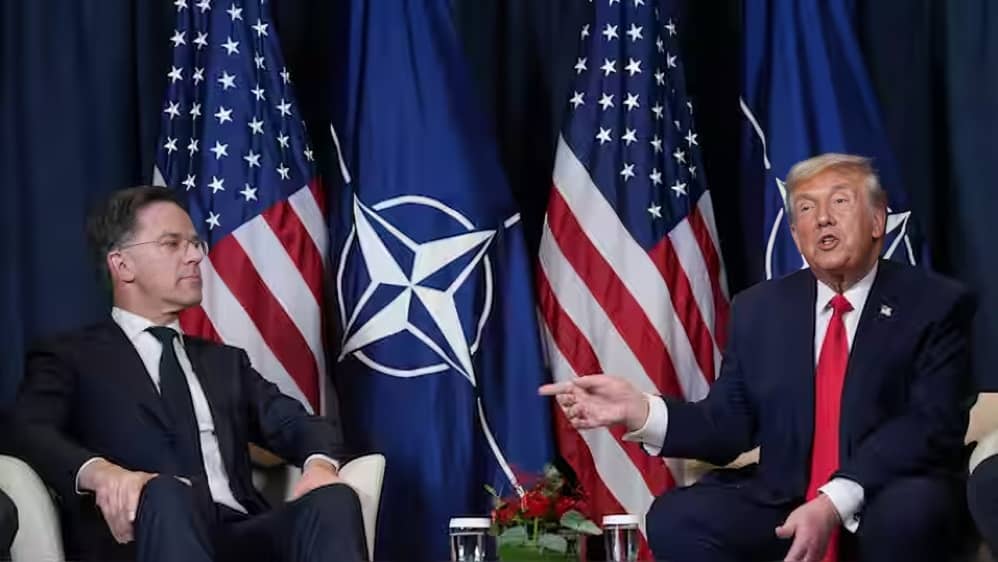
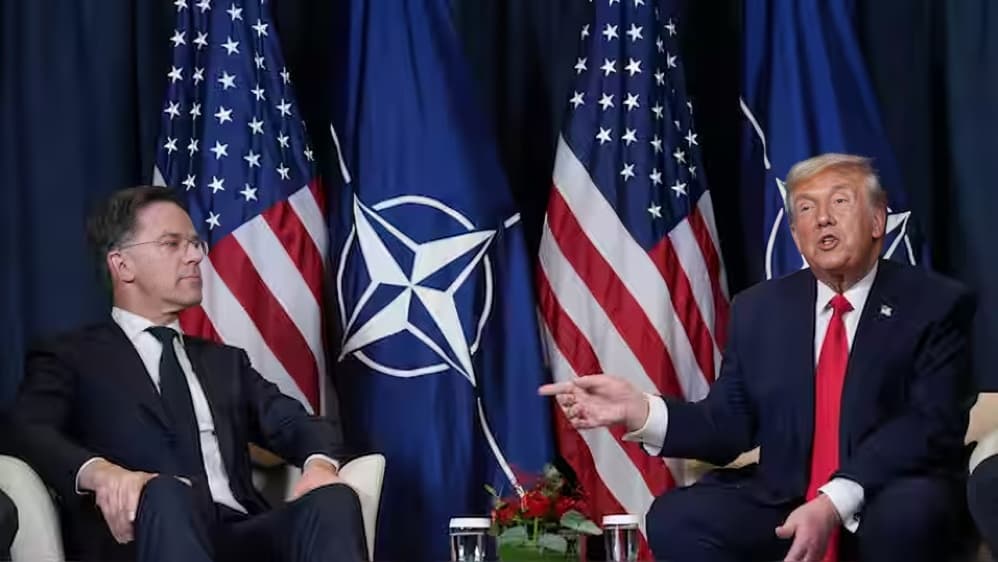
US President Donald Trump has proposed a controversial idea to involve NATO in US domestic border security, suggesting that the alliance’s Article 5 collective defense clause could be invoked to deploy forces along the US–Mexico border. The remark was made in a post on Trump’s Truth Social platform, days after he announced a suspension of additional tariffs on several European nations.
“Maybe we should have put NATO to the test: Invoked Article 5, and forced A to come here and protect our Southern Border,” Trump wrote. He added that such a deployment could allow US Border Patrol agents to focus on other duties, highlighting his view that illegal immigration at the southern border requires urgent international support.
Trump’s comments immediately drew attention in European capitals, where leaders were still adjusting to recent trade and diplomatic developments. The proposal underscores the former President’s unconventional approach to foreign policy and defense alliances, blending domestic challenges with international mechanisms traditionally reserved for collective security against armed aggression.
Article 5 of the NATO treaty obliges member states to consider an armed attack against one ally as an attack against all, primarily intended for military defense. Using it for border enforcement would be an unprecedented interpretation, raising questions about the legal and practical feasibility of such a move. Experts note that NATO has never been invoked for internal or domestic law enforcement matters, and European member states are unlikely to support deployment for immigration control.
Trump’s suggestion comes amid growing political debate over the US–Mexico border and immigration policy. His remarks aim to emphasize the need for international cooperation while criticizing existing domestic measures as insufficient. By framing the issue in terms of NATO obligations, Trump appears to seek greater leverage over European allies while highlighting perceived shortcomings in US border enforcement.
The idea has drawn mixed reactions from analysts and politicians. Some view it as a symbolic gesture designed to highlight immigration concerns and US border security priorities. Others warn that it could strain NATO relations and create confusion over the alliance’s role, which is rooted in collective defense and international security, not domestic law enforcement.
Transatlantic experts also point out that NATO members may be reluctant to comply with any such proposal, as it risks politicizing the alliance and setting a precedent for using military cooperation in non-traditional scenarios. Furthermore, any move involving armed forces on the US border would require Congressional approval and extensive legal review.
Trump’s post reinforces his long-standing focus on border security and challenges conventional diplomatic norms. Whether the suggestion will influence policy discussions or remain a provocative statement for political effect remains uncertain, but it has certainly reignited debate about the boundaries of international cooperation and the role of NATO in addressing global and domestic issues.