Ukraine has significantly expanded its long range drone operations against targets inside Russian territory, increasing pressure on Russia’s air defence network. Analysts say the growing scale and geographic reach of the attacks are creating additional challenges for Russian forces attempting to protect military, industrial, energy and logistics facilities.
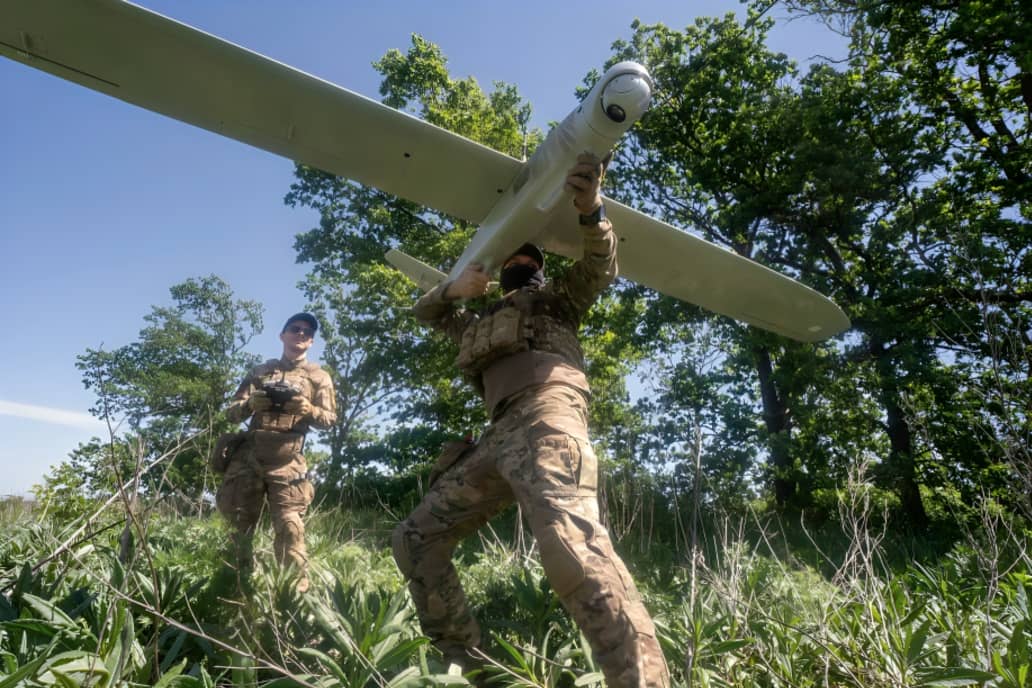
The development represents an important change in the aerial dimension of the Russia Ukraine war. Ukraine has increasingly relied on domestically developed long range drones to strike targets far beyond the immediate frontline. Recent attacks have reached areas around Moscow and other regions of Russia, demonstrating the increasing range of Ukrainian unmanned systems.
A major feature of the campaign has been the use of large numbers of drones in individual attacks. Russia has repeatedly reported intercepting significant numbers of Ukrainian drones. However, even when a large proportion of incoming drones are destroyed, the sheer number and geographic spread of attacks can place pressure on air defence resources.
Recent reporting indicates that Ukrainian drone attacks have targeted military and industrial facilities as well as energy and logistics infrastructure. The attacks have also affected major commercial facilities, illustrating how the conflict is increasingly extending beyond traditional military targets.
The effectiveness of an air defence network depends not only on the number of interceptor systems available but also on radar coverage, command and control, ammunition supplies and the ability to rapidly move defensive units between locations.
Russia has a large and layered air defence system, but protecting a vast territory presents a significant challenge. Long range drone operations can force authorities to decide which facilities and population centres require the greatest protection.
Analysts have previously identified signs that Ukrainian strikes are targeting Russian air defence infrastructure itself. The Institute for the Study of War has documented Ukrainian strikes against Russian surface to air missile systems and radar installations. Such operations can potentially create gaps in defensive coverage and make subsequent strikes more difficult to intercept.
Ukraine's drone campaign has also focused on Russia's energy infrastructure. Long range attacks against refineries and other industrial facilities can affect fuel production and create economic pressure. A recent analysis reported that Ukrainian attacks had damaged a significant portion of Russian refining capacity since the beginning of the year.
The increasing range of Ukrainian drones is another important factor. Modern long range unmanned aircraft can travel considerable distances before reaching their targets. This allows Ukrainian forces to threaten facilities that were previously considered relatively distant from the battlefield.
Recent attacks around Moscow have demonstrated the potential scale of the campaign. Russian authorities reported hundreds of drones during major waves of attacks, while Ukrainian operations have continued to target locations across different parts of Russia.
At the same time, Russian air defence forces continue to claim substantial numbers of successful interceptions. These claims indicate that Russia retains considerable defensive capabilities. Independent verification of individual interception figures is often difficult during active military operations, and figures released by either side should therefore be treated cautiously.
The strategic objective of Ukraine's drone campaign appears to extend beyond causing immediate physical damage. By repeatedly forcing Russia to respond to attacks over a large geographic area, Ukraine can increase the demands placed on air defence units, surveillance systems and military decision makers.
The campaign may also have psychological and economic effects. Drone incidents near major Russian cities and industrial centres can increase public concern, disrupt transportation and temporarily affect airports or commercial activity. Recent attacks near Moscow, for example, resulted in aviation disruptions and damage at a major logistics facility.
However, the increasing drone attacks do not by themselves demonstrate that Russia's air defence network has collapsed. Russia continues to possess extensive air defence capabilities and has intercepted many incoming drones. The more accurate assessment is that Ukraine is attempting to stretch and challenge those capabilities across a wider area.
The development also reflects the growing importance of unmanned systems in modern warfare. Drones can be produced at a lower cost than many conventional missiles and can be used in large numbers. This allows military planners to create saturation effects and force opponents to use expensive defensive systems against comparatively lower cost weapons.
Ukraine's expanding drone campaign is therefore becoming an important component of its wider military strategy. The continued attacks could force Russia to reposition air defence assets, increase protection around strategic facilities and devote additional resources to countering unmanned aircraft.
The situation remains fluid, and the effectiveness of both Ukrainian strikes and Russian air defence will depend on technological developments, production capacity and battlefield adaptation.
For now, the increasing geographic reach and frequency of Ukrainian drone operations indicate that Russia faces a continuing challenge in protecting its extensive territory. Analysts are likely to closely monitor whether Ukraine can sustain the campaign and whether Russia can adapt its air defence network to reduce the impact of future attacks