Vietnam War Soldier’s Audio Letter Preserved as a Piece of American History
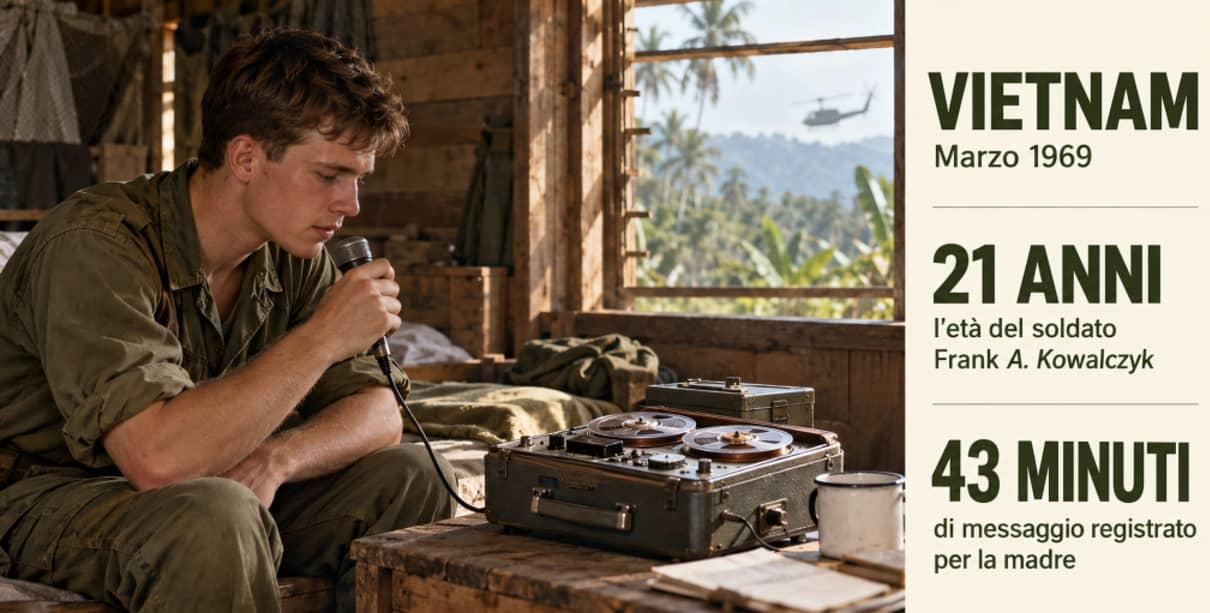
A personal audio message recorded by a young American soldier during the Vietnam War is continuing to preserve a small but meaningful part of history nearly 57 years later. Frank A. Kowalczyk, a 21-year-old US Army soldier from the Chicago area, recorded a message for his mother in March 1969 while serving in Vietnam. Rather than writing a traditional letter, he chose to speak directly into a reel-to-reel tape recorder.
The approximately 43-minute recording contains more than 8,600 words of conversation about his military service, fellow soldiers, family matters and thoughts about life after the war. The sound of a helicopter passing overhead also appears in the recording, providing a reminder of the environment in which the message was made.
The historic tape is now preserved by the Smithsonian’s National Postal Museum in Washington, DC. Its preservation allows future generations to hear a soldier's own words and gain a more personal understanding of the experiences of Americans serving overseas during the Vietnam War.
A Young Soldier Chooses to Record His Voice
Kowalczyk was serving as a private first class in the US Army. He was assigned to Headquarters, 46th Engineers Battalion, 20th Brigade, at Long Binh Post near Saigon, now known as Ho Chi Minh City.
During his deployment, he acquired a reel-to-reel tape recorder from another soldier. He preferred speaking into a microphone to writing on paper, which he found difficult and time-consuming. The recording offered him a convenient way to share a longer message with his family back home.
At the beginning of the tape, Kowalczyk explained his decision to his mother. He said that he would use the recorder instead of writing a letter because he disliked writing. His casual introduction established the personal nature of the message.
The recording was not a formal military report or a prepared speech. Instead, it was an informal conversation intended for his family. He discussed everyday matters and offered updates that helped maintain a connection with home while he was thousands of miles away.
A Personal Message About Family and Military Life
The audio letter included details about Kowalczyk's fellow soldiers, his experiences in the Army, family gossip and his plans for the future. These subjects made the message more than a simple account of military duties.
For families separated by war, communication was an important way to maintain relationships and share ordinary experiences. Letters were a familiar method, but recorded messages offered something different. They preserved the speaker's actual voice, including the way he spoke and the natural rhythm of his conversation.
Kowalczyk's recording captured that sense of everyday communication. Rather than concentrating exclusively on the dangers or major events of the war, he spoke about the personal details that mattered to him and his family.
The sound of a helicopter passing overhead added an unplanned element to the recording. While the soldier continued his message, the background noise reflected the setting in which he was speaking. It created a connection between his private conversation and the wider military environment surrounding him.
The recording therefore preserves two aspects of his experience at once. It offers a personal message to a family member while also documenting the sounds of life at a military post during the Vietnam War.
Why the Recording Matters Nearly Six Decades Later
The tape is significant because it allows listeners to encounter a historical experience through an individual's own words. Written records can provide dates, locations and descriptions of events, but an audio recording preserves a person's voice and manner of speaking.
For historians and members of the public, such material can help make the past feel more immediate. Instead of learning only about military operations and political decisions, listeners can hear how a young soldier communicated with his family during a period of conflict.
Kowalczyk's message also highlights the importance of personal archives. Everyday letters, photographs, diaries and recordings can become valuable historical resources when they are preserved over time. Items created for private use may later help researchers and future generations understand how major events affected individuals and families.
The tape does not represent every soldier's experience of the Vietnam War, and it should be understood as one person's personal account. However, its informal character offers a perspective that is different from official documents and public statements.
Smithsonian National Postal Museum Preserves the Audio Letter
The Smithsonian's National Postal Museum in Washington, DC, preserves the recording as part of its historical collections. The museum's catalogue describes the message as having been recorded across several sessions in March 1969.
There is a small difference in how the recording's duration is described. Smithsonian Magazine refers to it as approximately 43 minutes long, while the museum's object record rounds the duration to about 45 minutes. Both descriptions refer to the same personal audio message.
Preserving recordings of this kind requires institutions to retain the historical material and make it accessible in ways that support research and public understanding. The Smithsonian's collection helps ensure that the soldier's message remains part of the documented history of communication and personal correspondence.
The recording also demonstrates how communication methods have changed. Today, families can exchange voice messages and video calls almost instantly. In 1969, a soldier serving overseas could use a tape recorder to preserve a longer message, which his family could listen to later.
A Voice From the Past That Still Connects With Families
Nearly 57 years after Kowalczyk recorded his message, the audio letter remains a reminder of the personal relationships that continued despite the distance and uncertainty of wartime service.
His decision to speak rather than write preserved an everyday conversation that might otherwise have been lost. The message contains family updates, personal reflections and the background sound of a helicopter, bringing together ordinary life and the reality of military service.
The recording's lasting value lies not only in its historical setting but also in its human character. It documents a young soldier trying to stay connected with his mother and family while living far from home.
By preserving the tape, the Smithsonian National Postal Museum helps keep this individual experience available for future generations. Kowalczyk's voice provides a personal window into 1969 and shows how a simple recording made for a loved one can become an enduring historical document.