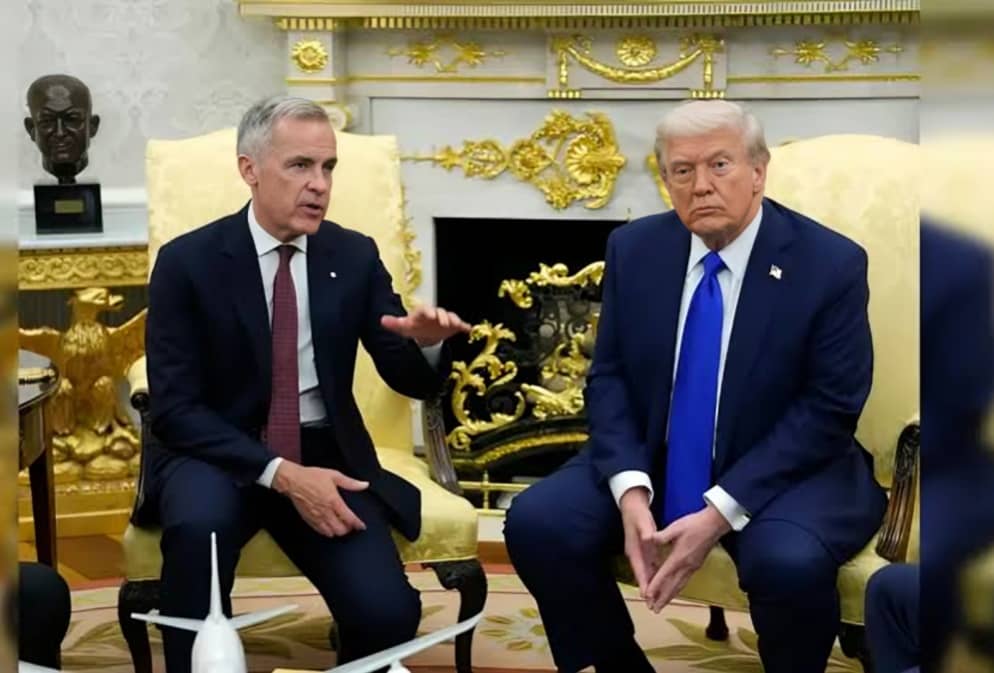
Canada has suspended trade negotiations with the United States after Prime Minister Mark Carney rejected last minute changes to Washington’s proposed trade terms, describing them as unfair and uneconomic.
The decision comes after several weeks of intensive negotiations between the two countries. The talks had been aimed at reducing tariffs, protecting Canadian businesses and workers and providing greater certainty for companies involved in cross border trade.
The latest development follows the United States imposing a 50 percent tariff on a range of Canadian products. The new duties came into effect at 12:01 am Eastern Time on Saturday, August 22, after the two sides failed to finalise a comprehensive trade agreement.
Prime Minister Mark Carney said Canada had made significant efforts to reach a fair agreement with Washington. However, he said the latest changes proposed by the United States did not meet Canada’s objectives and raised concerns about the reliability of any future agreement.
Carney subsequently directed Canada’s negotiating team to return to Ottawa, effectively suspending the current round of trade discussions. He also announced that Canada would match the new US tariffs on a dollar for dollar basis.
The Canadian government has said the response is intended to protect domestic workers and businesses from the economic impact of the new US duties. Ottawa is also considering additional measures to support companies and workers affected by the trade dispute.
The US tariffs cover a range of Canadian products and are expected to affect approximately 5 percent of Canada’s exports to the United States. Products facing the new duties include items such as hockey equipment, building materials, certain alcoholic beverages and other manufactured goods.
The United States has justified its trade measures by raising concerns about Canadian trade policies and market access. US Trade Representative Jamieson Greer said Washington had offered Canada favourable terms but accused Ottawa of seeking additional concessions.
The two governments have presented different accounts of why the negotiations failed. Canada says last minute changes from the United States made the proposed agreement unacceptable. Washington, meanwhile, has argued that Canada did not accept the terms that had been discussed during the negotiations.
The dispute represents a significant deterioration in economic relations between two countries that have historically maintained extensive trade ties.
Canada and the United States have deeply integrated supply chains, particularly in sectors such as automobiles, energy, manufacturing, agriculture and natural resources. Companies on both sides of the border depend heavily on cross border trade, meaning prolonged tariffs could increase costs and create uncertainty for businesses.
The latest tariffs also create questions about the future of the Canada United States Mexico Agreement, commonly known as CUSMA or USMCA. The trade agreement provides the framework for much of North American commerce and its future has already become a major subject of discussion between the three countries.
The breakdown in negotiations could make future discussions more difficult. Canadian officials have been seeking stable access to the US market, reduced tariffs on important sectors and greater certainty for Canadian exporters.
Carney has argued that Canada should not accept an agreement simply to meet an artificial deadline. He said the objective was to secure a fair deal that protects Canadian interests rather than reaching an agreement at any cost.
The Canadian government has also been working to diversify its international trade relationships. Ottawa has said that reducing excessive dependence on a single market could strengthen Canada’s economic position over the longer term.
For Canadian companies, however, the United States remains an extremely important trading partner. Any sustained increase in tariffs could affect exporters, manufacturers and businesses that depend on US customers.
The impact could also extend to American businesses and consumers. Canadian products form part of several US supply chains, meaning higher import costs can potentially be passed through to manufacturers, retailers and consumers.
Economists and businesses will therefore be watching closely to determine whether the latest measures remain in place for an extended period or whether the two governments eventually return to negotiations.
The Canadian government has indicated that it will introduce additional support measures for workers and businesses affected by the tariff dispute. Ottawa has already provided financial assistance to sectors facing economic pressure from earlier US trade measures.
The latest confrontation also comes after President Donald Trump had previously postponed the tariff deadline to allow additional time for negotiations. Both governments had indicated that progress was being made, but the talks ultimately failed to produce a final agreement.
The sudden collapse of negotiations has therefore surprised businesses that had expected the two sides to reach at least a temporary arrangement.
For now, Canada’s position is that negotiations cannot continue under the latest US terms. Carney has instructed Canadian negotiators to return home, while the new US tariffs are already in effect.
The Canadian government has promised a reciprocal response and said it will match the US measures dollar for dollar. The objective, according to Ottawa, is to protect Canadian workers and businesses while maintaining the country’s economic independence.
The United States and Canada could eventually return to negotiations, but there is currently no confirmed schedule for a new round of talks. The dispute is also expected to complicate discussions surrounding the future of the North American trade agreement.
The latest development highlights the growing pressure on international trade relations as governments increasingly use tariffs to protect domestic industries and pursue economic and political objectives.
For Canada, the immediate challenge will be to limit the economic impact of the new US tariffs while supporting affected businesses and workers. For the United States, the focus will be on achieving its trade objectives without creating significant disruption to highly integrated North American supply chains.
The current trade dispute has therefore moved into a more uncertain phase. Canada has suspended negotiations, the United States has implemented the new tariffs and Ottawa has promised a dollar for dollar response.
Further developments will depend on whether the two countries can eventually find common ground and return to negotiations. Until then, businesses on both sides of the border face increased uncertainty over tariffs, market access and the future direction of Canada US trade relations.