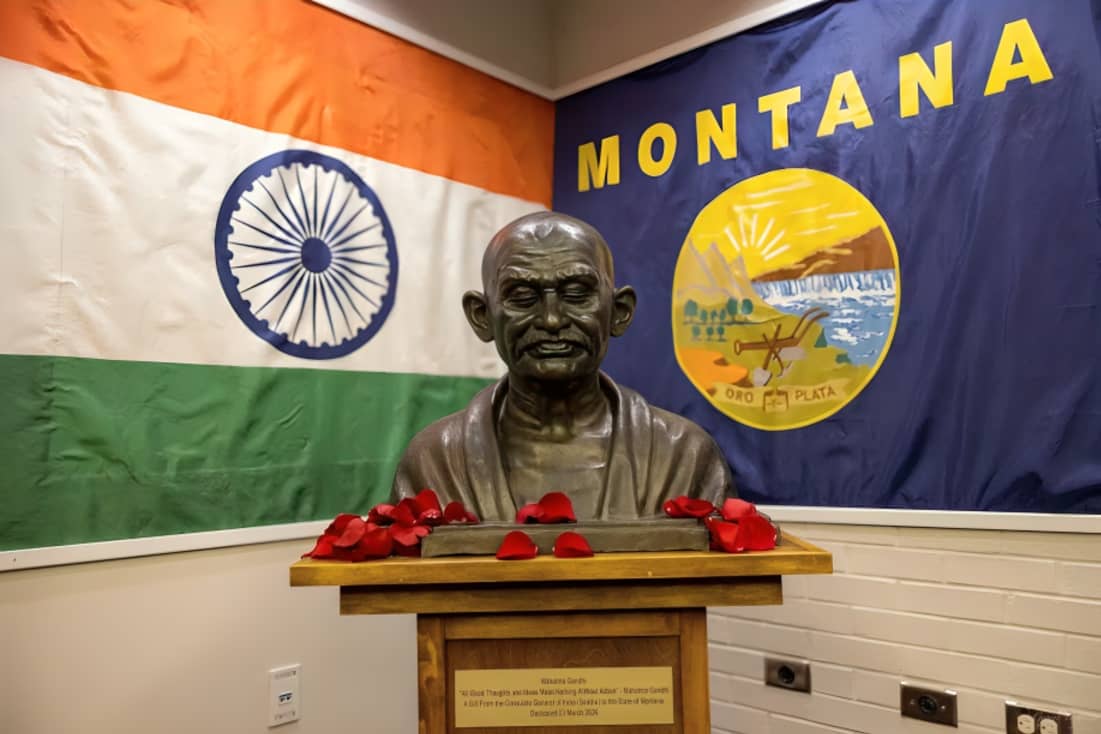
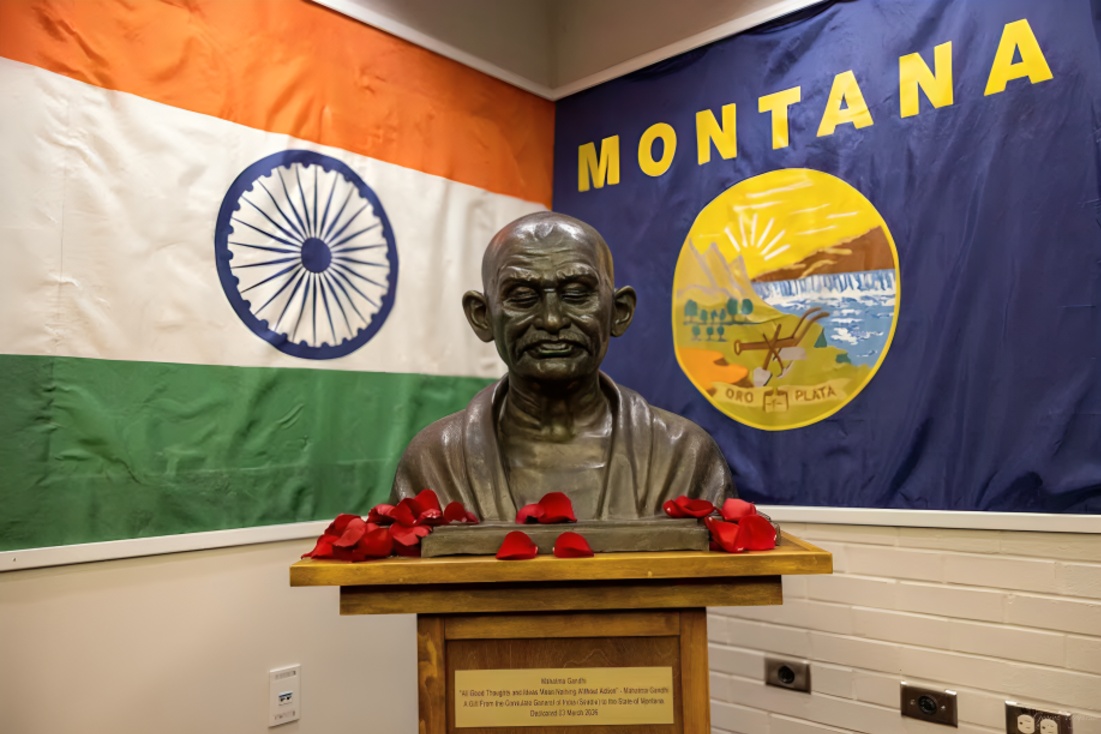
Montana Governor Greg Gianforte has launched the state’s first official trade mission to India, seeking to expand economic, agricultural, technological and educational ties between Montana and India. The Republican governor arrived in New Delhi with a delegation representing agriculture, higher education, critical minerals, manufacturing, photonics, quantum technology, bioscience and other sectors.
The mission began on October 5, 2026, and is scheduled to continue in India before moving on to Sri Lanka. Montana officials say the primary objective is to create new markets for the state’s producers while encouraging investment and strengthening long-term partnerships with Indian businesses and educational institutions.
Agriculture is one of the central issues during the visit. Montana is the leading producer of pulse crops in the United States, including lentils, dry peas and chickpeas. India, meanwhile, is one of the world’s largest consumers and importers of pulse crops. Montana officials see the Indian market as an important opportunity for farmers who want more stable and long-term international demand.
According to the Montana Governor’s Office, India purchased more than $14 million worth of Montana peas, lentils, chickpeas and commercial aircraft parts in 2025. India ranked as Montana’s 29th-largest trading partner that year. Montana officials have said they want to establish more predictable trading relationships rather than relying on fluctuating demand.
Gianforte has also emphasized that the delegation is not focused exclusively on agricultural exports. Representatives from aerospace, biotechnology, quantum technology, photonics and education are accompanying the governor. The broader objective is to attract Indian investment into Montana while giving Montana-based companies opportunities to expand their presence in India.
During meetings in New Delhi, Gianforte met representatives of Indian companies considering expansion into the United States. Montana officials promoted the state as a potential location for businesses involved in food ingredients, precision agriculture and other industries. The governor also met with representatives of the Confederation of Indian Industry and the U.S.-India Strategic Partnership Forum.
Education is another important part of the visit. Gianforte has brought Montana State University President Brock Tessman and representatives of the University of Montana’s Mansfield Center as part of the delegation. Discussions have focused on research cooperation and student exchanges, particularly in agriculture, technology and other fields.
Montana officials argue that international academic cooperation can benefit students and researchers in the state. The governor has said that addressing challenges such as precision agriculture and cybersecurity requires students and researchers to collaborate internationally.
The economic mission has nevertheless triggered a backlash from some MAGA supporters on social media. Critics have questioned why a Republican governor is seeking closer economic and educational ties with India at a time when immigration and foreign-worker policies are major issues within the Republican political debate.
Some social-media posts specifically criticized Gianforte’s reference to university partnerships and technology cooperation. Other comments questioned the potential presence of Indian students, researchers and professionals in Montana universities and businesses. These reactions have been reported as coming from individual MAGA-aligned social-media users and should not be treated as representing all Republican voters or all supporters of former President Donald Trump.
The criticism reflects a broader debate within parts of the Republican movement over the relationship between economic globalization and immigration policy. On one side, state leaders argue that international trade, investment, research partnerships and skilled workers can create jobs and strengthen local economies. On the other side, some activists argue that American jobs and educational opportunities should primarily benefit U.S. citizens and residents.
For Gianforte, the trade mission presents a practical economic calculation. Montana has a relatively small population and a large agricultural sector. Its farmers depend on markets beyond the state and, in many cases, beyond the United States. Building stronger export relationships can provide producers with additional customers and potentially more stable demand.
The governor has also highlighted the importance of a broader India-U.S. economic relationship. In an interview with NDTV, Gianforte said that Montana wants long-term relationships with Indian buyers and pointed to fluctuations in demand for Montana pulse crops as a reason for seeking greater consistency. He also discussed the importance of a broader India-U.S. trade agreement for businesses in both countries.
The mission comes at a time when relations between India and the United States are being closely watched because of trade negotiations, immigration policies, technology cooperation and investment. Montana officials are attempting to position the state as a partner in several of these areas rather than limiting the relationship to agricultural exports.
Technology is particularly important to the delegation. Montana officials say the state has growing capabilities in photonics, quantum technology, bioscience and advanced manufacturing. The state is also seeking investment from Indian companies that could establish operations in Montana and create local employment.
The political controversy surrounding the visit has therefore become larger than the question of selling lentils and chickpeas. It has highlighted the tension between economic interests and political debates about immigration and foreign engagement.
Gianforte’s office has continued to present the trip as an economic development mission rather than an immigration initiative. The official agenda includes meetings with businesses, government representatives, universities and industry organizations. The governor has also met with U.S. Ambassador to India Sergio Gor in New Delhi to discuss opportunities for strengthening economic ties.
For India, the visit offers an opportunity to engage directly with a U.S. state that has interests in agriculture, advanced technology, critical minerals and higher education. For Montana, India represents a large potential market and a source of investment and international academic cooperation.
The immediate focus of the mission remains economic. Montana wants to increase exports of pulse crops, attract investment, develop research partnerships and create new commercial opportunities. Whether those efforts produce significant long-term gains will depend on future trade agreements, market conditions, investment decisions and the ability of businesses and universities to establish sustained partnerships.
The social-media backlash demonstrates that such international engagement can also carry political risks for American state leaders. Gianforte is attempting to promote Montana’s economic interests in India while navigating a domestic political environment where some activists remain skeptical of international trade, immigration and foreign academic partnerships.
For now, Montana officials continue to describe the India mission as an effort to create mutually beneficial economic and educational relationships. The governor’s delegation is expected to continue meetings in New Delhi before the wider mission proceeds to Sri Lanka.