US President Donald Trump’s proposed White House ballroom has become the centre of an expanding political and legal controversy, with the administration increasingly portraying the project as an important national security facility rather than simply a venue for official dinners and ceremonies.
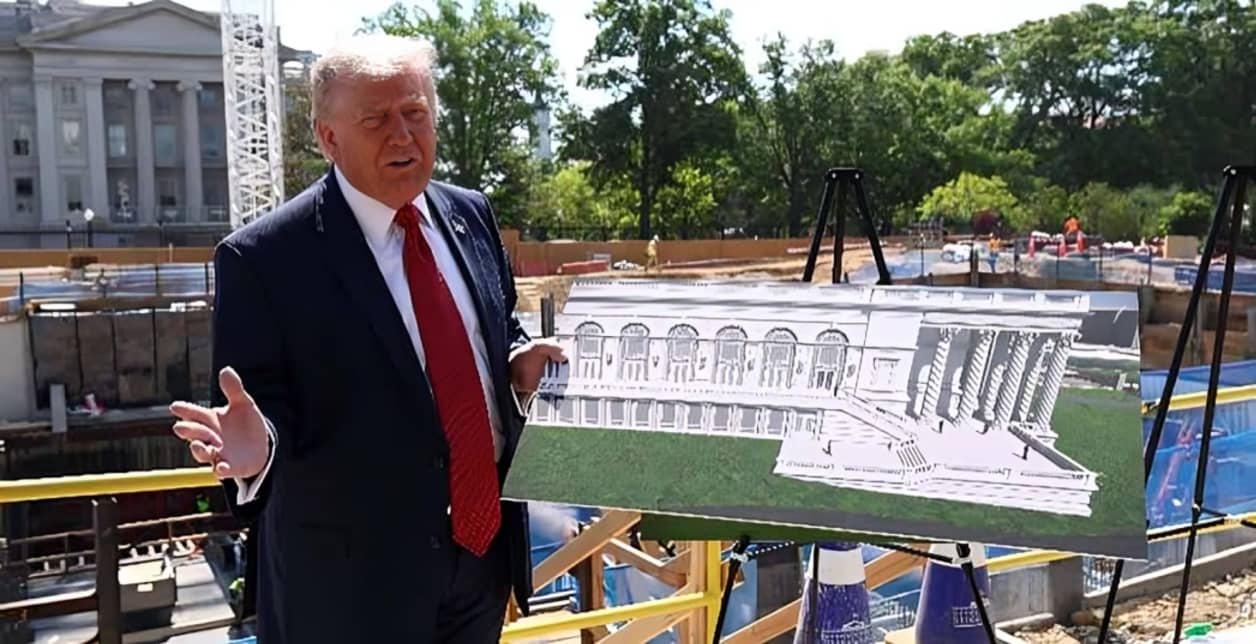
The project was initially presented as a long discussed plan to provide the White House with a larger and more suitable space for major official events. The proposed ballroom is expected to replace the East Wing of the White House complex and cover approximately 90,000 square feet. Its estimated cost has risen to around 400 million dollars.
The nature of the administration’s argument has changed significantly as legal challenges have intensified. Trump and his administration have increasingly emphasised security features associated with the project, arguing that the facility is needed to protect the president, government officials and visitors.
The administration has pointed to security concerns and previous incidents as reasons for completing the project. Officials have argued that the new structure would provide a more secure location for major events that might otherwise take place at locations outside the White House complex.
The project has reportedly been designed with reinforced security features, including strengthened structures and other protective elements. The administration has also described underground facilities associated with the development as having military and security functions.
The national security argument has become particularly important because the construction has faced legal opposition. The National Trust for Historic Preservation has challenged the project, raising questions about the process used to approve the major changes to the historic White House complex.
A US federal appeals court recently ruled that the administration could not proceed with the construction without congressional approval. The ruling temporarily halted the project and created another major obstacle for the Trump administration.
The administration has challenged that decision and asked the US Supreme Court to intervene. In its appeal, the Trump administration argued that stopping construction could create national security concerns and that the project should be allowed to continue while the broader legal dispute is considered.
The Supreme Court has not yet made a final decision on whether to allow the construction to proceed. The legal battle therefore remains an important factor in determining the future of the White House project.
The controversy has also raised questions about presidential authority. Critics argue that a project involving such a major alteration to the White House complex should receive congressional approval and undergo appropriate oversight.
The administration, however, has maintained that the project is necessary and that the security aspects of the development make it particularly important. The White House has also argued that the construction should not be delayed because of legal proceedings.
The ballroom project has attracted attention not only because of its cost but also because of the changes taking place at one of the most recognisable government buildings in the United States. The demolition of the East Wing to make way for the new structure has generated criticism from preservation groups and political opponents.
The estimated cost has also become a subject of scrutiny. Earlier estimates were lower, but the projected cost of the ballroom has increased substantially. Broader White House renovation plans have also been estimated at significantly higher amounts, adding to questions about funding and oversight.
The administration has argued that the White House needs modernisation and improved facilities for hosting major events. Trump has previously expressed frustration with the limitations of existing spaces and the need to use temporary facilities for large gatherings.
The new ballroom was therefore initially promoted as a practical improvement to the White House complex. The argument has gradually expanded to include security and military considerations as legal challenges have threatened to stop construction.
This shift in presentation has become one of the most closely watched aspects of the controversy. Supporters of the project say improved security at the White House is a legitimate government priority, while critics question whether national security arguments should be used to bypass normal congressional and legal oversight.
The administration's latest legal strategy centres on convincing the Supreme Court that construction should continue despite the lower court ruling. Officials argue that stopping work could cause significant disruption and potentially create security concerns.
The appeals court ruling, meanwhile, has reinforced the importance of congressional authority over major changes to federal property. The dispute could therefore have implications beyond the ballroom itself, particularly regarding the limits of presidential authority over historic federal buildings.
The White House project has also become part of a wider debate about Trump's approach to renovating and reshaping the presidential complex. His administration has pursued several major changes, including modifications to the grounds and other facilities. Critics have raised concerns about the scale, cost and approval process surrounding some of these projects.
For Trump, the ballroom is also connected to his long-standing interest in creating a larger formal event space at the White House. The project has been described as part of his effort to leave a lasting physical mark on the presidential residence.
The legal dispute has now transformed that vision into a major constitutional, political and security debate. The central question is whether the administration can continue with the project without specific congressional approval and how far presidential authority extends when making significant changes to the White House complex.
The Supreme Court’s response could determine whether construction continues in the near term. Until then, the project remains suspended by the latest court ruling while the administration seeks permission to proceed.
Overall, Trump's White House ballroom has evolved from a proposal for a large ceremonial venue into a much broader national debate involving presidential authority, national security, historic preservation, government spending and congressional oversight.
The Trump administration continues to argue that the project is essential to White House security and modernisation. Critics maintain that the administration must follow established legal procedures and obtain congressional approval for a project of this scale.
The outcome of the Supreme Court proceedings is therefore expected to play a crucial role in determining the future of the proposed ballroom and could also influence future debates over presidential authority to undertake major construction projects on federal property.