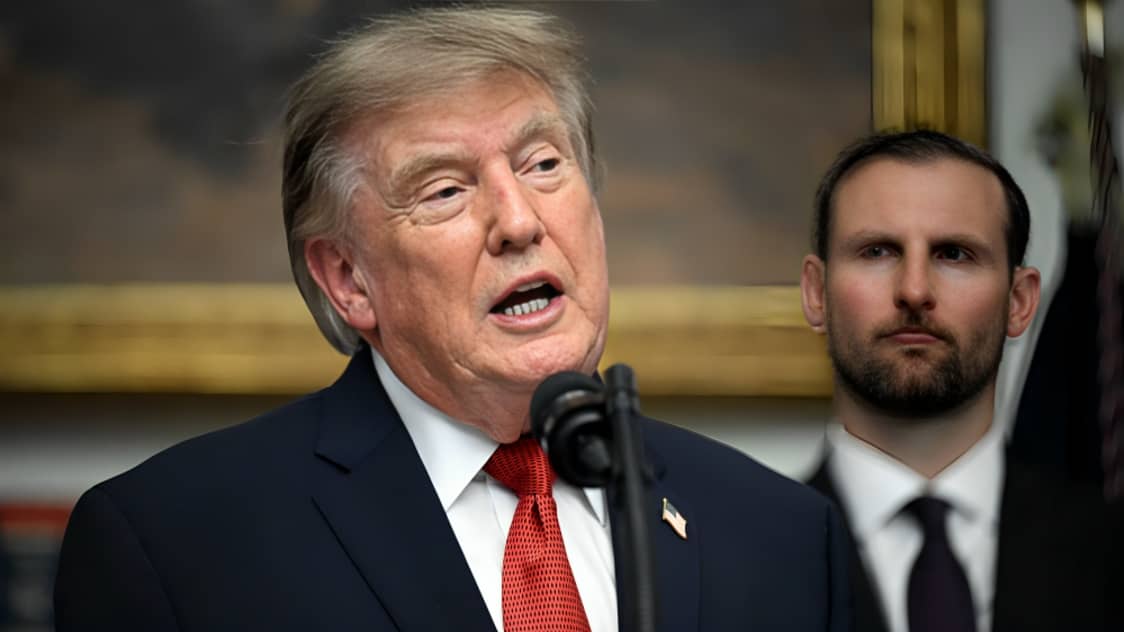
The conflict between the United States and Iran has entered another tense phase after US President Donald Trump announced a major new economic campaign against Tehran. Trump described the initiative as the most crushing economic operation ever imposed on a country and warned that governments, companies and financial institutions providing economic support to Iran could face severe consequences.
The announcement represents a further escalation in Washington’s pressure campaign against Tehran. According to reports, the new measures are intended to increase Iran’s economic isolation and target activities connected with oil smuggling, financial transactions and international trade.
Trump’s announcement comes as diplomatic efforts between the United States and Iran remain uncertain. Washington and Tehran have offered sharply different accounts of the prospects for negotiations. Trump has said that there are currently no talks scheduled, while Iran continues to demand changes to the US approach before agreeing to a full reopening of the Strait of Hormuz.
The Strait of Hormuz has become one of the most important flashpoints in the conflict. The waterway is a critical international shipping route for energy supplies moving from the Persian Gulf to global markets. Any prolonged disruption could affect oil and gas supplies, shipping costs and energy prices in several countries.
Trump has maintained that the Strait remains open and operating and has claimed that US naval operations have been effective. Iran, however, has rejected Washington’s claims and continues to link the full reopening of the waterway to conditions involving US actions and sanctions.
Available shipping data shows that commercial traffic remains substantially below normal levels. Reuters reported that nine commodity vessels crossed the Strait of Hormuz on Wednesday, with traffic remaining affected by the uncertainty surrounding the conflict. The reduced shipping activity reflects continued concerns among vessel operators about security and the future status of the waterway.
The dispute over Hormuz has broader economic implications because the route plays an important role in international energy transportation. Prolonged uncertainty could put additional pressure on oil markets and increase costs for businesses and consumers that depend on energy imports.
The economic confrontation is also extending beyond Iran itself. Trump has warned countries and international businesses against providing financial or commercial assistance to Tehran. Such secondary pressure could affect companies and governments that maintain trade relationships with Iran.
Iranian officials have strongly rejected Washington’s latest measures. Iranian Foreign Minister Abbas Araghchi criticised the new campaign and described what Washington calls an economic operation as an attempt to divert attention from domestic American issues.
The conflict has also created wider regional security concerns. Shipping routes in the Gulf and surrounding waters have faced increased risks, while attacks and security incidents involving energy infrastructure and vessels have contributed to uncertainty across the region.
The Houthis have also remained part of the wider regional security picture. Their reported attacks have increased concerns that the conflict could spread further across the Middle East and affect additional shipping routes and energy facilities.
Regional countries are closely monitoring developments because any escalation between Washington and Tehran could have consequences beyond the two countries. Gulf states, energy exporters, shipping companies and international governments all have an interest in maintaining freedom of navigation and preventing further disruption to energy markets.
Diplomatic efforts remain an important potential route towards reducing tensions. Oman has played a significant role in communications involving Iran and the United States, while other regional countries have called for steps that could prevent further escalation. However, the current disagreement over sanctions, Iran’s nuclear programme and the Strait of Hormuz continues to make a broader settlement difficult.
The immediate focus remains on whether Washington will implement additional economic measures and how Tehran will respond. Any further escalation could affect international trade, shipping and energy prices.
For India and other major energy-importing countries, developments in the Gulf are particularly important because disruptions to oil transportation can influence fuel costs, inflation and overall economic conditions.
The situation remains fluid, with Washington insisting that the Strait of Hormuz is operating while Tehran continues to challenge the US position. Until the two sides reach an understanding, shipping companies and energy markets are likely to remain cautious.
The latest developments therefore mark another significant stage in the US-Iran confrontation, combining increased economic pressure with a continuing dispute over one of the world’s most strategically important maritime routes