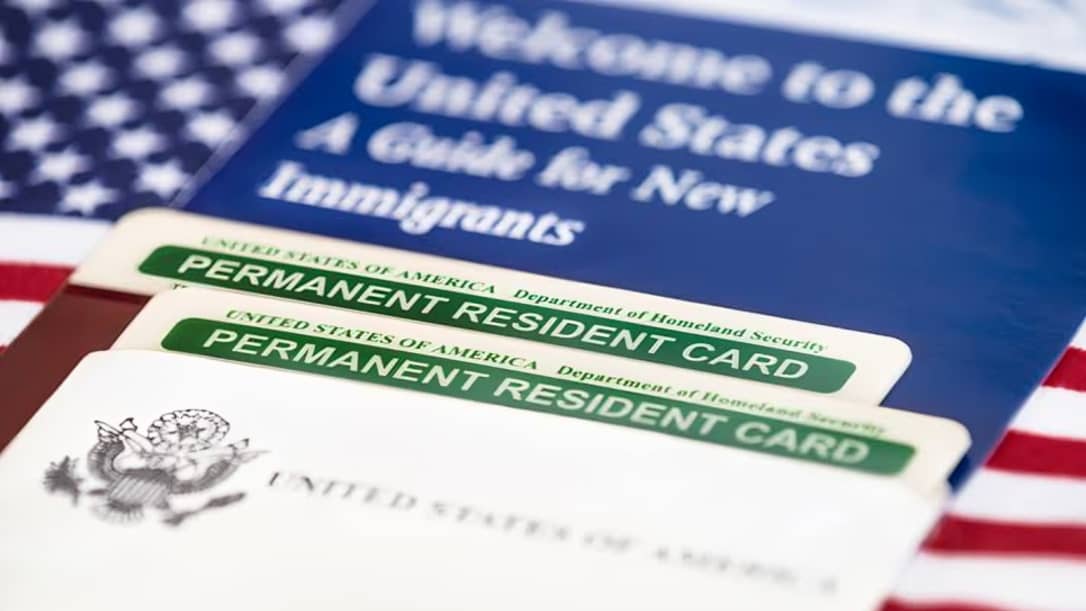
The United States is preparing to implement significant changes to the public charge assessment used for certain Green Card applicants. The updated framework from the US Citizenship and Immigration Services will take effect on September 18, 2026.
The public charge test is used to determine whether an applicant is likely to become dependent on government assistance. Under the new framework, immigration officers will have broader discretion to assess an applicant's overall circumstances rather than relying on a narrow set of financial criteria.
USCIS will consider several factors when reviewing an applicant. These include age, health, family status, assets and financial resources, education and skills. Officers can consider these factors together when deciding whether an applicant is likely to become a public charge.
One of the major changes concerns government benefits. From September 18, USCIS will be able to consider a wider range of means tested public benefits received on or after that date. These may include certain cash assistance, housing assistance, food assistance and other qualifying benefits.
The change does not mean that receiving government assistance will automatically lead to a Green Card denial. Instead, the receipt of benefits will be considered as one part of the applicant's overall circumstances. USCIS officers are expected to make decisions based on the totality of the circumstances in each case.
The new approach replaces the public charge framework introduced during the Biden administration in 2022. The Department of Homeland Security has rescinded those regulations and is restoring a broader case by case assessment of applicants.
The revised framework will apply to Form I 485 applications for adjustment of status that are postmarked or submitted electronically on or after September 18, 2026, when the application is subject to the public charge ground of inadmissibility. Applications filed before that date will generally continue to be evaluated under the applicable earlier framework.
Another important change concerns public charge bonds. In certain circumstances, USCIS may invite an applicant to provide a financial bond if the agency determines that the applicant may otherwise be considered likely to become a public charge.
Applicants cannot simply choose to submit such a bond on their own. According to USCIS guidance, the agency must first invite the applicant to post the bond through the relevant immigration process.
The amount of a public charge bond can depend on the circumstances of the individual case, including the potential level of government assistance that may be involved. Therefore, applicants should not assume that a fixed bond amount will apply to everyone.
The new rules are expected to receive particular attention from immigrants applying for permanent residence through family based and employment based categories. However, the public charge ground does not apply to every immigration category.
Several groups are exempt from public charge inadmissibility under federal law. These include certain refugees, asylees and other humanitarian categories. Applicants should therefore determine whether the public charge rules apply to their specific immigration category before assessing the effect of the changes.
The broader assessment means that an applicant's financial position will be considered alongside other personal circumstances. For example, education, professional skills, employment prospects, family circumstances and health can all form part of the overall assessment.
The changes could be particularly important for applicants preparing to submit Form I 485 around the September 18 effective date. The date of filing can determine which public charge framework applies to the application.
USCIS has also issued updated guidance explaining how officers should evaluate public charge cases. The agency has stressed that the assessment should consider the applicant's circumstances as a whole rather than treating one factor in isolation.
The new policy does not mean that every Green Card applicant who has received public assistance will be rejected. Instead, the benefits received may become one factor in determining whether the applicant is likely to become a public charge.
For applicants from India and other countries seeking US permanent residence, the changes make it important to understand the filing date, applicable immigration category and financial circumstances before submitting an application.
Immigration rules can be complex, and individual cases may involve exemptions or additional requirements. Applicants with questions about their eligibility should consult the latest USCIS guidance or obtain advice from a qualified US immigration attorney.
Overall, the September 18 changes will give USCIS officers broader authority to examine the financial and personal circumstances of certain Green Card applicants. The expanded review of means tested benefits and the possibility of public charge bonds represent the most significant aspects of the revised framework.
The new system is expected to make the public charge assessment more comprehensive, with USCIS considering multiple aspects of an applicant's ability to remain financially self sufficient in the United States.