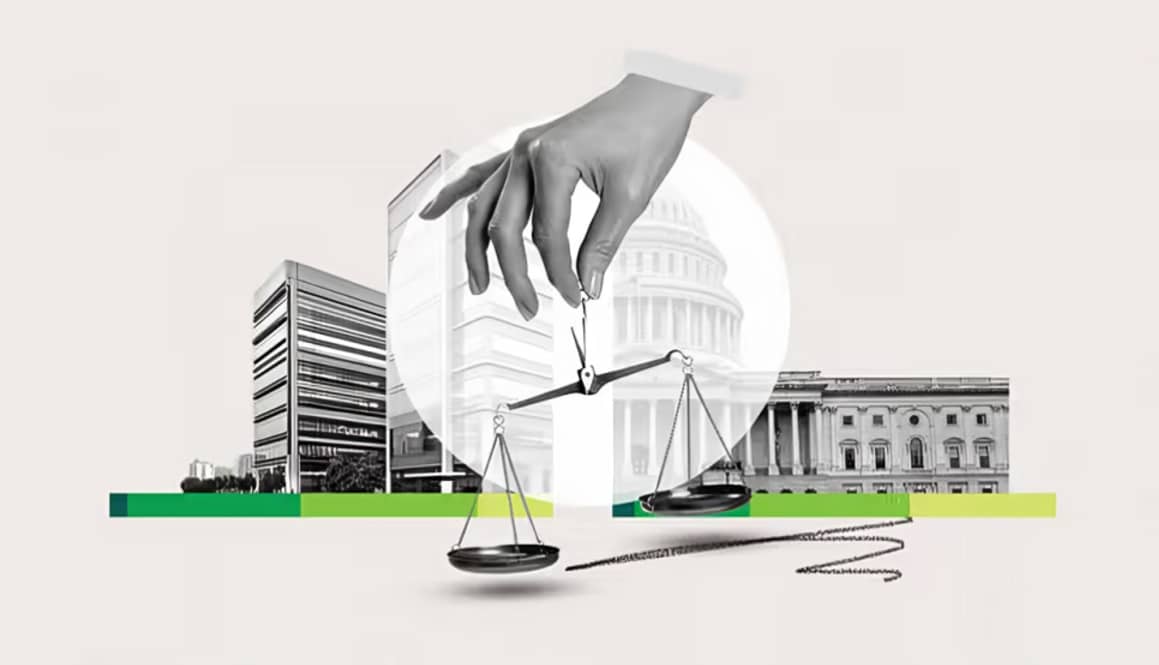
A new Gallup poll has found that a record 89 percent of Americans believe corruption is widespread in the United States government. The result represents the highest level recorded in Gallup's 20 year trend and highlights a significant increase in public concern about corruption and the functioning of government institutions.
The latest figure is 10 percentage points higher than the level recorded in 2025. Gallup's historical results show that perceptions of widespread government corruption generally remained between 72 percent and 79 percent from 2010 through 2025. The new 89 percent result therefore represents a notable shift in public opinion.
The findings should be understood as a measure of public perception rather than evidence that 89 percent of Americans have identified specific acts of corruption. The survey asks respondents whether they believe corruption is widespread. It does not determine whether particular officials, agencies or government institutions have committed crimes or violated laws.
One of the most significant developments in the latest survey is the change among Democrats. According to Gallup, 91 percent of Democrats now say corruption is widespread in government. That compares with 76 percent in 2025 and 57 percent in 2024, showing a substantial increase in concern over the past two years.
Republican views have been comparatively more stable. Around eight in ten Republicans continue to describe government corruption as widespread. Gallup reported that 83 percent of Republicans held this view in the latest measurement, compared with 87 percent in 2024. The figures indicate that concerns about government corruption are not limited to one political party, although the intensity and recent movement in opinion differ across partisan groups.
Independent voters have also contributed to the overall increase in concern. The rise among Democrats and independents has helped push the national figure to its highest point in the history of the current Gallup trend.
The findings come at a politically sensitive period in the United States. President Donald Trump is serving his second term, and political disagreements between Democrats and Republicans remain intense. The issue of government accountability has become an important part of the broader political debate, with different groups pointing to different policies, decisions and allegations when discussing corruption.
Gallup's findings do not establish a single reason for the change in public opinion. Instead, they show that a very large majority of Americans now perceive corruption as a widespread problem in government.
The survey also examined perceptions of corruption in the business sector. About 71 percent of Americans said corruption is widespread in business, according to Gallup. That represents an eight point increase from the previous year. However, the figure remains 18 percentage points below the percentage who perceive widespread corruption in government. Gallup said this is the largest gap between perceptions of government and business corruption in its US trend.
The comparison provides additional context for the latest findings. Americans have historically viewed government corruption as more widespread than business corruption. From 2006 through 2025, the average difference between the two measures was about 11 percentage points. The current 18 point gap is therefore considerably larger than the historical average.
Public perceptions of corruption can be influenced by political events, media coverage, investigations, allegations involving public officials and broader confidence in institutions. However, the Gallup results alone cannot identify which specific events caused the latest increase.
The findings are also significant because public confidence in institutions can affect political participation and attitudes toward government. When citizens believe corruption is widespread, they may become more skeptical about government decisions and the ability of public institutions to act in the public interest.
The latest results also place the United States among countries where perceptions of government corruption are particularly high. Gallup's international comparisons have found that Americans' views of government corruption are relatively negative compared with several other advanced economies.
At the same time, the survey does not mean that Americans believe every government employee or institution is corrupt. The question concerns whether corruption is widespread across government. A respondent may believe corruption exists in certain areas without believing that all officials or agencies are involved.
The political divide in the findings is also important. Although Republicans, Democrats and independents differ in the level and direction of their views, large majorities across political groups perceive corruption as a widespread problem. This suggests that dissatisfaction with government integrity extends beyond traditional partisan boundaries.
For Democrats, the recent increase has been especially pronounced. The share saying corruption is widespread rose by 34 percentage points between 2024 and 2026. The increase has occurred during a period of significant political conflict surrounding the Trump administration and its policies. However, the Gallup data do not by themselves establish that particular administration policies caused the change.
Republican perceptions have shown less movement. Their views were already relatively high in earlier surveys, meaning there was less room for a comparable increase. The latest results therefore reflect both a rise among groups that previously expressed lower levels of concern and continued high concern among Republicans.
The results may become politically relevant as the United States moves toward the 2026 midterm elections. Candidates and political parties may use public concern about corruption as part of broader arguments about government accountability, ethics and institutional reform.
However, interpreting the poll requires caution. Polling measures attitudes at a particular point in time, and perceptions can change as political events develop. A high percentage of respondents saying corruption is widespread does not provide evidence of a specific corruption case or determine whether an alleged action was legal or illegal.
Gallup's long term data nevertheless show that the current figure is unusual. The 89 percent result is not simply another fluctuation within the recent historical range. It is the highest percentage recorded in the 20 year trend and is substantially above most previous measurements.
The increase also comes alongside a broader decline in public confidence in several American institutions. Political debates over ethics, conflicts of interest, government spending and the relationship between public officials and private businesses have contributed to heightened attention to institutional accountability.
For policymakers, the findings could signal a need to address concerns about transparency and government ethics. Measures such as stronger oversight, clearer disclosure requirements and greater transparency in public spending are commonly discussed as ways to improve public confidence. However, the Gallup survey itself does not recommend a particular policy solution.
For the public, the central finding is that perceptions of government corruption have reached a record level in the Gallup trend. Nearly nine out of ten Americans now say corruption is widespread, making the issue one of the clearest indicators of public dissatisfaction with government integrity.
The sharp increase among Democrats and independents, combined with consistently high concern among Republicans, means the issue has the potential to remain politically significant. Whether these perceptions translate into changes in voting behavior, support for reforms or greater political engagement will depend on future events and the wider political environment.
Ultimately, the Gallup poll measures how Americans view the prevalence of corruption in their government. It does not determine the actual level of criminal or unethical conduct. The distinction is important when interpreting the findings. The record 89 percent figure demonstrates a widespread perception problem, while determining the extent of actual corruption requires investigations, evidence and legal findings.
The survey therefore provides an important snapshot of public opinion at a time when confidence in government remains a major issue in American politics. With concerns rising particularly among Democrats and independents and remaining high among Republicans, corruption is likely to continue as a significant topic in debates over government accountability and institutional trust.