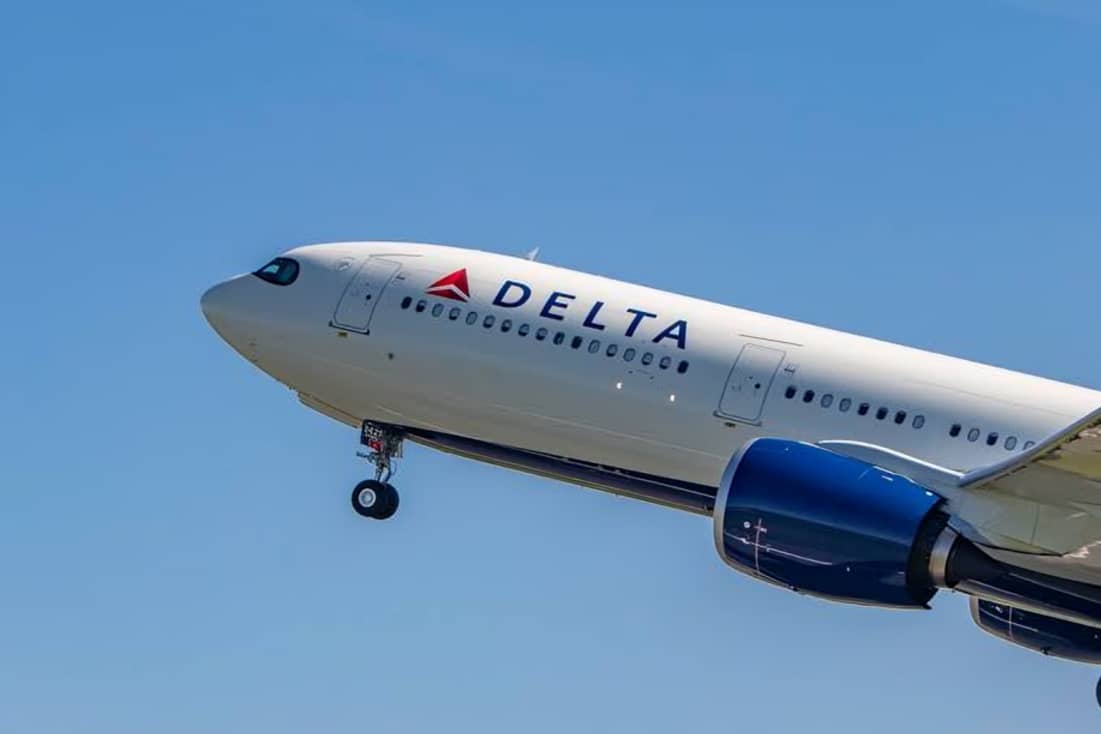
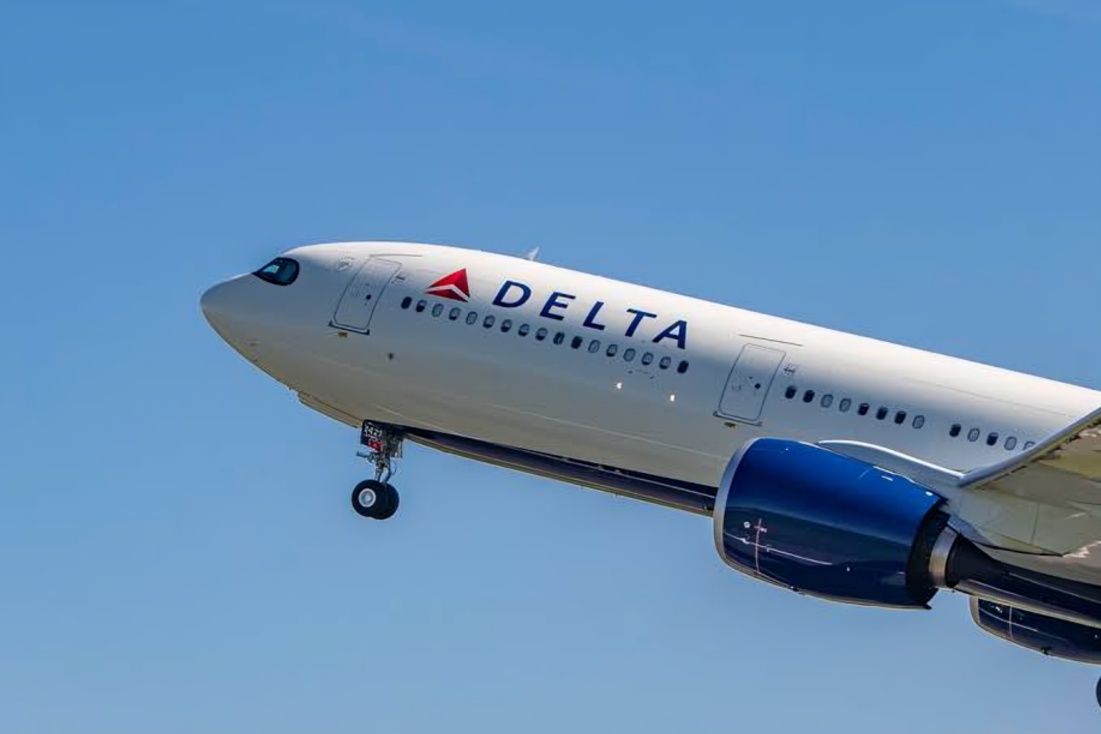
A Delta Air Lines flight travelling from Barcelona to Boston made an emergency landing in Porto, Portugal, after smoke was detected inside the aircraft cabin, prompting an emergency response at the airport.
The incident involved Delta Flight DL251, which was operating from Barcelona El Prat Airport in Spain to Boston Logan International Airport in the United States. The Airbus A330 was carrying hundreds of passengers when the crew diverted the aircraft to Porto after a reported mechanical issue and the presence of smoke in the cabin.
Delta confirmed that the aircraft landed safely at Francisco Sá Carneiro Airport in Porto. The airline said the diversion followed a reported mechanical issue and apologised to passengers for the disruption to their journey.
Portuguese emergency and civil protection authorities responded when the aircraft arrived at the airport. Several passengers were assessed by medical teams after landing.
There has been a slight difference in reports regarding the number of passengers who required hospital treatment. Reuters, citing a spokesperson for Portugal’s emergency and civil protection authority, reported that eight passengers were treated on the airport tarmac and three others were taken to hospital. Another report citing the Portuguese civil protection service said four passengers were taken to hospital after suffering smoke inhalation, while 14 people in total required medical assistance.
The available reports indicate that the medical conditions were not considered serious. The passengers taken to hospital were reported to have experienced symptoms associated with smoke inhalation. A later report from the Boston Globe said the three passengers reported by Delta as hospitalised had been discharged.
The aircraft was diverted to Porto instead of continuing its transatlantic journey to Boston. Flight tracking information showed that the aircraft departed Barcelona and later changed course towards Portugal before landing at Porto.
The reason for the emergency landing was described by Portuguese authorities as smoke in the cabin. Delta, meanwhile, described the diversion as being caused by a reported mechanical issue. The exact source of the smoke or fumes had not been publicly established in the initial reports.
Smoke or unusual fumes inside an aircraft are treated as a serious operational issue because the crew must determine whether there is an electrical, mechanical or other source that could pose a safety risk. In such circumstances, pilots may decide to divert to a suitable airport rather than continue a long flight.
The decision to divert was particularly significant because the flight was scheduled to cross the Atlantic Ocean on its way to the United States. Porto provided an available airport where emergency services could respond immediately after the aircraft landed.
Emergency personnel were positioned at Porto airport before the aircraft arrived. Firefighters, police and medical teams were prepared to assist the passengers and crew following the emergency landing.
The aircraft landed safely and the passengers were able to leave the plane. Those who required medical attention were assessed by emergency personnel, while the remaining passengers were assisted following the disruption to their journey.
The incident occurred on September 27, 2026, and attracted attention because it was another recent Delta flight to experience an in flight safety related diversion. Reports noted that the airline had experienced other incidents involving fumes, odours or aircraft systems in the preceding weeks. However, those incidents involved separate flights and aircraft, and there is no indication that they were connected to the Porto diversion.
The cause of the smoke remains an important part of the investigation. At the time of the initial reports, neither Delta nor Portuguese authorities had publicly identified the specific source of the smoke.
Smoke inside an aircraft cabin can originate from several possible sources, including mechanical systems, electrical equipment, galley equipment or other components. However, no specific cause has been confirmed in this incident, and it would be premature to attribute the smoke to any particular system.
Delta has said that smoke, fumes and unusual odours are rare but are treated seriously. The airline is expected to examine the aircraft and work with relevant authorities to determine what caused the problem.
The emergency landing also affected the travel plans of passengers who were originally scheduled to arrive in Boston. The aircraft and crew were temporarily out of position in Portugal following the diversion, requiring arrangements to be made for passengers to continue their journey.
The Boston Globe reported that Delta was working to help the passengers reach their final destination after the incident. The airline said it was assisting customers affected by the delay and working to get them to Boston safely and as quickly as possible.
The incident highlights the procedures airlines follow when smoke or fumes are detected during flight. Flight crews are trained to respond quickly to cabin smoke because the source may not immediately be visible. Depending on the circumstances, the crew may use emergency procedures, communicate with air traffic control and divert to the nearest suitable airport.
In this case, the flight crew diverted to Porto rather than continuing towards Boston. The aircraft subsequently landed without a reported major accident.
The airport response was coordinated with the arrival of the aircraft. Medical teams assessed passengers, while emergency services remained prepared to deal with any further problems.
Although the incident caused concern among passengers, there were no reports in the sources reviewed of a major fire or serious injuries. The aircraft itself landed safely, and the medical cases reported involved smoke related symptoms.
The different figures regarding medical treatment are likely related to differences in how authorities and news organisations counted passengers who were assessed at the airport and those who were transported to hospital. Reuters reported three hospitalisations, while CBS, citing the Portuguese civil protection service, reported four.
The precise number of people who required medical attention may therefore be clarified by the authorities or Delta in subsequent updates.
For passengers, the immediate priority following the incident was completing their journey to Boston. Delta was expected to arrange alternative travel and provide assistance to affected customers.
The aircraft's operational status and the precise cause of the smoke will also be important in determining when the aircraft can return to service. Such technical assessments are normally carried out before an aircraft involved in a mechanical or smoke related event is cleared for another flight.
The Porto incident comes at a time when aviation authorities and airlines continue to emphasise the importance of responding immediately to smoke and fumes inside aircraft cabins. Even when the final cause turns out to be relatively minor, unexplained smoke is treated cautiously because an aircraft in flight has limited options for dealing with a potentially developing fire.
In the Delta incident, the flight crew's decision to divert allowed emergency personnel to meet the aircraft at Porto. The aircraft landed safely, and passengers requiring medical attention were taken care of after landing.
The investigation into the source of the smoke is expected to provide more information about what caused the problem. Until that information is available, the incident can only be described as a smoke related emergency diversion following a reported mechanical issue.
For now, the confirmed details are that Delta Flight DL251 was travelling from Barcelona to Boston, diverted to Porto after smoke was detected in the cabin, and landed safely. Several passengers received medical attention, with reports differing on whether three or four were taken to hospital.
The incident caused a significant disruption to the passengers' transatlantic journey, but there were no reports of fatalities or serious injuries in the sources reviewed. Delta has apologised for the delay and said it was working to help passengers continue their journey to Boston.
Further information about the aircraft's mechanical issue, the source of the smoke and the final number of passengers requiring medical treatment may emerge as Delta and Portuguese authorities complete their assessments.