
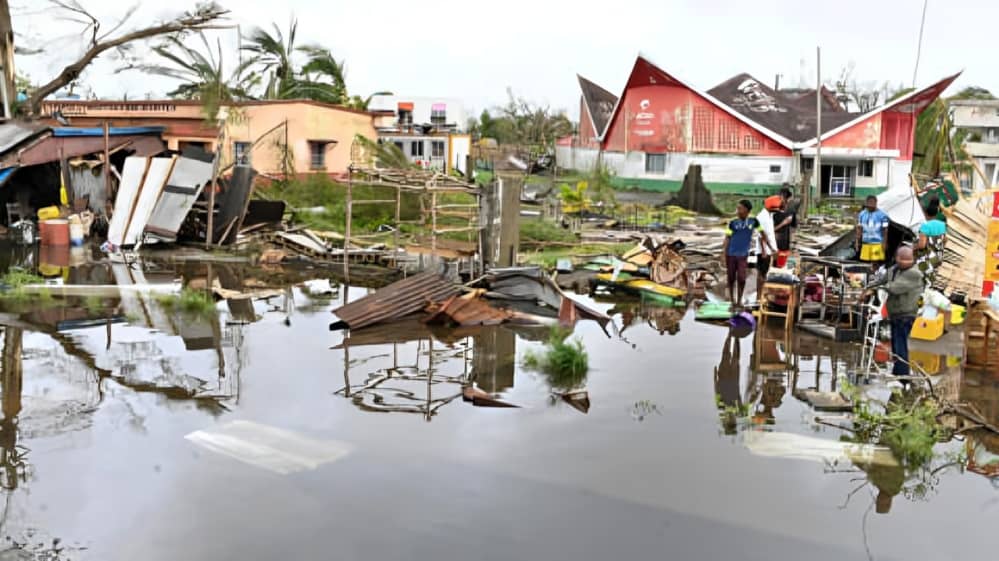
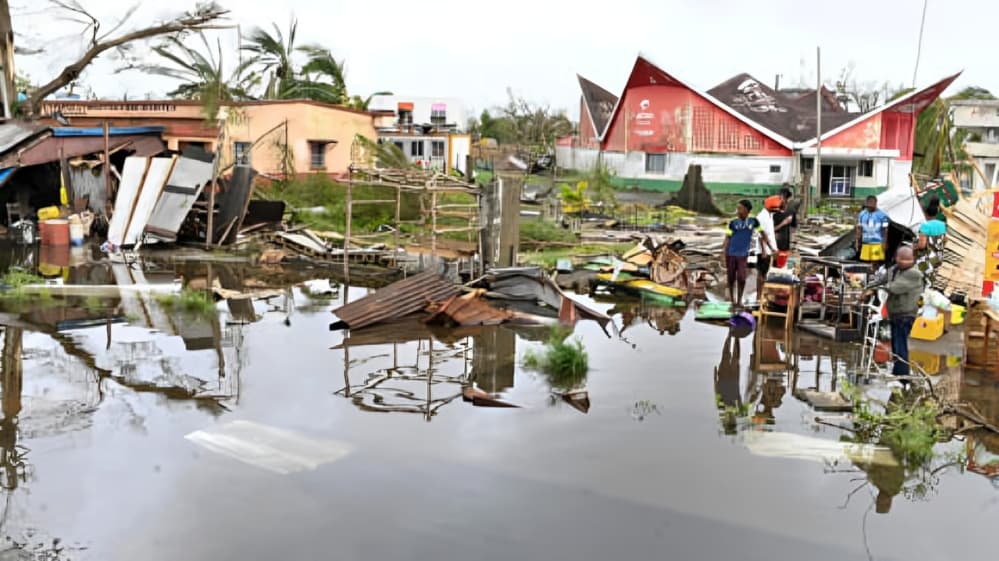
Cyclone Gezani has left a trail of destruction across Madagascar, with the impact still visible nearly two weeks after the storm made landfall along the country’s southern and eastern coasts. Communities remain overwhelmed as recovery efforts continue amid damaged infrastructure, flooded land and widespread displacement.
Satellite imagery reveals vast stretches of land submerged under water, turning agricultural fields and residential areas into swamps filled with debris. Thousands of homes have been reduced to rubble, and several neighborhoods have been swept away by powerful floodwaters. Residents are now attempting to salvage whatever belongings they can find while constructing temporary shelters from remaining materials.
The epicenter of the cyclone’s impact was along the eastern coastline, including areas such as the Tsararano region facing the Indian Ocean. The port city of Toamasina, formerly known as Tamatave, reported the majority of fatalities. Toamasina is Madagascar’s second largest city, with an estimated population of about 400,000 people. Local authorities and emergency services have been working to assess the full extent of damage in urban and rural communities.
Survivors have described the terrifying moments when strong winds and heavy rain struck their homes. Several residents reported that buildings collapsed under intense pressure from wind gusts and flooding. In many areas, metal roofing sheets were torn away and homes were flattened, forcing families to seek shelter wherever possible. Rescue efforts were often carried out by neighbors and local volunteers before official teams could reach affected zones.
The United Nations Office for the Coordination of Humanitarian Affairs has stated that approximately 35,000 people were evacuated due to the cyclone. An estimated 380,000 individuals now require emergency humanitarian assistance, including food, clean water, medical care and temporary shelter. Authorities also reported that around 25,000 homes were destroyed or severely damaged, along with more than 750 classrooms, disrupting education for thousands of children.
After moving across Madagascar, Cyclone Gezani continued toward Mozambique but weakened about 50 kilometers before reaching its coastline. However, the storm still affected parts of southern Mozambique, including the city of Inhambane, bringing wind speeds of up to 215 kilometers per hour.
Relief agencies are currently distributing emergency supplies in accessible areas, though damaged roads and flooded routes have slowed some operations. Humanitarian organizations have emphasized the urgent need for additional funding and coordinated support to address immediate needs and begin long term rebuilding efforts.
The scale of devastation highlights Madagascar’s vulnerability to extreme weather events. As recovery progresses, government authorities and international partners face the challenge of rebuilding homes, restoring essential services and strengthening infrastructure to better withstand future storms. For many families who have lost everything, the road to recovery is expected to be long and demanding.


