A powerful storm system moved across parts of Long Island, New York, on Thursday, bringing heavy rain, strong winds, flooding and possible tornado activity.
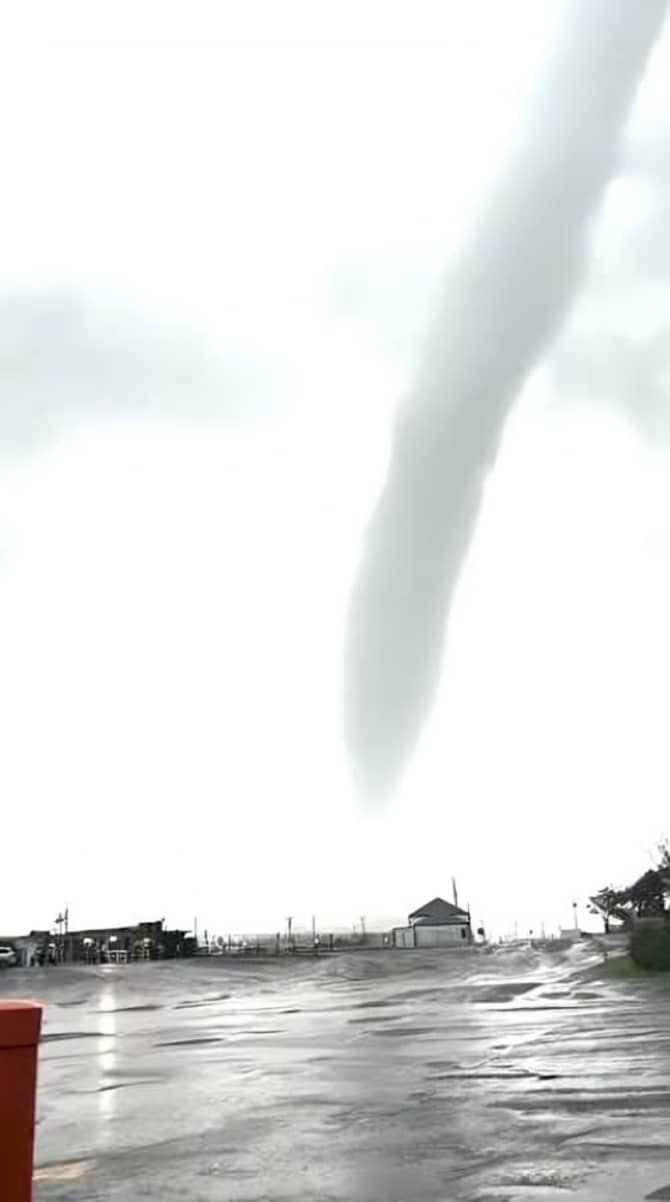
A tornado warning was issued for parts of Nassau County and Queens as severe thunderstorms moved through the region. At the same time, a waterspout was observed offshore near Atlantic Beach, raising concerns about the possibility of the rotating storm moving onto land.
The most significant reported damage occurred in Atlantic Beach, where a possible tornado affected the area around the Sun and Surf Beach Club. Photos and videos from the area showed debris scattered across the shoreline and damage to beach structures.
Nassau County Executive Bruce Blakeman declared a state of emergency following the storm. Officials said emergency teams were deployed to assess the damage and ensure that people were not trapped inside damaged structures. Initial reports indicated that there were no deaths or serious injuries.
The weather event began as a waterspout over the Atlantic Ocean near Long Island. A waterspout is a rotating column of air and water spray that develops over a body of water. When such a circulation moves onto land, it can become a tornado or produce tornado-like damage.
The National Weather Service was assessing the event to determine the precise nature and strength of the phenomenon. Officials cautioned that the final classification could depend on a detailed examination of the damage.
Videos circulating online showed a large funnel-shaped formation over the water near Atlantic Beach. Other footage showed severe winds and debris around the beach facilities as the storm moved inland.
The Sun and Surf Beach Club was among the locations affected. Reports indicated that cabanas and other beach structures were damaged, with pieces of wood and other debris scattered across the area.
Nearby Silver Point Beach Club also reported property damage, according to local officials. Search teams were sent to the area to check the damaged structures and make sure nobody remained trapped.
The storm also caused significant flooding in parts of Long Island. Several roads were affected by heavy rainfall, while emergency responders dealt with reports of motorists becoming stranded in flooded vehicles.
Nassau County authorities coordinated emergency operations as conditions deteriorated. The county's Emergency Operations Center was activated following the reports of storm damage and flooding.
The tornado warning covered parts of southwestern Nassau County and areas of Queens. The warning was issued for communities including Oceanside and Baldwin Harbor as the severe weather system moved through the region.
The weather system was part of a broader episode of severe storms affecting the northeastern United States. Heavy rain, damaging winds and flooding were reported in several locations.
New York City also experienced flooding during the storm. Major roads in Queens were affected, creating difficult driving conditions for motorists.
The Long Island Expressway was among the roads affected by flooding, according to reports. Emergency officials urged residents to avoid flooded roads and take alternative routes where necessary.
The storm's impact was not limited to Long Island. Other parts of the northeastern United States also experienced severe weather, including flooding and possible tornadoes.
In New Jersey, emergency responders rescued people from flooded vehicles, while Delaware also reported tornado-related damage. The widespread weather system created hazardous conditions across multiple states.
For residents in the affected areas, the sudden development of the waterspout and possible tornado highlighted the difficulty of predicting rapidly developing severe weather.
Weather authorities issue tornado warnings when radar observations or other evidence indicate that a tornado may be occurring or developing. Such warnings are intended to give residents enough time to seek shelter.
During a tornado warning, residents are generally advised to move indoors, preferably to an interior room on the lowest level of a sturdy building and away from windows.
The Atlantic Beach event also demonstrated the potential danger of waterspouts. Although waterspouts form over water, they can become hazardous when they approach coastal communities or move onto land.
The damage assessment in Atlantic Beach will help determine the strength and classification of the storm. Officials will examine damaged buildings, vegetation and other structures to estimate the intensity of the winds.
At the time of the initial reports, there was no official confirmation of the exact tornado rating.
Local officials also faced the challenge of dealing with flooding at the same time as the wind damage. Heavy rainfall caused water to accumulate rapidly on several roads, leaving some motorists stranded.
Emergency crews were sent to assist people affected by the flooding. Authorities urged residents to remain cautious as water levels and road conditions could change quickly.
The declaration of a state of emergency allowed Nassau County authorities to coordinate resources and emergency operations more effectively.
Officials also worked with neighbouring jurisdictions because severe weather was affecting a wider section of the New York metropolitan area.
The event attracted significant public attention because of videos showing the waterspout and the apparent tornado moving toward the Atlantic Beach shoreline.
Several videos were shared widely on social media, showing the funnel over the water and the storm's impact near the beach clubs. However, officials and weather experts have stressed the importance of relying on verified information when determining whether a particular video shows a tornado or waterspout.
The National Weather Service's assessment will be important in establishing exactly what happened.
A waterspout can develop under certain atmospheric conditions when warm, moist air interacts with unstable weather systems. Strong thunderstorms can create rotating air columns capable of producing damaging winds.
If the circulation moves onto land, the resulting damage can resemble that of a conventional tornado.
The Atlantic Beach incident occurred during a period of severe thunderstorms across the region, making the weather conditions favourable for rapidly developing hazards.
Residents were also dealing with heavy rainfall and flash flooding at the same time. This combination increased the overall risk to people travelling or remaining outdoors.
Authorities urged people to avoid unnecessary travel while the strongest storms passed through.
The storm caused damage to beach facilities but initial reports did not indicate widespread casualties. Emergency teams focused on checking damaged buildings and assisting people affected by flooding.
Nassau County officials said there were no reports of deaths or serious injuries at the time of the initial emergency response.
The situation remained under observation as authorities assessed the extent of the damage.
Cleanup operations are expected to continue as damaged structures are inspected and debris is removed.
The storm also serves as a reminder that severe weather can affect coastal areas rapidly. Long Island communities are exposed to thunderstorms, flooding, strong winds and occasional tornadoes.
Weather warnings can provide residents with critical time to move to safer locations. Officials therefore continue to encourage residents to monitor emergency alerts and National Weather Service updates during severe weather.
For businesses located near the coast, the incident could also result in significant property damage. Beach clubs and other shoreline facilities can be particularly vulnerable to strong winds because of their exposed locations and lightweight structures.
The damage at Sun and Surf Beach Club will be assessed in greater detail as emergency teams complete their inspections.
The state of emergency declared by Nassau County reflects the seriousness of the combined weather impacts, particularly the possible tornado damage and flooding.
The event also affected transportation. Flooded roads created dangerous conditions, and some motorists required assistance from emergency responders.
Officials warned residents not to drive through flooded areas because water depth can be difficult to judge and vehicles can lose control or become stranded.
The severe weather eventually moved away from the region, but authorities continued to monitor flooding and damage.
The National Weather Service's final assessment will determine whether the Atlantic Beach event is officially classified as a tornado, a tornadic waterspout or another type of severe wind event.
Until that assessment is completed, describing the event as a possible tornado is the most accurate approach.
The incident has nevertheless caused clear property damage in Atlantic Beach and prompted emergency authorities to take significant action.
For residents of Long Island, the priority following the storm is safety, damage assessment and recovery. Emergency personnel are continuing to inspect affected locations and respond to calls for assistance.
The weather event demonstrates how quickly severe thunderstorms can produce multiple hazards, including tornadoes, waterspouts, flooding and damaging winds.
Authorities are expected to provide further information as damage surveys are completed and the weather system moves farther away.
For now, the confirmed information is that severe storms affected Long Island, a tornado warning was issued for parts of Nassau County and Queens, a waterspout was observed near Atlantic Beach, and significant property damage was reported at beach facilities.
Nassau County has declared a state of emergency, while emergency teams continue their response.
No deaths or serious injuries were initially reported, but officials are continuing to assess the full impact of the storm