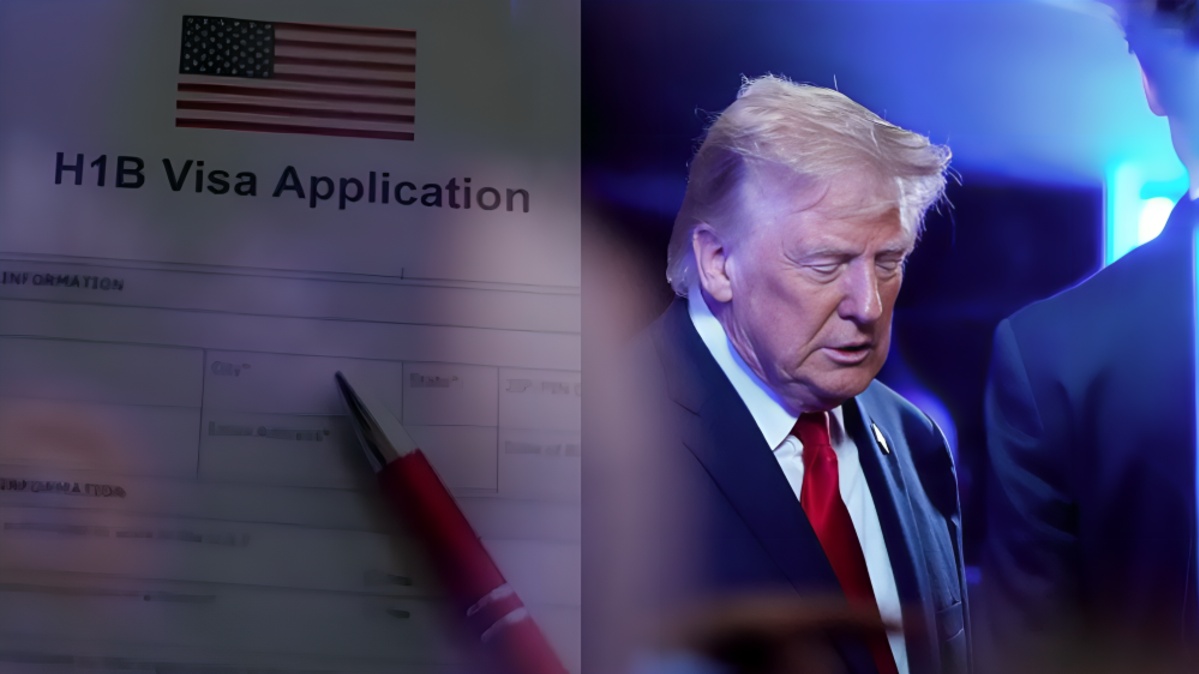
A second US federal judge has blocked the Trump administration from enforcing the 100000 dollar payment requirement imposed on certain new H 1 B visa workers, creating another legal setback for the policy and providing temporary relief for employers seeking to hire skilled foreign professionals.
US District Judge Haywood Gilliam issued the latest ruling in California, finding that the US Citizenship and Immigration Services and the State Department did not follow the required administrative procedures when implementing the 100000 dollar payment requirement. The decision adds another layer to the ongoing legal dispute over the Trump administration's H 1 B policy.
The H 1 B programme allows US employers to employ foreign professionals in specialised occupations. The programme is widely used by companies in sectors such as technology, engineering, healthcare, research and other specialised fields.
The latest court ruling is particularly significant for Indian professionals because Indian nationals account for a substantial share of H 1 B approvals. The programme has historically been an important route for Indian technology professionals seeking employment in the United States.
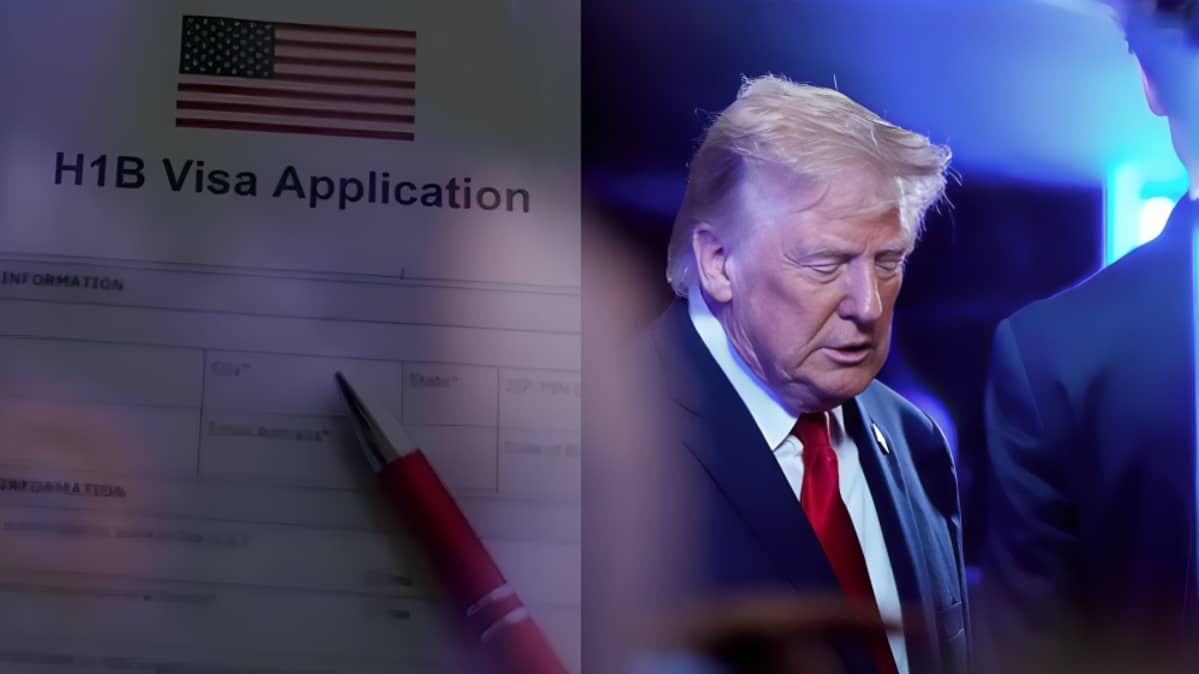
The 100000 dollar payment requirement was introduced by President Donald Trump's administration in September 2025. The administration said the measure was intended to address what it described as abuse of the H 1 B programme and concerns that some employers were using lower paid foreign workers instead of American workers.
Under the policy, certain H 1 B petitions involving workers outside the United States were required to be accompanied by a 100000 dollar payment. The measure represented a major increase compared with the standard costs historically associated with H 1 B petitions and visas.
The policy immediately generated legal challenges from businesses, states, organisations and other groups. Opponents argued that the administration did not have the authority to impose such a large payment without congressional action and that the measure could make it significantly more expensive for US employers to recruit specialised foreign workers.
The latest ruling follows an earlier decision by a federal judge in Massachusetts. In June 2026, US District Judge Leo Sorokin ruled against the 100000 dollar fee. That case was subsequently appealed by the Trump administration. A federal appeals court later rejected the administration's request to halt the earlier ruling.
The new California ruling is based on a different legal issue. Judge Haywood Gilliam concluded that federal agencies had not followed the required rulemaking procedures while implementing the payment requirement. This means that the latest decision adds another legal challenge to the administration's approach to the H 1 B fee.
For Indian professionals, the immediate significance is that the 100000 dollar requirement cannot currently be enforced in the manner challenged in the latest case. However, the broader H 1 B immigration framework remains subject to other rules and restrictions.
It is also important to distinguish between the court decisions concerning the 100000 dollar payment and the Trump administration's broader H 1 B policy. On September 18, 2026, Trump extended the underlying restriction on certain H 1 B workers for another 12 months, until September 21, 2027. The presidential proclamation states that the restriction applies to certain workers outside the United States unless the specified payment is made or an applicable exception is granted.
The administration has defended the policy by arguing that the H 1 B programme has been abused by some employers and that restrictions are necessary to protect US workers and improve the programme's integrity. The White House has also pointed to changes in H 1 B registration patterns following the introduction of the restrictions.
At the same time, opponents of the policy have argued that the high payment requirement could make it harder for US businesses, universities, hospitals and other organisations to recruit workers with specialised skills. The H 1 B programme is used across several industries, meaning that changes to the system can affect employers beyond the technology sector.
The impact on Indian workers is an important part of the debate because India has traditionally been the largest source of H 1 B beneficiaries. A large number of Indian professionals work in the US technology industry, while others are employed in engineering, healthcare, research and specialised professional occupations.
The court rulings do not mean that all H 1 B restrictions have been removed. The legal decisions specifically concern the 100000 dollar payment requirement and the authority or procedures used to implement it. Other immigration requirements continue to apply to H 1 B applicants and employers.
The latest development also does not represent a final resolution of the legal dispute. The Trump administration can seek further review of the ruling, and additional litigation concerning the H 1 B programme is continuing.
The US government has separately moved toward formalising a new H 1 B fee structure. Reuters reported in August that the Department of Homeland Security was working on a proposal for a fee of more than 100000 dollars, potentially making the policy part of a longer term regulatory framework.
This means that Indian professionals and US employers may continue to face uncertainty even after the latest court ruling. The outcome of the ongoing litigation, future administrative rules and any decisions by higher courts could determine how the H 1 B system operates in the coming months.
For Indian students and professionals considering US employment, the latest ruling provides a legal development concerning the 100000 dollar payment requirement, but it does not guarantee that every future H 1 B application will be exempt from additional restrictions or costs.
Employers also need to consider the specific circumstances of each H 1 B petition, including whether the applicant is already in the United States, whether the petition involves a new worker or an extension, and whether any exceptions apply.
The current situation therefore remains fluid. The second federal court ruling has blocked enforcement of the 100000 dollar fee challenged in the case, while the Trump administration continues to pursue broader changes to the H 1 B system.
The legal dispute is likely to continue through further court proceedings. Until additional decisions or official guidance are issued, applicants and employers should rely on current instructions from US immigration authorities and consult qualified immigration professionals for individual cases.
For Indian H 1 B applicants, the latest court ruling is an important development because it removes, at least for now, one of the most significant additional financial requirements associated with the programme. However, the broader immigration policy remains subject to litigation, administrative action and possible further changes.