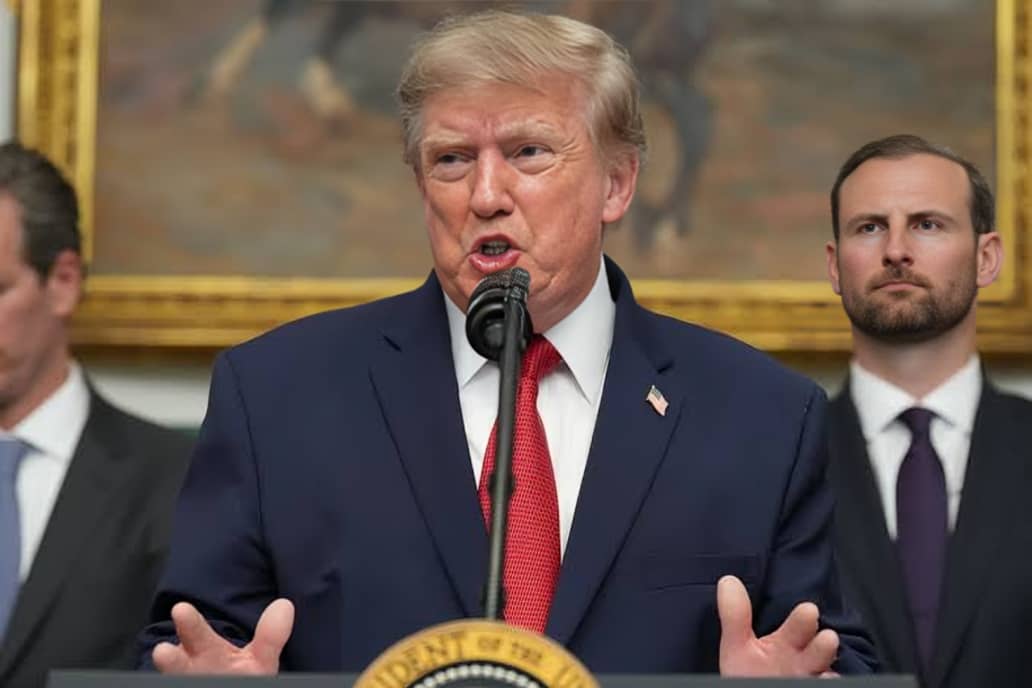
US President Donald Trump has announced a major new economic campaign against Iran, significantly increasing pressure on Tehran amid continuing tensions and stalled efforts to resolve the conflict.
Trump described the initiative as the most crushing economic operation ever taken against a country. He also warned governments, companies and other entities that provide financial or commercial assistance to Iran that they could face what he described as tremendous economic consequences. The announcement marks another escalation in Washington's efforts to isolate the Iranian economy.
The new US approach focuses on restricting Iran's access to international financial and commercial networks. Trump has indicated that the campaign could target oil smuggling, financial transactions and businesses maintaining economic relationships with Tehran. The precise details and scope of additional measures were still being developed when the announcement was made.
The US announcement comes against the backdrop of a continuing confrontation between Washington and Tehran. Negotiations aimed at reducing tensions have remained uncertain, while disagreements over Iran's nuclear programme and broader security issues continue to complicate diplomatic efforts.
The Strait of Hormuz remains one of the most important strategic issues in the confrontation. The waterway is a major route for global energy shipments, and continued uncertainty surrounding navigation through the area has increased concerns among shipping companies, energy producers and international markets.
At the same time, the United Arab Emirates has taken a major economic step against Iran. The UAE announced that it had suspended all trade, commercial exchanges and financial transactions with Iran until further notice. The decision followed reported missile incidents and was announced amid what Emirati authorities described as growing regional tensions.
The UAE has attributed the reported missile incidents to Iran. Tehran, however, has denied responsibility for the launches. According to reports, two ballistic missiles were detected and landed in the sea without causing the damage that would have resulted from a direct strike on major infrastructure. The conflicting claims have added to the uncertainty surrounding the latest escalation.
The UAE's decision is particularly significant because the country has historically been an important commercial and financial link between Iran and international markets. Dubai, in particular, has maintained extensive business connections with Iranian companies and traders. Suspending financial and commercial dealings could therefore create additional pressure on Iran's external economic activity.
The development also comes after reports of attacks involving UAE-linked shipping in the Strait of Hormuz. The security situation in and around the waterway has become increasingly important because any prolonged disruption could affect global oil supplies, shipping costs and international trade.
For Iran, the combination of US economic pressure and reduced commercial access through a major regional trading partner could increase existing financial difficulties. The impact will depend on how extensively the measures are implemented and whether other countries continue their economic relationships with Tehran.
For the United States, the campaign represents an attempt to use economic pressure to force Iran towards Washington's preferred negotiating position. Trump has maintained that Iran must address US concerns, including the country's nuclear programme, before a lasting settlement can be reached.
Iranian officials have rejected the latest US measures. Iranian Foreign Minister Abbas Araghchi criticised the campaign and dismissed Trump's announcement as an attempt to divert attention from other issues inside the United States.
The UAE's move could also have wider regional consequences. Other Gulf countries are closely monitoring the security situation, particularly because the region's economies depend heavily on stable maritime trade and uninterrupted energy exports.
International markets are also watching developments around the Strait of Hormuz. Any prolonged reduction in shipping activity could put upward pressure on energy prices and increase transportation and insurance costs.
The latest developments therefore combine economic and geopolitical pressure on Iran. The United States is threatening stronger sanctions and economic isolation, while the UAE has suspended its commercial and financial dealings with Tehran.
The situation remains fluid, and the final impact of these measures will depend on whether Washington introduces additional sanctions, whether other countries follow the UAE's decision and whether diplomatic negotiations between the United States and Iran resume.
For India and other major energy-importing economies, developments in the Gulf are particularly important. Any disruption to oil transportation could affect crude prices, import costs and inflation.
The latest US and UAE actions demonstrate how the Iran conflict is increasingly affecting not only military and diplomatic relations but also international trade and financial networks. The coming days are expected to be closely watched for further sanctions, retaliatory measures, changes in shipping activity and possible diplomatic initiatives.