
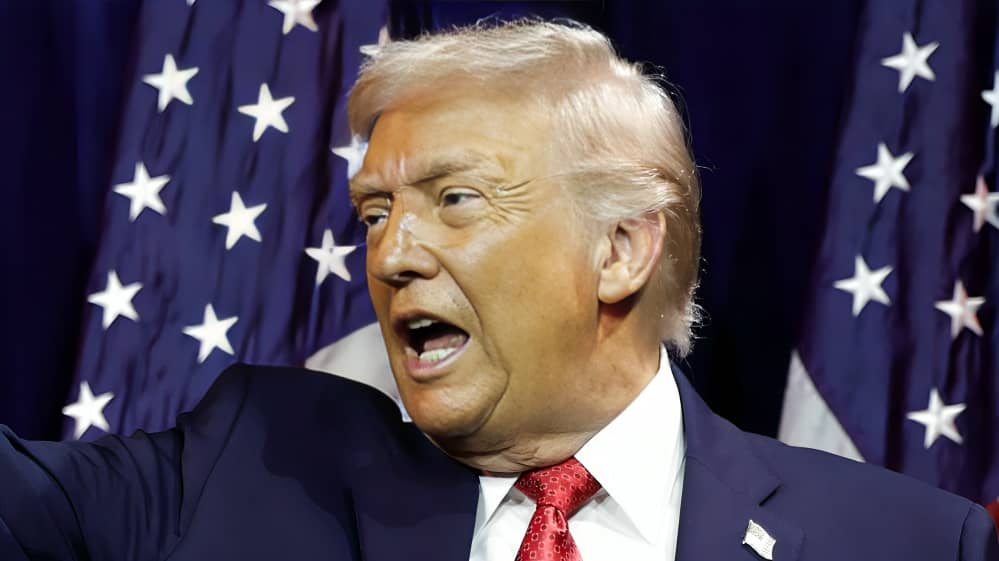

Former United States President Donald Trump has ruled out the possibility of meeting Reza Pahlavi, Iran’s exiled crown prince, citing concerns over appropriateness amid ongoing protests in Iran. Trump’s remarks come at a time when the Islamic Republic is facing sustained demonstrations driven by political, economic, and social grievances.
Speaking on the issue, Trump described Pahlavi as a “nice person” but maintained that holding a meeting with opposition figures would not be suitable. He indicated that such engagement could carry diplomatic implications and potentially escalate tensions. Trump’s comments reflect a cautious approach toward direct involvement with Iranian opposition movements, even as unrest within Iran continues to attract global attention.
Reza Pahlavi, the son of Mohammad Reza Shah Pahlavi, who was overthrown during the 1979 Iranian Revolution, has lived in exile for decades. In recent years, he has emerged as a prominent voice calling for democratic reforms and greater freedoms in Iran. While Pahlavi does not claim formal leadership over protest movements, he has expressed support for demonstrators and advocated for international pressure on Tehran.
The protests in Iran have been marked by widespread public dissatisfaction with governance, economic hardship, and restrictions on civil liberties. International reactions have varied, with some countries voicing concern over human rights issues while others have urged restraint and dialogue. The situation has placed foreign governments in a delicate position regarding how openly to engage with Iranian opposition figures.
Trump’s decision not to meet Pahlavi underscores the complexities surrounding US involvement in Iran-related matters. During his presidency, Trump pursued a hardline policy toward Tehran, including withdrawing the US from the Iran nuclear deal and imposing strict economic sanctions. However, he has also emphasized avoiding actions that could be interpreted as direct interference in Iran’s internal politics.
Political analysts note that meetings between prominent international leaders and opposition figures can carry symbolic weight and may influence internal dynamics within a country. As a result, such engagements are often weighed carefully against potential diplomatic fallout. Trump’s remarks suggest an effort to avoid sending signals that could be construed as endorsing regime change through external intervention.
At the same time, supporters of Iran’s protest movement argue that international visibility and moral backing are important for sustaining momentum. The question of how foreign leaders should respond to domestic unrest in other countries remains a subject of debate in global diplomacy.
In summary, Donald Trump’s decision to decline a meeting with Reza Pahlavi reflects a cautious stance amid ongoing protests in Iran. While acknowledging Pahlavi personally, Trump emphasized the need to avoid actions that could complicate diplomatic considerations. The development highlights the delicate balance foreign leaders face when responding to political unrest beyond their borders.


