US President Donald Trump has signed an executive order directing the establishment process for a new United States Space Academy, an institution intended to prepare the next generation of professionals for the country’s expanding space programme.
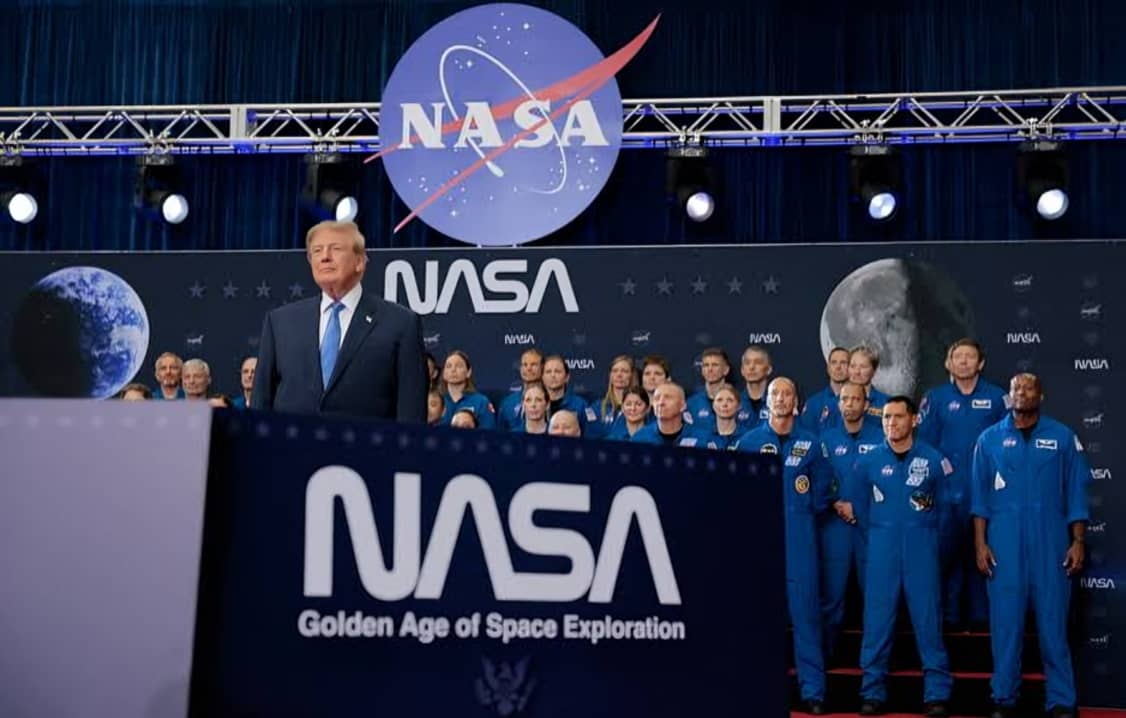
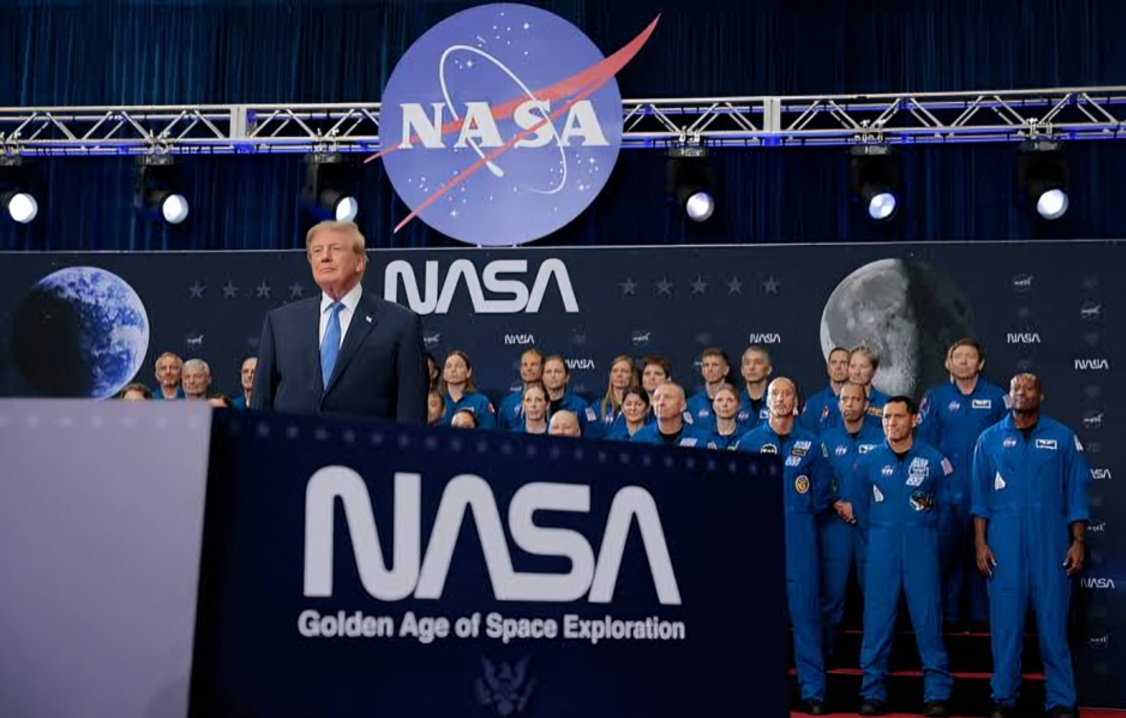
Trump signed the order on August 28, 2026, during an event at NASA’s Johnson Space Center in Houston, where he also honoured the Artemis II astronauts with the Congressional Space Medal of Honor. NASA said the proposed academy will be the nation’s first United States Space Academy.
The initiative is designed to address the growing demand for skilled personnel across the American space sector. The proposed academy would combine technical education with leadership development, discipline and a commitment to public service.
According to the executive order, the academy is intended to prepare future astronauts, scientists, engineers, operators, entrepreneurs, civil servants and military personnel involved in the space sector.
The proposed institution is expected to support several areas of the US space programme, including NASA, the US Space Force and the growing commercial space industry. Trump said the rapid expansion of America's space ambitions would require a new generation of highly trained professionals.
The White House said the academy would focus on technical fields where the United States currently needs more trained workers and graduates. The institution is expected to encourage students to pursue advanced scientific and engineering disciplines connected with space exploration, national security and commercial space activities.
The academy is being planned as a NASA led federal institution. However, it is important to note that the executive order does not mean that a fully operational academy has already opened. Instead, it establishes a presidential commission that will develop a framework for creating the institution.
NASA Administrator Jared Isaacman has been appointed chair of the Presidential Commission on the United States Space Academy. NASA Deputy Administrator Matt Anderson will serve as the commission’s executive director, while other senior administration officials will also participate.
The commission has been given 120 days to submit recommendations to the President. Its work will include examining the academy’s governance structure, potential location, service obligations for graduates and any legislation that may be required to establish the institution.
The exact location of the academy has not yet been finalised. Houston is a prominent possibility because the announcement was made at NASA’s Johnson Space Center, but the final location will be determined through the commission’s recommendations.
The proposed academy has been compared with America’s existing military service academies, including the United States Military Academy at West Point. However, the new institution is intended to have a broader focus that includes both military and civilian space activities.
The distinction between military and civilian training is important. The United States Space Force is a branch of the US armed forces responsible for organising, training and equipping personnel for space operations. NASA, meanwhile, is a civilian agency focused on space exploration, scientific research and aeronautics.
The commercial space industry has also become a major part of the US space programme. Private companies are increasingly involved in rocket launches, satellite services, human spaceflight, lunar missions and other space related activities.
The new academy is therefore intended to help develop a workforce capable of serving across these different parts of the space economy.
The initiative comes at a time when the United States is increasing its ambitions for lunar exploration and future Mars missions. NASA’s Artemis programme is aimed at returning astronauts to the Moon, while the US government is also encouraging commercial investment in space transportation and infrastructure.
The Trump administration has recently issued other policies aimed at strengthening American space capabilities. On August 20, 2026, the White House issued a National Space Transportation Policy calling for the United States to develop launch and reentry capacity capable of supporting more than 1,000 launches and reentries annually by 2030.
The proposed Space Academy is part of this broader effort to expand America's space workforce and infrastructure.
The academy could eventually provide education and training in areas such as aerospace engineering, space science, satellite technology, spacecraft operations, space systems, robotics and other advanced technical fields. The exact curriculum, degree structure and admission requirements have not yet been finalised.
The executive order specifically calls for rigorous technical education combined with leadership development, discipline and public service. The objective is to develop graduates capable of contributing to both government and commercial space programmes.
The question of service obligations is also expected to be considered by the presidential commission. Existing US military academies generally include service commitments for graduates, but the precise obligations associated with the proposed Space Academy have not yet been established.
Another major issue will be funding. The institution is expected to be federally supported, but details about construction, staffing, scholarships, operating costs and long term funding will need to be worked out.
Supporters of the proposal argue that a dedicated academy could help address shortages of engineers, scientists, technicians and other skilled workers at a time when the space sector is expanding rapidly.
The US Space Force is also growing, creating demand for personnel with specialised knowledge of satellite systems, space operations, communications and other technologies.
The commercial space industry faces similar workforce challenges. Private companies involved in launch vehicles, spacecraft, satellites and lunar exploration require engineers and technical specialists with advanced training.
The academy could therefore become a bridge between government space agencies, the military and private industry.
At the same time, the proposal raises practical questions about whether a new institution is necessary when the United States already has major universities, military academies and technical institutions producing aerospace professionals.
Those questions are likely to be examined during the commission’s 120 day review.
The proposed academy also reflects the increasing strategic importance of space. The Trump administration has described space as a critical domain for national security, economic growth, scientific discovery and technological innovation.
Space is no longer viewed solely as an area for scientific exploration. Satellites support communications, navigation, weather forecasting, military operations, financial systems and other critical services.
The United States is also competing with other major space powers, particularly China, in areas including lunar exploration, satellite technology and commercial space development.
The White House has therefore linked the proposed academy to maintaining American leadership in space.
Trump's announcement also came during a ceremony recognising the Artemis II crew. The four astronauts completed a lunar flyby mission earlier in 2026, marking an important step in NASA’s plans for future lunar exploration.
The timing of the announcement highlights the connection between the proposed academy and America's long term exploration goals.
The United States intends to expand human activity around the Moon and eventually pursue more ambitious missions beyond lunar orbit. Such programmes will require a large workforce of engineers, scientists, astronauts, technicians and mission specialists.
The proposed Space Academy is intended to contribute to building that workforce.
However, the academy is still in its planning stage. The presidential commission must first develop recommendations on how the institution should operate, where it should be located and what legal and legislative measures may be necessary.
The commission’s report within 120 days will therefore be an important next step.
If the proposal moves forward as planned, the institution could become a major part of America's education and workforce strategy for space.
For now, the confirmed development is that President Trump has signed an executive order beginning the process of establishing the United States Space Academy. The proposed NASA led institution is intended to combine technical education, leadership training and public service while preparing personnel for America's military, civilian and commercial space sectors.
The final structure, location, curriculum, funding arrangements and service requirements will be determined after the presidential commission completes its review and submits recommendations to the President.