
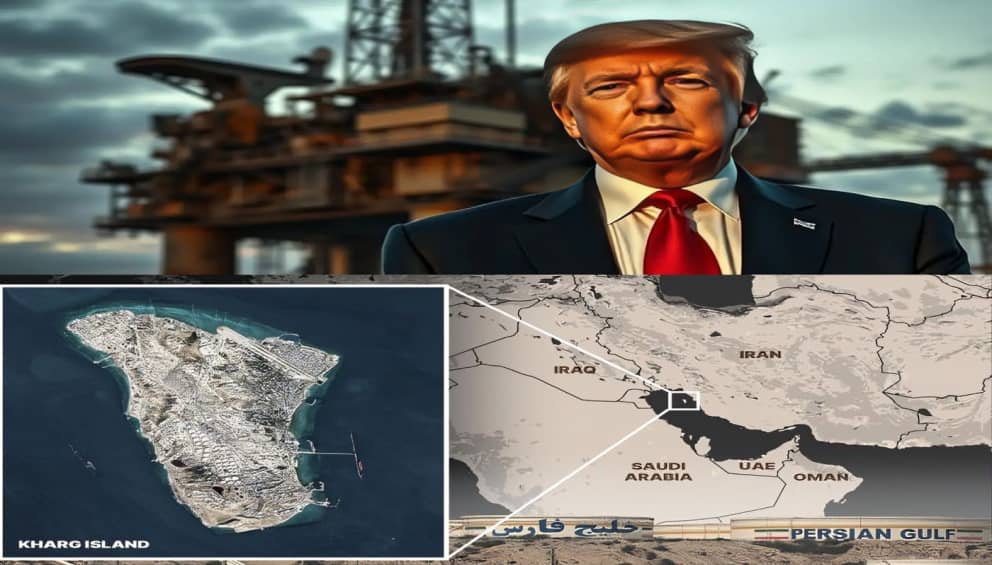
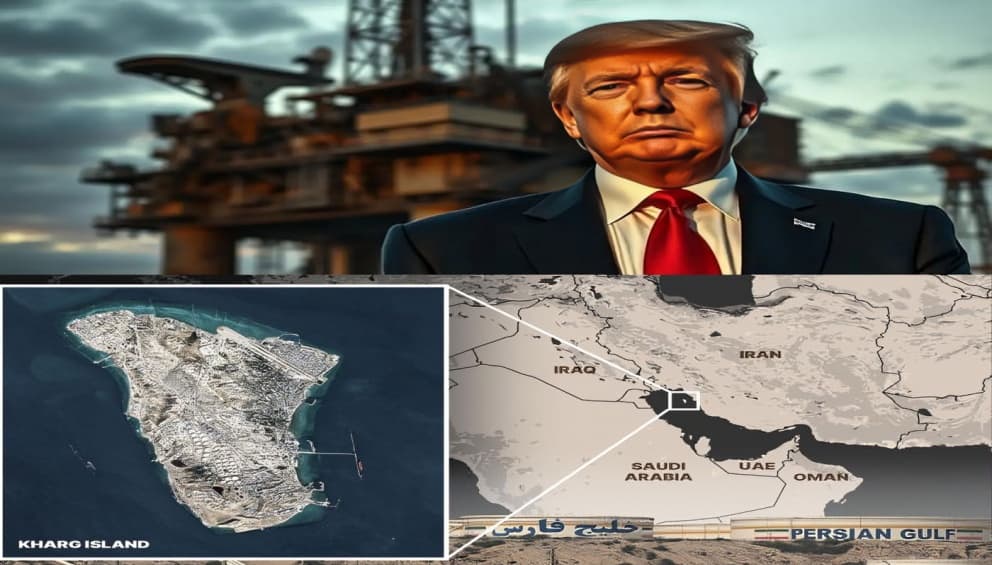
United States President Donald Trump has confirmed that American forces conducted strikes on military facilities located on Iran’s Kharg Island, a strategic location in the Persian Gulf known for its role in oil exports and maritime activity. The announcement was made during a public statement in which the president also warned Iran against interfering with international shipping routes in the Strait of Hormuz.
According to Trump, the operation targeted facilities believed to be linked to military activities on the island. He said the action was taken as part of broader efforts to protect freedom of navigation and ensure that global shipping lanes remain open and secure. The president emphasized that the United States would take stronger measures if any attempt is made to disrupt maritime trade in the region.
Kharg Island is considered one of Iran’s most significant energy infrastructure locations, serving as a major terminal for the country’s crude oil exports. Because of its strategic importance, developments related to the island often draw global attention from governments, energy markets, and security analysts.
The Strait of Hormuz, located between Iran and Oman, is one of the world’s most critical maritime chokepoints. A significant portion of the world’s oil shipments passes through this narrow waterway each day, making stability in the region essential for global energy supply and international trade. Any disruption in the strait can influence oil prices and raise concerns about the security of energy transport routes.
During his remarks, Trump stated that the United States remains committed to safeguarding international shipping lanes. He warned that interference with vessels or attempts to block maritime routes would prompt a decisive response. The president added that maintaining open sea lanes is a priority for global economic stability.
The announcement has intensified attention on the already sensitive geopolitical situation in the Middle East. Regional tensions have periodically risen due to disagreements over security, nuclear policies, and maritime activities. Analysts note that military actions or threats affecting the Strait of Hormuz often have broader implications beyond the immediate region, including potential effects on global markets and diplomatic relations.
International observers are closely monitoring the situation to assess how Iran and other regional actors may respond. Diplomatic channels are often used in such situations to prevent escalation and encourage dialogue between countries involved.
Energy analysts also point out that any development near major oil export facilities or key shipping routes can quickly influence global energy markets. Traders and governments around the world watch the region carefully because the Strait of Hormuz remains central to the movement of crude oil and liquefied natural gas shipments.
While the United States has emphasized its intention to ensure the safety of maritime commerce, experts say the coming days will be important in determining whether tensions escalate or whether diplomatic engagement helps reduce the risk of further confrontation.
The situation continues to evolve as governments, international organizations, and energy markets monitor developments in the Persian Gulf region.


