The US Navy is exploring a new generation of air launched anti submarine warfare technology under a programme known as the Silent Anvil Air Launched Torpedo, or SAA LT. The initiative is aimed at developing a weapon that can be released from aircraft or unmanned platforms and travel through the air before entering the water to search for submarines.
The programme reflects the growing importance of long range anti submarine warfare as naval forces increasingly operate across large maritime areas. Modern submarines are becoming quieter and more capable, creating a requirement for improved detection and engagement systems.
According to a recent US Navy request for information, the Silent Anvil programme is considering two main approaches. The first would involve developing a completely new torpedo with an integrated glide capability. The second option would involve creating a glide kit that could be attached to an existing torpedo.
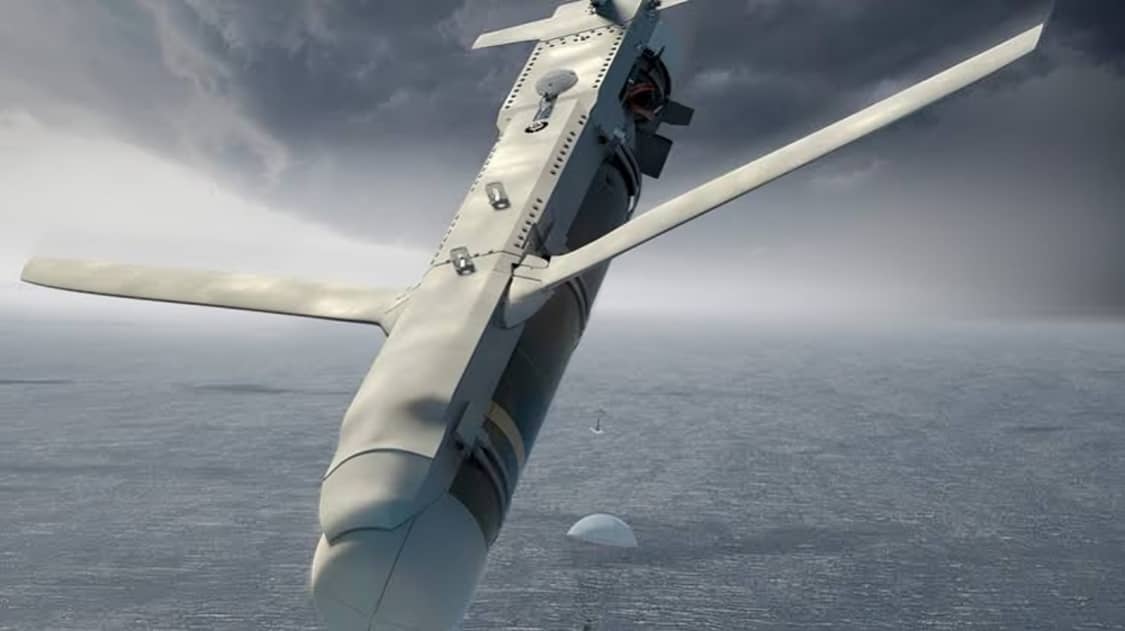
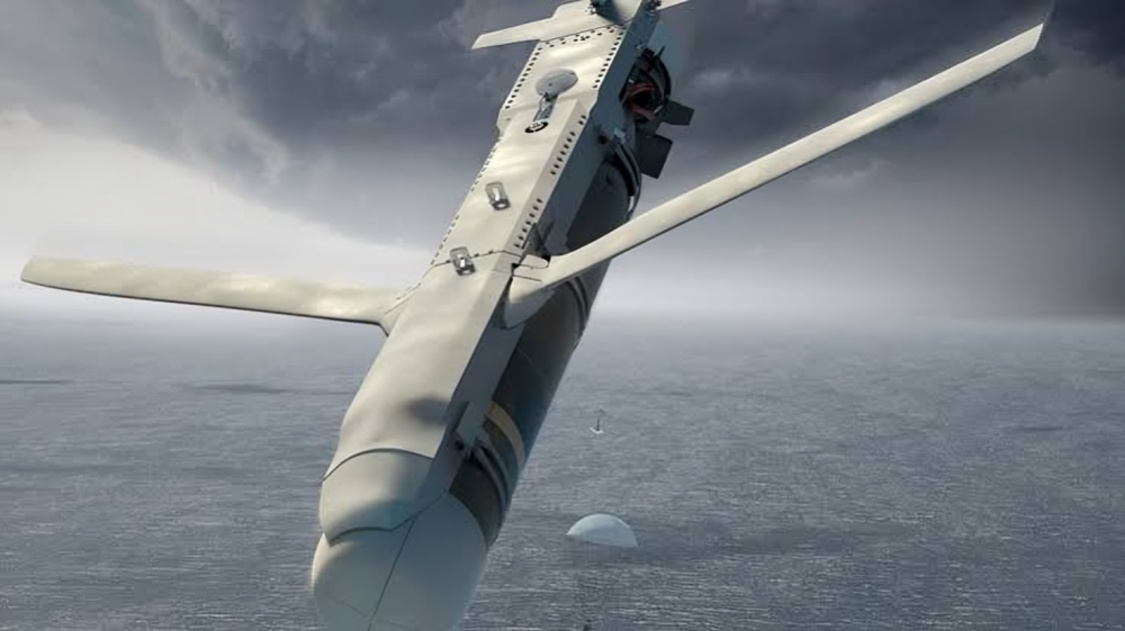
Under the proposed concept, the weapon would be released from an aircraft or unmanned platform and use its aerodynamic components to travel through the air towards the intended operating area. Once it reaches the water, the torpedo would use its underwater systems to search for and engage a submarine.
The concept is designed to reduce the amount of time the torpedo needs to spend travelling underwater before reaching the target area. The Navy has described the objective as maximising aerial flight endurance while minimising aquatic immersion time.
This approach could provide aircraft with greater flexibility when conducting anti submarine warfare missions. Instead of releasing a conventional torpedo close to the expected submarine location, a glide capable weapon could potentially cover additional distance through the air before entering the water.
The Navy is also looking at compatibility with a broader range of manned and unmanned aircraft. The proposed system is expected to be capable of being carried internally or externally and to work with standard aircraft weapon carriage systems.
The Navy has indicated that the weapon should have a compact form similar to the GBU 39 Small Diameter Bomb. The proposed configuration is intended to increase compatibility with different aircraft platforms and provide greater flexibility in future operations.
The Silent Anvil programme is not simply focused on creating another torpedo. It is intended to develop a wider delivery system that can combine aerial mobility with underwater acoustic sensing and propulsion.
The proposed weapon would include components such as an acoustic sensor, warhead, command and control systems and electric propulsion. The flight portion would include aerodynamic surfaces, communications equipment and guidance and control systems.
The acoustic sensor would be important once the weapon enters the water because submarine detection and tracking rely heavily on acoustic information. The system is expected to transition from an aerial glide phase to an underwater search and engagement phase.
The Navy is also considering networking and communications capabilities. The proposed system would be able to connect with tactical command and control networks and could potentially receive updated information during a mission.
This capability could become increasingly important in a complex maritime environment where submarine locations may change after an aircraft receives its initial information. Network connectivity could allow information from other aircraft, ships, sensors or command centres to influence the mission.
The Navy has not yet selected a specific contractor or final design. Instead, the current request for information is intended to identify companies that can offer suitable technologies and development approaches.
The programme is therefore still in the development and market research stage. The Navy is seeking industry proposals before moving towards prototype development.
The proposed development schedule calls for an end to end prototype demonstration within 18 months after an agreement is awarded. Following a successful demonstration, the Navy is considering the production of approximately 180 complete prototype rounds within three years.
The programme also has potential implications beyond traditional manned maritime patrol aircraft. The Navy wants the system to be compatible with a wider range of manned and unmanned platforms capable of conducting anti submarine warfare missions.
This could allow future high altitude or long endurance unmanned aircraft to contribute more effectively to submarine surveillance and engagement missions.
The concept has similarities with the Navy’s existing High Altitude Anti Submarine Warfare Weapon Capability system, which uses a glide kit with the Mark 54 lightweight torpedo. The Silent Anvil programme, however, seeks to broaden the concept and provide compatibility with a wider range of platforms.
The development also comes as naval planners pay increasing attention to the expansion of submarine capabilities around the world. The US Navy is developing multiple technologies intended to improve its ability to detect and respond to underwater threats.
Submarines remain important military platforms because they can operate covertly for extended periods and can be difficult to detect. Anti submarine warfare therefore requires a combination of surveillance aircraft, underwater sensors, surface vessels, unmanned systems and specialised weapons.
Air launched torpedoes provide one part of this broader system. Aircraft can cover large areas of ocean and rapidly respond when information indicates the possible presence of a submarine.
A glide delivery system could potentially expand the distance between the launching aircraft and the point where the torpedo enters the water. This could give aircraft greater flexibility while conducting anti submarine missions.
The Navy has not publicly established a final operational range for Silent Anvil. Instead, the current request for information asks industry to provide information on the maximum achievable glide range.
The programme also includes requirements related to launch conditions and water entry. These requirements are part of the Navy’s effort to understand what different contractors can achieve during the prototype development process.
The proposed weapon is expected to operate across a broad range of launch conditions and to transition from aerial flight to underwater operation in a controlled manner.
The development of a glide capable torpedo also presents technical challenges. The system must function effectively in two very different environments. During the first phase, it must remain stable and controllable while travelling through the atmosphere. After entering the water, it must transition into an underwater weapon capable of detecting and tracking a submarine.
The two environments require different technologies for guidance, propulsion and sensing. Integrating them into a compact weapon is therefore a significant engineering challenge.
The alternative glide kit approach could offer another path. Instead of creating an entirely new torpedo, engineers could develop an aerodynamic delivery system that carries an existing government furnished torpedo to the target area.
Such an approach could potentially reduce development requirements by using an already established underwater weapon while adding a new aerial delivery capability.
The Navy is therefore examining both options before deciding which approach provides the best combination of cost, performance and flexibility.
The programme also reflects the broader trend towards combining unmanned systems with traditional naval weapons. Drones are increasingly being used for surveillance and other maritime missions, and the ability to carry specialised weapons could expand their role.
A successful Silent Anvil system could potentially allow unmanned aircraft to participate more effectively in anti submarine warfare operations without requiring a large manned aircraft to approach the suspected submarine area.
However, the programme remains at an early stage and there is no indication that the final weapon has entered operational service.
The Navy's current effort is focused on gathering information from industry and identifying technologies that could support rapid prototype development. The request for information is therefore an important early step rather than an announcement of a completed weapon system.
The Navy has set a deadline of September 29 for industry responses to the current request for information. An industry day is also planned for September 17, according to the programme information.
The Silent Anvil programme is part of a broader US effort to strengthen anti submarine warfare capabilities. The Navy is also developing other systems designed to increase the reach and flexibility of weapons used against underwater threats.
The importance of these capabilities is expected to increase as navies deploy more advanced submarines and unmanned underwater systems.
For the US Navy, the ability to detect and respond to submarines from greater distances could provide additional options for protecting ships, aircraft carriers and maritime supply routes.
The proposed system could also reduce the exposure of anti submarine aircraft by allowing them to release a weapon from farther away from the suspected target area.
At this stage, however, Silent Anvil should be described as a development programme rather than an operational weapon. The Navy is still evaluating technical proposals and has not announced a final design or production contract.
Overall, the Silent Anvil Air Launched Torpedo programme represents an effort by the US Navy to combine aerial glide technology with underwater torpedo capabilities. The Navy is considering both a new glide capable torpedo and a glide kit for existing torpedoes.
If successfully developed, the system could provide a more flexible method for delivering anti submarine weapons from both manned and unmanned aircraft. It could also increase the distance between the launching platform and the point where the torpedo begins its underwater mission.
The programme highlights the continuing evolution of anti submarine warfare and the growing role of unmanned aircraft, networked sensors and long range weapon delivery systems in modern naval operations.