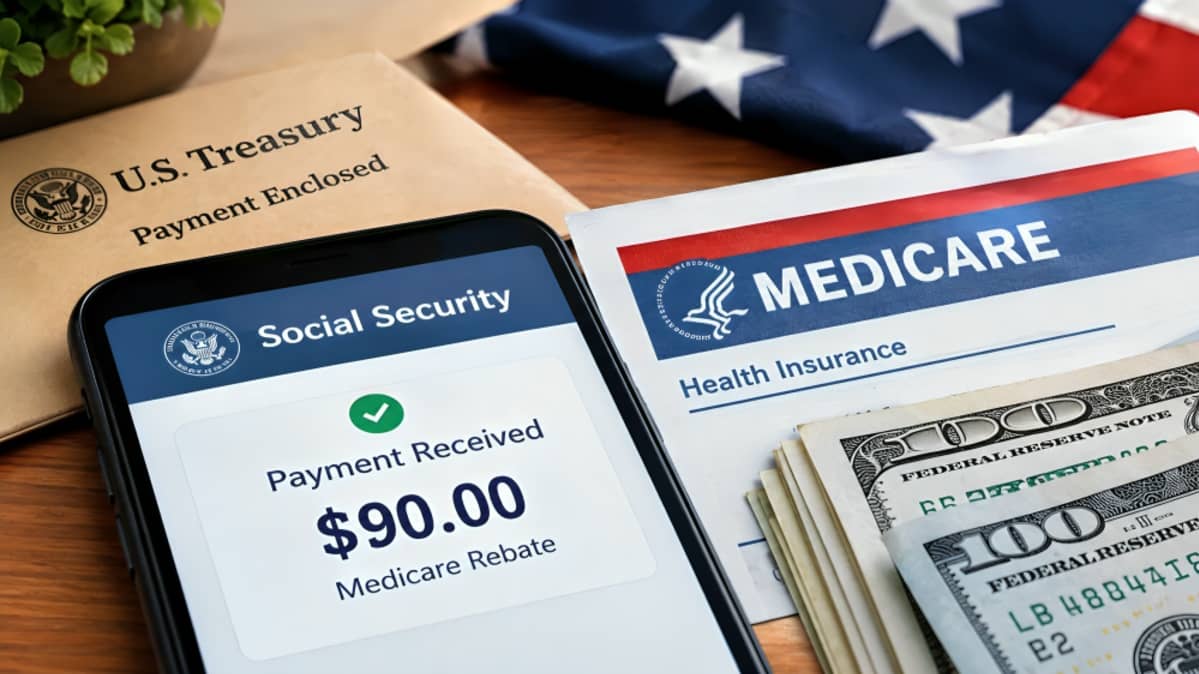
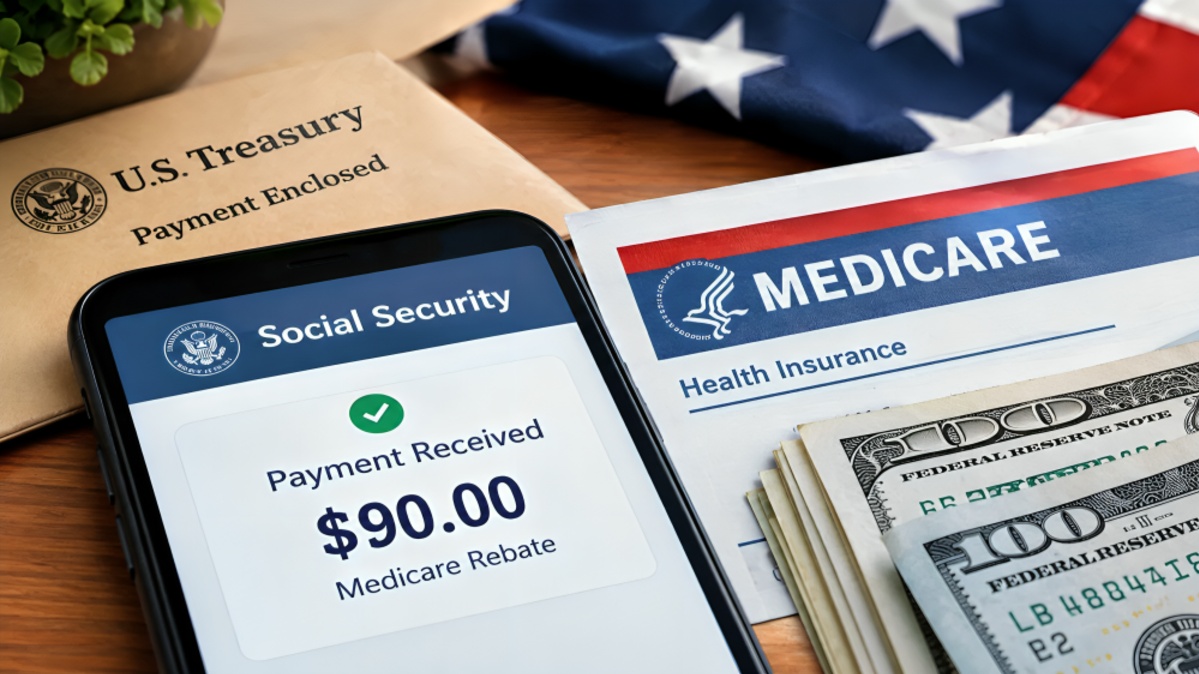
Millions of Americans enrolled in Medicare Part B are receiving a one time payment of 90 dollars in October 2026, prompting some beneficiaries to ask why the money has appeared in their Social Security accounts.
The payment is a Medicare Improvement Fund Premium Rebate created to help eligible beneficiaries offset part of their October Medicare Part B premium. It is not a regular increase in Social Security benefits and is not part of the annual cost of living adjustment.
The Centers for Medicare and Medicaid Services said eligible beneficiaries will receive one 90 dollar rebate during October 2026. Most eligible recipients are expected to receive the payment through direct deposit from the Social Security Administration on or around October 8. People who do not use direct deposit are expected to receive a paper check from the US Department of the Treasury later in October.
The program is expected to cover approximately 20.8 million Americans enrolled in Original Medicare Part B. The payment is being financed through the Medicare Improvement Fund, which was established by Congress in 2008 to support improvements to the traditional Medicare fee for service program.
The federal government announced the payment as a way to provide financial assistance to Medicare beneficiaries facing higher healthcare costs. The payment is specifically intended to offset the October Part B premium rather than provide a permanent reduction in Medicare costs.
Medicare Part B generally covers outpatient medical services, including doctor visits, certain preventive services, diagnostic services and other medically necessary care. Beneficiaries normally pay a monthly premium for Part B coverage.
The 90 dollar payment therefore represents a temporary reduction in the amount beneficiaries effectively pay toward their October premium. It does not change the underlying Medicare Part B premium for future months.
According to CMS, several conditions determine whether an individual qualifies for the payment. Eligible beneficiaries must generally be enrolled in Original Medicare Part B, live in the United States, not receive premium assistance through Medicaid and not pay an Income Related Monthly Adjustment Amount.
People whose Medicare premiums are already being paid with Medicaid assistance are excluded from the rebate. Beneficiaries who pay higher Part B premiums because of their income are also not eligible.
People enrolled in Medicare Advantage are also excluded from the 90 dollar payment. Medicare Advantage is an alternative to Original Medicare in which private insurance companies provide Medicare covered benefits under Medicare contracts.
The eligibility rules mean that the payment will not reach every person receiving Medicare. CBS News reported that roughly 40 million Medicare Part B enrollees are not expected to qualify, while more than 20 million are eligible under the federal government's criteria.
The payment method is designed to make the process automatic for eligible beneficiaries. Most recipients do not need to submit a separate application to receive the rebate.
For beneficiaries who normally receive Social Security payments through direct deposit, the 90 dollar payment will generally be deposited into the account associated with their benefits. Those who do not have direct deposit will receive a paper check through the US Treasury.
CMS said beneficiaries receiving a paper check can expect it later in October. The payment will identify the transaction as a Medicare Improvement Fund payment intended to offset the October premium.
Beneficiaries who are unsure about their eligibility can contact Medicare directly. CMS has provided the Medicare telephone number for people who want to check whether they qualify for the rebate.
People who want to check the status of a payment should contact the Social Security Administration through its official channels. CMS said beneficiaries can begin contacting the Social Security Administration about payment status from October 15, 2026.
The 90 dollar payment comes at a time when Medicare beneficiaries are facing higher healthcare expenses. According to recent reporting based on Medicare trustees data, the annual Part B premium increased significantly in 2026 and is projected to rise again in 2027. The one time rebate therefore provides some immediate relief but does not eliminate the broader increase in Medicare costs.
The federal government's decision to use the Medicare Improvement Fund for direct payments is also attracting political attention. The administration has described the rebate as an effort to return healthcare funds directly to Medicare beneficiaries.
The announcement comes only weeks before the November 3, 2026 US midterm elections. President Donald Trump announced the payment as part of a broader series of proposals and payments involving healthcare costs. Reuters reported that the payment is among several financial measures announced by the administration ahead of the elections.
However, the 90 dollar payment should not be confused with other government payments announced during the same period. It is separate from the 500 dollar payments associated with certain Affordable Care Act beneficiaries and from other proposals discussed by the administration.
For Medicare beneficiaries, the most important issue is determining whether the payment is legitimate and whether they meet the eligibility requirements.
Because unexpected government payments can also be used by scammers, beneficiaries should be cautious about unsolicited messages requesting bank details, passwords, Social Security numbers or payment information. The legitimate Medicare rebate does not require beneficiaries to pay a fee to receive the money or click an unofficial link to claim it.
Anyone who receives a message asking them to verify their banking information in order to receive the 90 dollar payment should independently contact Medicare or Social Security using official contact information.
The payment also does not represent a permanent increase in Social Security income. It is a one time Medicare related rebate specifically intended to offset the October Part B premium.
Eligible beneficiaries who receive the money can therefore expect the payment to appear separately from their regular Social Security benefit. Those who do not receive it should not automatically assume that their payment has been delayed, because eligibility restrictions exclude several large groups of Medicare beneficiaries.
The federal government expects most eligible beneficiaries to receive the payment around October 8, while paper checks are expected later in the month. CMS and the Social Security Administration will handle eligibility and payment related questions.
Overall, the 90 dollar payment is a temporary Medicare premium rebate for qualifying Original Medicare Part B beneficiaries. It is designed to provide limited financial relief during October 2026 rather than establish a permanent change to Social Security or Medicare benefits.