Security Strengthened at Dite-Dime Bridge Amid Protests Against Siang Project
Security has been significantly strengthened at the Dite-Dime bridge in Arunachal Pradesh following protests against the proposed Siang Upper Multipurpose Project. The bridge has become a focal point of opposition to the project, as demonstrators continue to object to plans for a pre-feasibility survey involving proposed drilling locations in the region.
The Dite-Dime bridge, also known as the 65 Bridge, is an important crossing on the Dite-Dime-Migging highway. The route leads towards Tuting, a strategically sensitive area near the Line of Actual Control, which separates Indian- and Chinese-controlled territory. Its location makes the bridge an important transport link in the border region.
According to the information provided by officials, around 30 companies of Central Armed Police Forces have been deployed across districts affected by the protests. In addition, three companies of the Assam Police Battalion have reportedly been stationed in Pasighat. Security personnel have reinforced the bridge area with barricades and other measures to manage gatherings and prevent further confrontations.
The protests are connected to the proposed 11,200 MW Siang Upper Multipurpose Project. The project is planned for the Siang region of Arunachal Pradesh and is intended to provide large-scale electricity generation and other potential infrastructure benefits. However, the proposal has faced opposition from sections of local communities who have raised concerns about its possible environmental, social and regional consequences.
The current dispute centres on a proposed pre-feasibility survey that includes four drilling sites connected by the Dite-Dime bridge. Such surveys are generally undertaken to collect technical and geological information before authorities make decisions about the feasibility and design of a major infrastructure project. The survey itself is distinct from a final decision to construct the entire project.
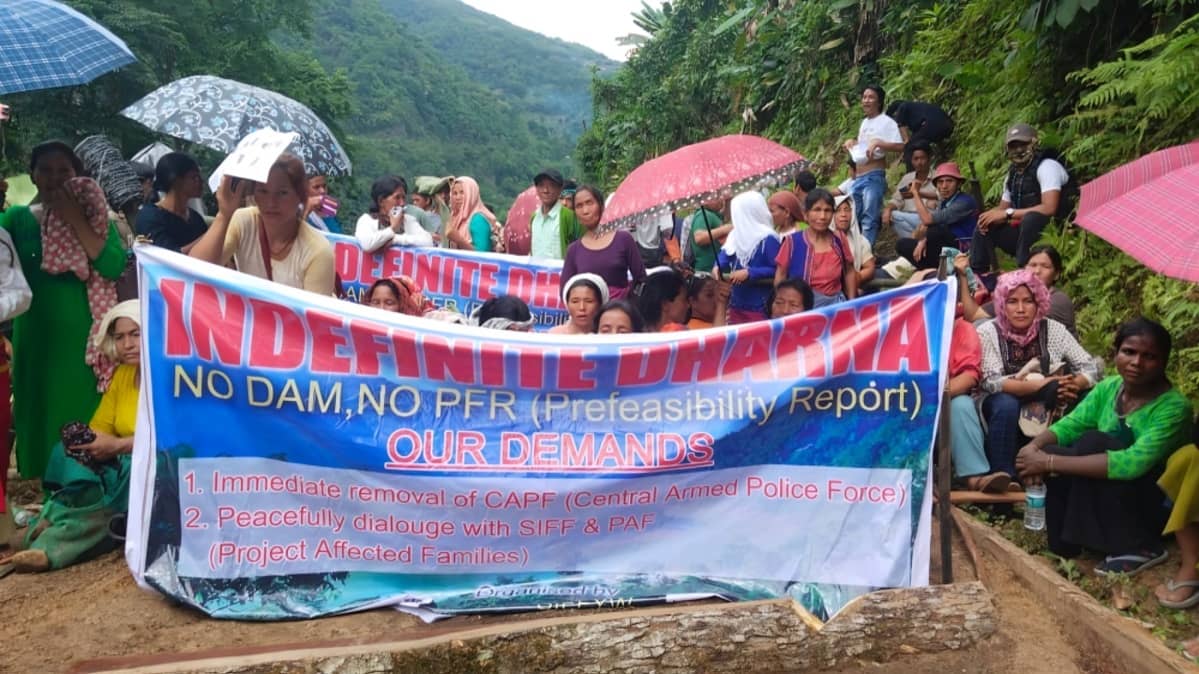
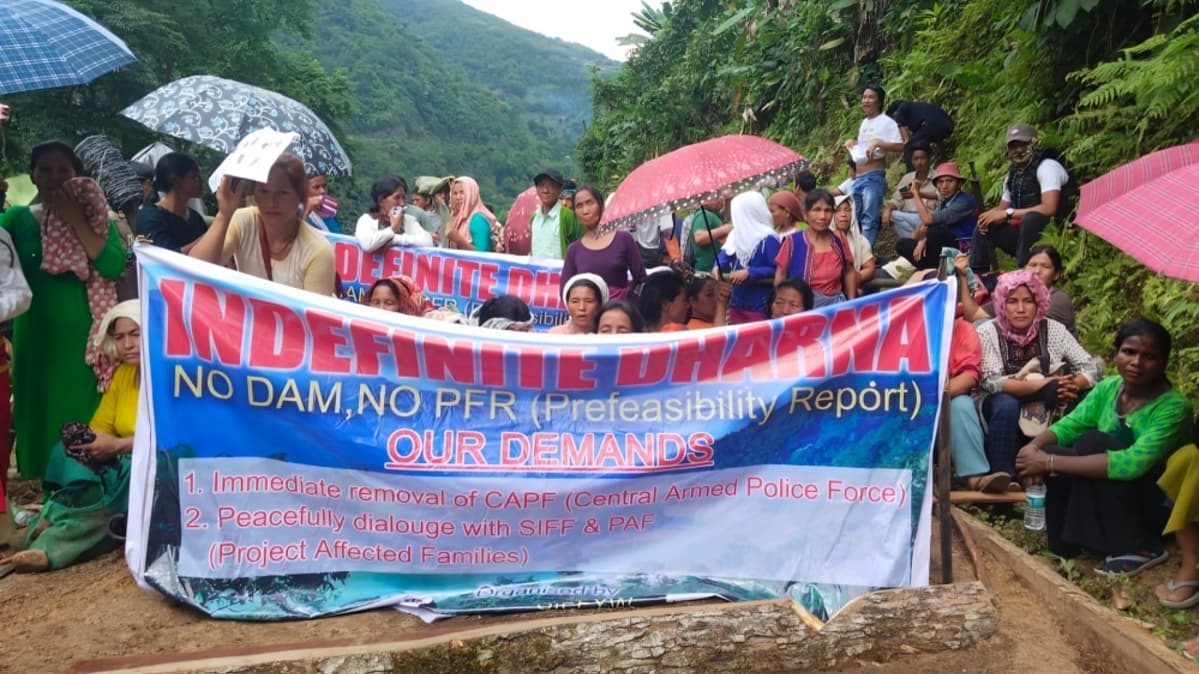
For opponents, the proposed survey has become a major point of concern. Protesters have organised demonstrations and sit-ins, commonly known as dharnas, to express their objections. The bridge has consequently emerged as a key location in the ongoing movement because it provides access to the proposed survey sites.
Tensions reportedly escalated during a 12-hour bandh on October 23. According to police sources cited in the supplied report, at least four women were injured in a clash at Dite-Dime. The same account alleged that more than 150 supporters threw stones at security personnel, attempted to cross barricades and damaged security vehicles.
These allegations should be distinguished from independently established findings. Further official information would be needed to clarify the full sequence of events, the circumstances in which the women were injured and whether any arrests or formal cases followed. An accurate account should include the perspectives of protesters and local representatives where available.
The deployment of additional security personnel reflects the authorities' efforts to maintain order in an area that has become sensitive because of both the infrastructure dispute and its strategic location. The presence of large numbers of security personnel can help prevent violence, protect public property and keep transport routes accessible. At the same time, the handling of demonstrations requires care to ensure that public order measures do not unnecessarily restrict peaceful protest.
The Siang Upper Multipurpose Project raises broader questions about the balance between infrastructure development and the concerns of communities living in project-affected areas. Large hydropower projects can contribute to electricity generation and regional development, but they may also require extensive land use and affect local environments and livelihoods. The scale and nature of these effects depend on the project's final design, location and implementation.
For communities in the Siang region, consultation and transparent access to information are important parts of the debate. Residents may seek clarity about environmental impacts, land requirements, rehabilitation arrangements and the long-term effects of the project. Authorities would need to address such concerns through appropriate assessments, consultations and statutory procedures as the proposal progresses.
The proposed pre-feasibility survey is an early stage in evaluating the project. Its findings could inform later technical assessments and decisions. However, the survey should not automatically be treated as confirmation that every aspect of the project has been approved or that construction will begin immediately. The formal status of the project and its required approvals should be confirmed through official records.
The strategic importance of the Dite-Dime-Migging highway adds another dimension to the situation. Reliable road access is important for people living in remote border areas and for the movement of essential supplies and services. Any disruption to a key crossing can affect transport and access to surrounding communities. This is one reason why the bridge has received heightened attention during the protests.
The coming developments will depend on the authorities' handling of the security situation, the continuation of public demonstrations and further decisions concerning the proposed project. Clear communication between officials, local communities and project authorities could help reduce uncertainty and address concerns through established procedures.
For now, the Dite-Dime bridge remains a major focus of security operations and opposition to the Siang Upper Multipurpose Project. The situation highlights the challenges of advancing major infrastructure proposals in sensitive border regions while responding to community concerns and protecting the right to peaceful protest.