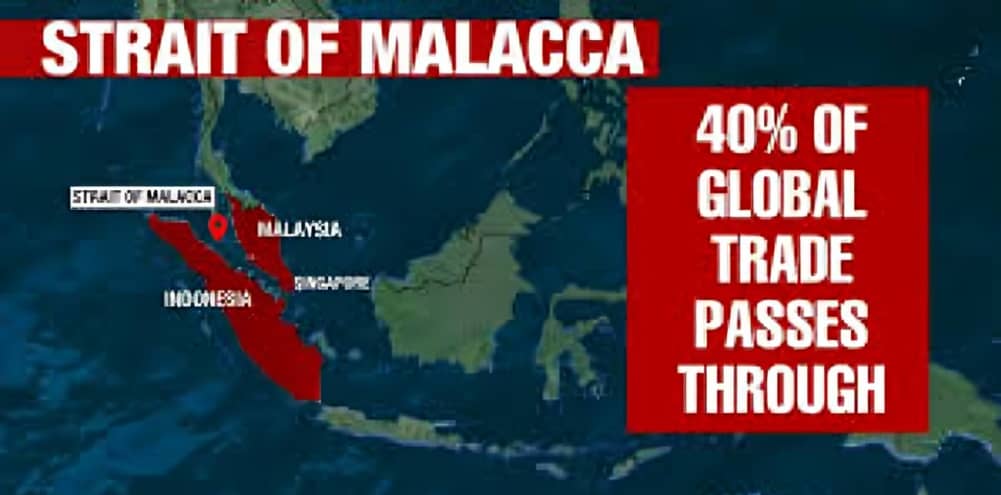
The Strait of Malacca, one of the most important maritime trade routes in the world, has come under renewed attention as global trade tensions continue to rise. The narrow waterway, which connects the Indian Ocean to the South China Sea and the Pacific Ocean, plays a vital role in global shipping and energy transportation. Any disruption in this corridor could significantly impact international trade flows.
Recent remarks by Indonesian Finance Minister Pabaya Yudi Sadewa triggered widespread concern among shipping companies and regional governments. The minister clarified that Indonesia has no intention of imposing tolls on vessels passing through the strait. His statement came after speculation that Indonesia might consider charging ships, inspired by discussions in the Middle East regarding similar measures in another critical waterway.
Although Indonesia has stepped back from the idea, the situation has highlighted the vulnerability of the Strait of Malacca. The concern comes at a time when global markets are already dealing with disruptions caused by tensions affecting other key shipping routes. The comparison has raised fears about how fragile global supply chains can become when strategic waterways are threatened.
The Strait of Malacca is jointly managed by Indonesia, Malaysia, and Singapore, and operates under international maritime laws that ensure freedom of navigation. Around one hundred thousand ships pass through the strait every year, carrying essential goods including oil, raw materials, and manufactured products. In the first half of 2025 alone, more than twenty three million barrels of oil were transported through this route, highlighting its importance to global energy security.
Despite its significance, there is no single governing authority that controls the strait as a global trade chokepoint. Current cooperation between the three nations mainly focuses on maintaining safety and preventing illegal activities such as piracy and smuggling. However, the absence of a broader governance framework raises concerns about how future challenges will be handled.
The issue becomes more complex as geopolitical tensions increase, particularly with growing competition between major powers in the Indo Pacific region. The United States and China are expanding their strategic presence, making the strait not only an economic asset but also a geopolitical focal point. This adds pressure on ASEAN countries to assert greater control while ensuring that the waterway remains open and stable for global trade.
Experts believe that any attempt to impose restrictions or charges could disrupt international shipping and increase costs worldwide. At the same time, ASEAN nations are under pressure to strengthen security and infrastructure to protect the route from potential threats.
The situation reflects a broader challenge for the region. ASEAN must find a balance between protecting its strategic interests and maintaining the free flow of global commerce. As global trade tensions continue to evolve, the future of the Strait of Malacca will remain a critical issue for both regional and international stakeholders.