Bangladesh Opposition Leader Raises Objections to Indian Transit Corridor
A political debate has emerged in Bangladesh after National Citizen Party convener Nahid Islam opposed any move to facilitate an Indian transit corridor through the country. He also demanded a fair renewal of the Ganges water-sharing treaty with India, which is scheduled to expire in December 2026.
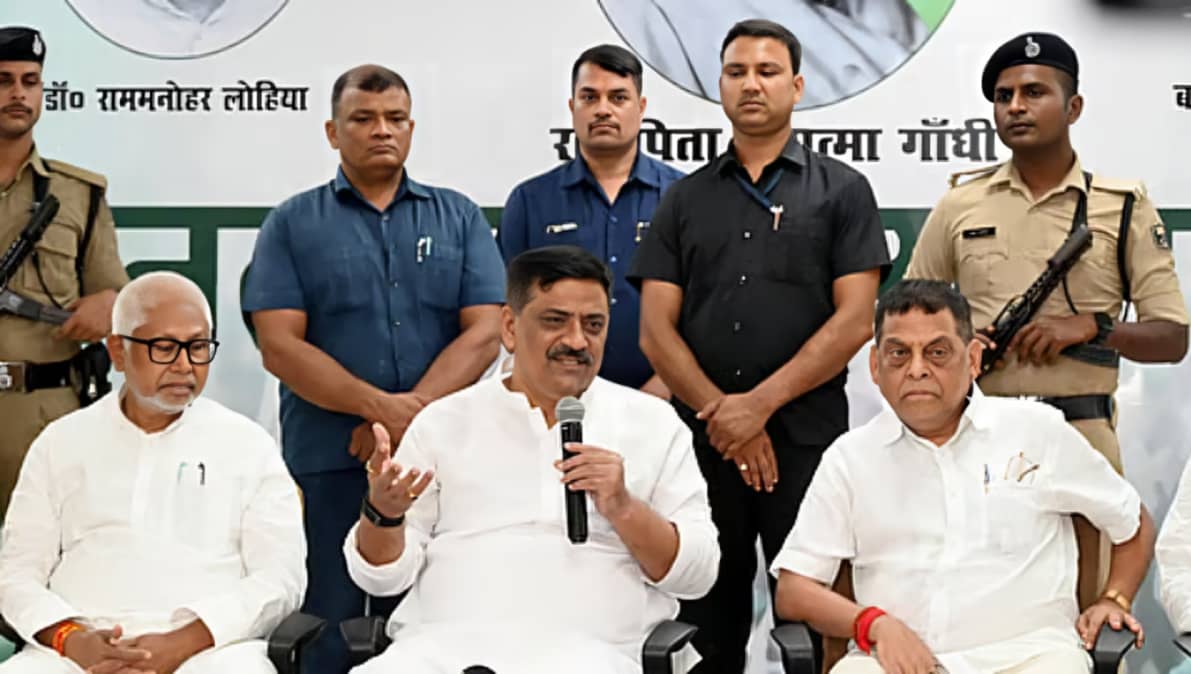
Speaking at a public rally in Dhaka on Friday, October 30, Nahid Islam warned Prime Minister Tarique Rahman's government against allowing a transit arrangement that, according to him, could affect Bangladesh's national interests. He said the people of Bangladesh would not accept an agreement that compromised the country's sovereignty.
The rally was attended by hundreds of supporters and was primarily organised to demand the resignation of Bangladesh Home Minister Salahuddin Ahmed and Power, Energy and Mineral Resources Minister Iqbal Hassan Mahmood Tuku. The organisers criticised the government's handling of law and order issues and shortages of gas and electricity.
During his speech, Nahid also connected the transit corridor issue with Bangladesh's growing regional partnerships, particularly its cooperation with Japan. He alleged that the government was attempting to facilitate an Indian transit arrangement through a regional connectivity initiative.
His remarks have brought renewed attention to the relationship between India and Bangladesh, particularly concerning regional transportation, economic cooperation and the sharing of river water.
Why Nahid Islam Opposes the Proposed Transit Corridor
Nahid Islam questioned the possibility of an Indian transit corridor passing through Bangladesh. He argued that any such arrangement should not be accepted without considering the country's national interests and public concerns.
His remarks came after Bangladesh Prime Minister Tarique Rahman visited Japan from October 26 to 29, 2026. During the visit, Bangladesh and Japan agreed to strengthen their cooperation in regional connectivity, economic development, disaster preparedness and strategic cooperation.
The two countries also discussed upgrading the Bay of Bengal Industrial Growth Belt initiative, commonly known as BIG-B, into a broader strategic cooperation framework.
The initiative aims to improve regional connectivity, encourage investment, strengthen infrastructure and promote economic development around the Bay of Bengal.
Japan is also supporting the development of the Matarbari deep-sea port in southeastern Bangladesh through financial assistance from the Japan International Cooperation Agency. The port is expected to play an important role in regional trade and transportation.
Japanese officials have previously discussed a wider connectivity vision centred on the Matarbari port. The proposed regional industrial network could connect India's northeastern states with the Bay of Bengal and Southeast Asian markets through Bangladesh.
Nahid Islam's criticism appears to be linked to concerns about whether such regional connectivity plans could eventually provide India with additional transit access through Bangladesh. However, the regional cooperation discussions do not by themselves establish that a formal Indian transit corridor agreement has been reached.
Bangladesh Government Clarifies Position on Third-Country Issues
Following the political criticism, Bangladesh State Minister for Foreign Affairs Humaiun Kobir clarified that no third-country issues were discussed during Prime Minister Tarique Rahman's visit to Japan.
According to his statement, the discussions between Bangladesh and Japan focused on strengthening their bilateral economic partnership. He said the two countries did not discuss arrangements involving another country during the visit.
Kobir also indicated that if any matter involving a third country needed to be discussed, representatives of that country would have to be part of the discussions.
This clarification is significant because Nahid Islam's criticism was based partly on the possibility that regional connectivity plans could facilitate Indian transit through Bangladesh.
The Bangladesh government's statement suggests that the agreements reached during the Japan visit should be understood as part of bilateral cooperation between Dhaka and Tokyo. It does not confirm an agreement to provide India with a new transit corridor.
Meanwhile, India has expressed interest in strengthening its partnership with Japan, including initiatives involving India's northeastern states.
On October 28, Indian Ministry of External Affairs spokesperson Randhir Jaiswal said New Delhi wanted to further strengthen its existing cooperation with Japan, particularly in projects involving the northeastern region.
These developments have brought India, Bangladesh and Japan into a wider discussion about regional infrastructure, trade connectivity and economic cooperation.
Ganges Water-Sharing Treaty Set to Expire on December 12
Apart from the transit corridor issue, Nahid Islam strongly raised concerns about the Ganges water-sharing agreement between India and Bangladesh.
The agreement was signed on December 12, 1996, and has a duration of 30 years. It regulates the sharing of Ganges river water between the two countries at the Farakka Barrage in West Bengal, particularly during the dry season from January to May.
The treaty is scheduled to expire on December 12, 2026. With the deadline approaching, discussions about its renewal have become an important issue in bilateral relations.
Bangladesh has been seeking a revised and longer-term agreement with stronger guarantees to protect its share of the river water during periods of reduced flow.
The issue is particularly important for Bangladesh because the availability of Ganges water during the dry season affects agriculture, irrigation, fisheries and the livelihoods of communities in areas dependent on the river.
Nahid Islam warned that Bangladeshis could take to the streets if the treaty was not renewed on terms that protected the country's fair share of water. He said Bangladesh would not compromise on its water interests during the negotiations.
His statement indicates that the treaty renewal could become a major political issue in Bangladesh as the December deadline approaches.
Why the Ganges Treaty Matters to India and Bangladesh
The Ganges is one of the most important river systems in South Asia. It supports agriculture, drinking water requirements, fisheries and several economic activities in both India and Bangladesh.
The Farakka Barrage in West Bengal plays a central role in regulating the distribution of Ganges water between the two countries under the 1996 agreement.
The treaty provides a framework for sharing available water during the lean season, when river flows are generally lower. The agreement is therefore important for communities that depend on the river for their daily needs and agricultural activities.
Bangladesh has expressed interest in a new agreement that would provide long-term certainty and stronger safeguards during dry periods. Its demand includes a guarantee mechanism to protect its water allocation.
India, meanwhile, has maintained that discussions concerning shared rivers and water-related matters should take place through established bilateral mechanisms.
The Joint Rivers Commission, established in 1972, serves as an important platform for India and Bangladesh to discuss issues concerning their shared rivers. Both countries share 54 rivers, making water cooperation an important part of their bilateral relationship.
Indian officials have also indicated that technical-level discussions concerning the Ganges Water-Sharing Treaty have continued.
The renewal process will require negotiations between the two governments, with both sides expected to consider their respective water requirements and long-term interests.
Nahid Islam and the National Citizen Party
Nahid Islam is the convener of Bangladesh's National Citizen Party, which was formed in February 2025 by leaders associated with the student movement that played a major role in the July and August 2024 protests.
The protests contributed to the political developments that led to the removal of former Prime Minister Sheikh Hasina from power.
The National Citizen Party has emerged as a political force following those events. Its leaders have raised issues relating to governance, public accountability, national sovereignty and economic conditions.
The latest rally in Dhaka also focused on domestic concerns, including law and order and shortages of gas and electricity. Nahid's comments on the Indian transit corridor and the Ganges treaty added an important foreign policy dimension to the gathering.
His remarks reflect the concerns being raised by sections of Bangladesh's political opposition about the country's relationship with neighbouring India and the terms of regional cooperation.
Regional Connectivity and Water Sharing Remain Key Issues
The latest developments highlight two important issues in India-Bangladesh relations: regional connectivity and the sharing of transboundary river water.
India's northeastern states could benefit from improved transportation links through Bangladesh, while Bangladesh could gain from infrastructure investment, trade opportunities and better access to regional markets.
Japan's involvement in projects such as the Matarbari deep-sea port has added another dimension to these connectivity discussions.
At the same time, the Ganges water-sharing treaty remains a sensitive issue because of its direct impact on agriculture, water availability and livelihoods in both countries.
Nahid Islam's warning of protests has increased political attention on the treaty renewal process. However, the final decision will depend on negotiations between the Indian and Bangladeshi governments.
As the December 12 deadline approaches, discussions through diplomatic and technical channels are expected to remain important. The way both countries handle the transit corridor debate and the Ganges water-sharing agreement could influence their future cooperation.
The coming weeks will therefore be significant for India-Bangladesh relations, particularly as both countries balance regional development opportunities with national interests and long-term water security.