Houthis Accused of Fresh Attacks on Saudi Arabia and Yemen
Fresh attacks involving Yemen’s Houthi group have increased tensions in the Middle East, with Saudi Arabia reporting a drone interception over the Medina region and Yemeni authorities accusing the group of launching ballistic missiles towards Aden International Airport and the Maashiq Presidential Palace.
According to the Saudi-led coalition, a drone launched towards Saudi Arabia was intercepted and destroyed over the Medina region on Friday, October 30. Medina is one of the holiest cities in Islam and is home to the Prophet’s Mosque, which attracts millions of Muslim pilgrims and visitors every year.
The coalition said it had successfully intercepted the drone before it could reach its intended destination. However, the Houthis denied carrying out an operation against Saudi territory. The group has repeatedly rejected similar allegations involving drone attacks towards the holy cities of Mecca and Medina.
Meanwhile, Yemen’s military said the Houthis had launched ballistic missiles targeting Aden International Airport and the Maashiq Presidential Palace in the southern city of Aden. The latest developments have raised concerns about further escalation in a conflict that has increasingly affected civilian infrastructure and important transport facilities.
Drone Interception Reported Over Medina
The reported drone interception over Medina has attracted particular attention because of the city’s religious importance. Medina is home to the Prophet’s Mosque and receives large numbers of visitors throughout the year, especially during major Islamic pilgrimage seasons.
The Saudi-led coalition, which supports Yemen’s internationally recognised government in its conflict with the Houthis, said its forces intercepted and destroyed the drone over the Medina region. The coalition had also reported another drone interception in the Mecca region earlier in the week.
However, Houthi military spokesperson Yahya Saree rejected the accusation that the group had launched an attack towards Saudi Arabia. He said the Houthis had not carried out an operation against Saudi territory and described the coalition’s account as false.
The group has previously denied allegations that it targeted Mecca or Medina. It has maintained that its military operations are directed at Saudi military installations and energy infrastructure rather than the two holy cities.
The competing statements have made it important to distinguish between the coalition’s claims and the Houthis’ response. While Saudi authorities reported an interception, the group denied responsibility for the alleged launch.
Ballistic Missiles Reportedly Target Aden Airport and Presidential Palace
In a separate development, Yemen’s military accused the Houthis of launching ballistic missiles towards Aden International Airport and the Maashiq Presidential Palace on Friday.
Aden is an important southern port city and serves as the base of Yemen’s internationally recognised government. The Maashiq Presidential Palace complex is used as the headquarters of the government and is an important political centre.
Yemeni military spokesperson Majed Abdullah Al-Nuzaili said the two facilities were targeted with ballistic missiles. However, the initial statement did not provide complete information about whether the missiles struck their intended targets or the extent of any damage.
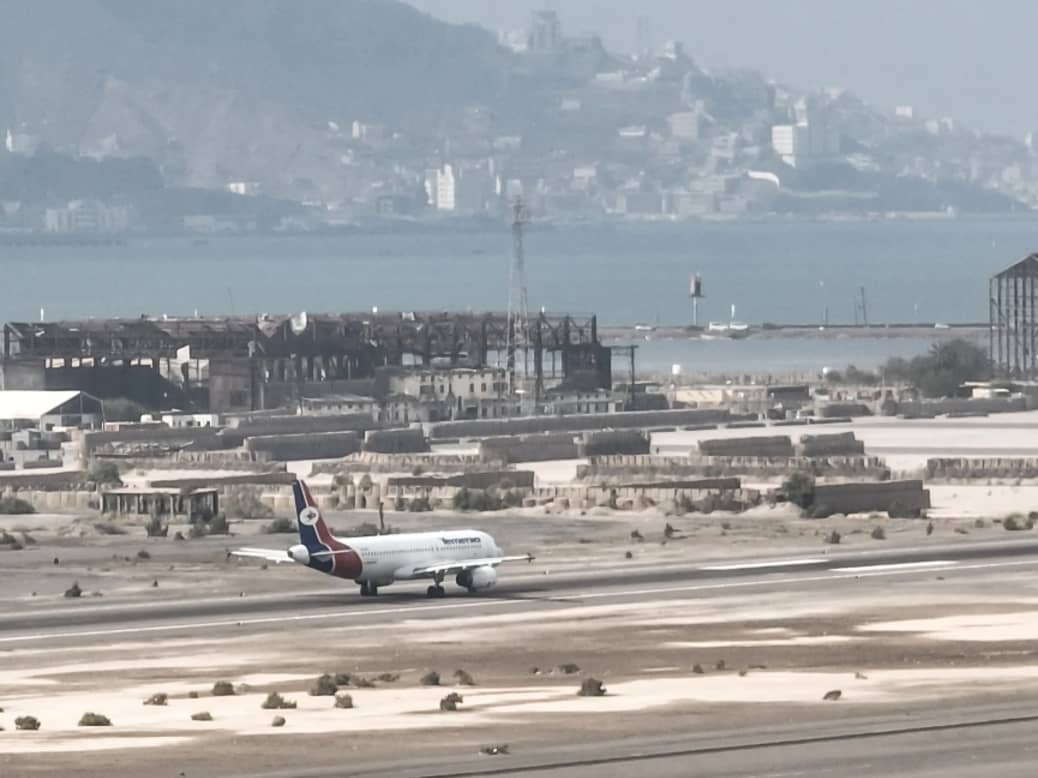
The latest reported attack came shortly after Aden International Airport resumed operations following a temporary suspension caused by an earlier missile strike on Wednesday. According to Yemeni authorities, the previous attack injured two civilians and damaged airport infrastructure. Emergency repairs were carried out on the runway before the airport reopened on Thursday.
The airport is a major entry point for people travelling to parts of Yemen outside Houthi control. It is also important for humanitarian operations and the movement of essential supplies. Any disruption to its operations can create additional difficulties for civilians, aid workers and travellers.
The Maashiq Presidential Palace has also been targeted during the recent escalation. An earlier missile attack on the complex on October 15 killed five people and injured 16, according to Yemeni government officials. The Houthis said that their operation targeted what they described as a Saudi military operations headquarters in Aden.
Why Aden Is Important in the Yemen Conflict
Aden has played a major role in Yemen’s political and military developments since the Houthis took control of the capital, Sanaa, in 2014. The internationally recognised government was forced out of the capital and later established its base in Aden with support from a Saudi-led coalition.
The Houthis control Sanaa and large parts of northwestern Yemen, while the internationally recognised government operates from areas outside Houthi control. This division has contributed to years of political instability and armed conflict.
Saudi Arabia intervened militarily in Yemen in March 2015, leading a coalition to support the internationally recognised government against the Houthi movement. Although a United Nations-brokered truce in 2022 reduced major fighting and cross-border attacks for a period, renewed hostilities have weakened that relative calm.
The latest clashes have increased the risks to government-controlled cities, airports, ports and other important facilities. Aden is particularly significant because it functions as an administrative and transport centre for parts of Yemen outside Houthi control.
The recent attacks have also taken place amid wider regional tensions involving Iran, the United States and Israel. The expanding confrontation has created additional pressure on countries in the region and raised concerns about the security of important shipping routes.
Growing Concerns Over Civilian Infrastructure
The reported attacks on Medina, Aden airport and the presidential palace have raised concerns about the security of civilian locations and essential infrastructure.
Airports are particularly important during periods of conflict because they provide access for humanitarian assistance, medical travel and the movement of essential goods. Missile attacks or threats to airport facilities can force authorities to suspend flights, divert aircraft and carry out emergency safety inspections.
The recent disruption at Aden airport demonstrates how quickly military activity can affect civilian transport. Its temporary closure following Wednesday’s attack was followed by repair work and a reopening on Thursday. The latest reported missile targeting on Friday has added further uncertainty over the security of the facility.
The reported drone interception over Medina has also drawn attention because of the potential risks associated with military activity near a major religious destination. Saudi Arabia has said that the drone was destroyed, while the Houthis have denied responsibility.
These developments underline the difficulty of maintaining civilian safety as the conflict expands across different parts of the region. Further attacks could affect travel, humanitarian operations and the daily lives of people living in affected areas.
Wider Regional Conflict Adds to Tensions
The renewed fighting in Yemen is taking place alongside a wider regional confrontation. The Houthis have increased their military activities against Saudi-linked targets, while Saudi Arabia and its allies have continued to support forces opposing the group.
The strategic importance of the Bab el-Mandeb Strait has also added to international concern. The waterway connects the Red Sea with the Gulf of Aden and is an important route for international shipping. Any military escalation near this area could affect commercial shipping and the movement of goods between major global markets.
Saudi Arabia has accused the Houthis of targeting airports, energy facilities and other infrastructure in recent weeks. The group has rejected some of these allegations, while claiming responsibility for certain attacks on military facilities. The different accounts have made independent confirmation of individual incidents important.
The latest incidents involving Medina and Aden show that the conflict is no longer limited to isolated areas of Yemen. It has wider implications for Saudi security, regional transport and the stability of the Middle East.
For now, the Saudi-led coalition’s reported interception over Medina and Yemen’s military accusations over the Aden missile attacks remain central developments. Further official statements and independent verification will be needed to establish the full impact of the latest incidents