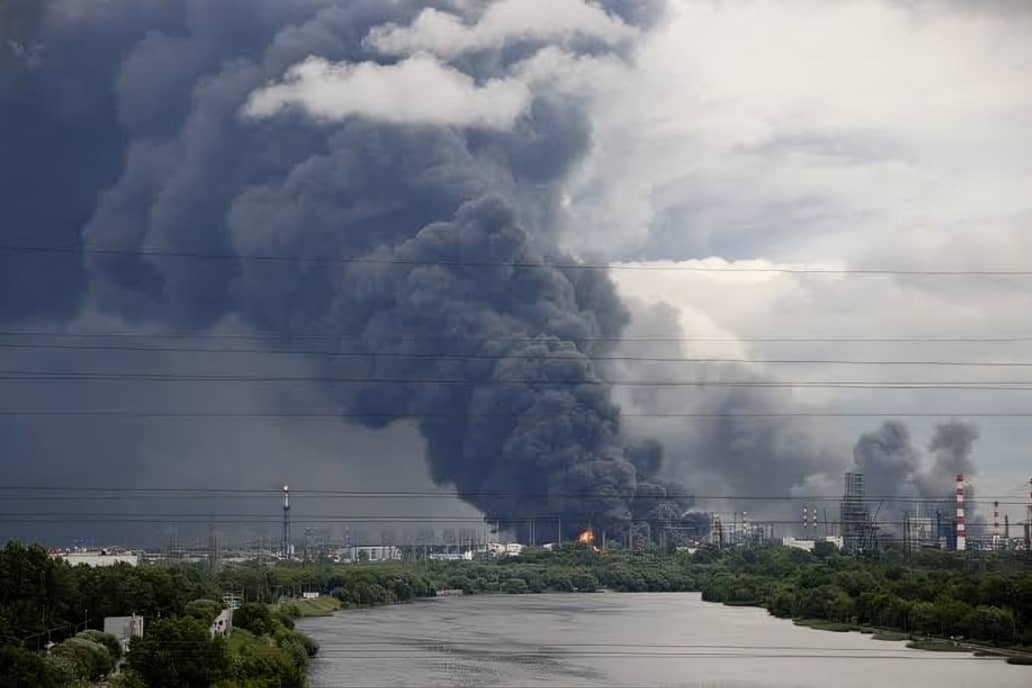
A fire reportedly broke out at the Novokuybyshevsk Oil Refinery in Russia’s Samara Oblast overnight on October 30, following a suspected Ukrainian drone attack. The incident has drawn attention to energy infrastructure in the region as the Russia Ukraine conflict continues. Reports of flames at the industrial facility have raised questions about possible damage to refinery operations and the wider impact on local energy infrastructure.
The Novokuybyshevsk Oil Refinery is an industrial facility located in Samara Oblast, in southwestern Russia. Oil refineries play an important role in the energy supply chain by processing crude oil into products such as petrol, diesel and other petroleum-based fuels. Any major disruption at such a facility can create operational challenges and require technical assessments before normal activities can resume.
According to the initial information provided, the fire started during the night of October 30 after a suspected drone attack. However, the exact sequence of events and the cause of the fire have not been independently established. The possibility of a Ukrainian drone strike has been reported, but it should not be treated as a confirmed explanation until supported by reliable evidence or official statements.
Videos and images reportedly showing flames at the refinery have attracted attention. Visual material from an incident can provide an indication that a fire has occurred, but it does not necessarily establish the cause, the extent of the damage or whether the facility was directly hit by a drone. These details require confirmation from authorities and independent reporting.
The extent of the damage remains unclear based on the information available. It has not been established whether the fire affected processing units, storage facilities, pipelines or other parts of the refinery. Information about the duration of the fire, the response by emergency services and the status of refinery operations will be important in assessing the seriousness of the incident.
Casualty information has also not been provided in the initial report. It is therefore not possible to confirm whether anyone was injured or whether workers and nearby residents were affected. Updates from local authorities and emergency response teams may provide further details about safety measures and the condition of the facility.
The reported incident comes amid continuing military tensions between Russia and Ukraine. Since the beginning of the conflict, energy infrastructure has remained an important part of the wider security situation. Facilities involved in oil processing, fuel storage and transportation are strategically significant because they support industrial activity, transport networks and energy distribution.
Drone technology has become an important feature of modern warfare. Unmanned aerial vehicles can be used for surveillance and military operations, and attacks involving drones have created new security challenges for infrastructure located far from active front lines. Their use has increased the need for improved detection systems, air defence measures and emergency response planning around important industrial facilities.
Oil refineries can be particularly vulnerable to fires because their operations involve flammable materials, high temperatures and complex processing equipment. A fire at such a site may require specialised firefighting operations and a detailed safety inspection. Even when the visible flames are brought under control, authorities may need to assess equipment, pipelines and electrical systems before restarting affected operations.
Any disruption to a refinery can also raise questions about fuel production and supply. However, the effect of an incident depends on the scale of the damage, the amount of production affected and the availability of other supply sources. There is currently insufficient information to determine whether the reported fire at Novokuybyshevsk will have a significant impact on regional fuel supplies or wider energy markets.
The incident also highlights the continuing security concerns surrounding industrial infrastructure during the conflict. Governments and operators may need to strengthen protective measures around facilities that process or transport energy resources. These measures can include surveillance, air defence coordination, emergency response planning and procedures to protect workers and nearby communities.
For now, the key questions concern the cause of the fire, the extent of the damage and whether refinery operations have been disrupted. Confirmation of a drone strike, if established, would provide a clearer picture of the incident and its connection to the wider conflict. Until then, the reported Ukrainian involvement should remain an allegation or suspicion rather than a confirmed fact.
Further official statements and verified reports are needed to establish what happened at the Novokuybyshevsk Oil Refinery. The situation will remain important to monitor as developments in the Russia Ukraine conflict continue to affect energy infrastructure and regional security.