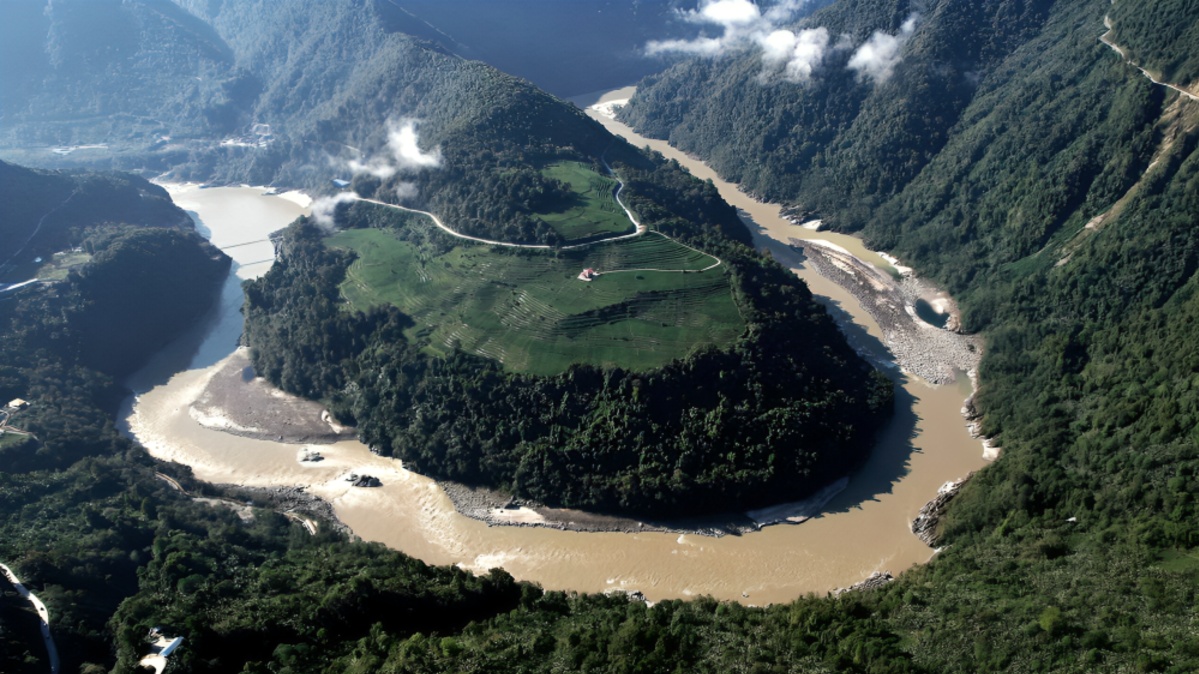
China is advancing plans for a massive hydropower project on the Yarlung Tsangpo River, the upper reaches of the Brahmaputra River, with an estimated investment of 168 billion dollars. The project is expected to become the largest hydroelectric development in the world, highlighting China's continued focus on expanding renewable energy infrastructure while also drawing international attention because of its geographical and environmental significance.
The Yarlung Tsangpo River originates on the Tibetan Plateau before flowing through one of the deepest river gorges in the world. After entering India, the river becomes the Brahmaputra, one of the country's major river systems, before continuing into Bangladesh. Because the river flows across international borders, any major infrastructure project along its course is closely monitored by neighboring countries.
According to Chinese authorities, the proposed hydropower project is intended to strengthen clean energy production, reduce dependence on fossil fuels, and support long term economic development. The project is expected to generate a significant amount of electricity, contributing to China's renewable energy targets and its broader strategy to reduce carbon emissions.
The planned development involves constructing large scale hydroelectric infrastructure in a region known for its steep terrain, deep valleys, and powerful river flow. Engineers consider the location suitable for hydropower generation because of its natural elevation changes and high water discharge.
Despite its potential benefits for energy production, the project has generated discussions among environmental experts, geologists, and policy analysts. The proposed construction site lies in a geologically active region that experiences seismic activity. Experts have noted that large infrastructure projects in earthquake prone areas require extensive engineering safeguards, continuous monitoring, and comprehensive risk assessments to ensure long term structural safety.
Environmental specialists have also highlighted the importance of carefully evaluating the possible impact on river ecosystems, biodiversity, and downstream water flow. Large hydropower projects can alter natural river systems, affect fish habitats, influence sediment movement, and change seasonal water patterns. Comprehensive environmental assessments are considered essential before the completion of projects of this scale.
The river's international nature has also attracted attention from neighboring countries, particularly India and Bangladesh, which depend on the Brahmaputra River for agriculture, drinking water, transportation, and hydroelectric generation. Water resource experts have emphasized the importance of maintaining communication and transparency regarding projects on transboundary rivers to promote regional cooperation and sustainable water management.
China has stated on previous occasions that hydropower projects on transboundary rivers are designed in accordance with national development priorities and that relevant environmental considerations are taken into account during planning and construction. Officials have also indicated that such projects are intended for clean energy generation rather than altering downstream water availability.
Infrastructure experts describe the project as one of the most ambitious engineering initiatives currently under development. If completed as planned, it could surpass existing hydroelectric facilities in terms of installed generating capacity and become a landmark project in global renewable energy infrastructure.
At the same time, analysts believe that projects of this magnitude require continuous scientific evaluation, environmental monitoring, and international dialogue because of their potential cross border implications. As climate change increases pressure on water resources worldwide, sustainable river management and regional cooperation are expected to become increasingly important.
The proposed Yarlung Tsangpo hydropower project represents both a major renewable energy initiative and a significant engineering undertaking. Its progress will continue to be closely watched by governments, environmental researchers, and infrastructure experts because of its potential impact on energy production, river ecology, and regional water management across Asia.