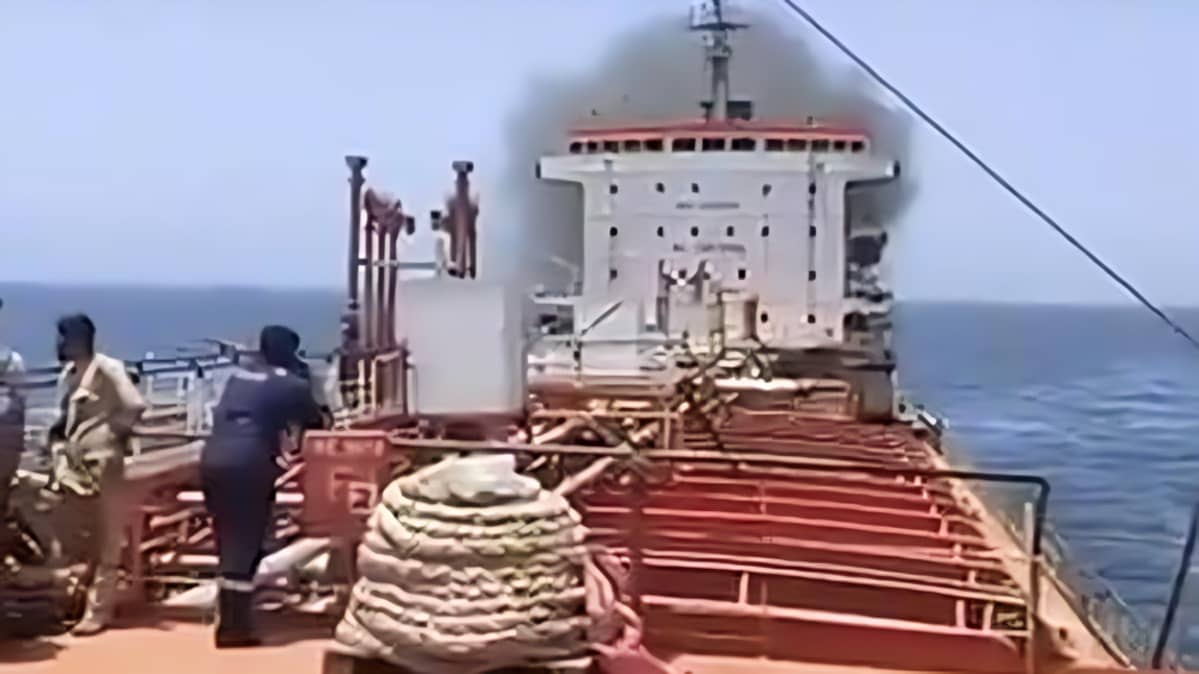

An Indian-crewed oil tanker operating near the coast of Oman reportedly sent an emergency distress call after an incident at sea caused significant damage to the vessel. According to initial reports, the tanker identified as MT Marivex experienced a fire onboard and began taking on water, prompting crew members to seek immediate assistance.
The vessel was navigating through waters near Oman when the incident occurred. Crew members reportedly informed maritime authorities that the ship had sustained serious damage and that water was entering the vessel through a breach in its structure. Emergency communications from the crew highlighted growing concerns about the safety of personnel onboard and the condition of the tanker.
Reports indicate that a fire broke out following the incident, creating additional challenges for the crew as they worked to contain the situation. Maritime emergency response teams and regional authorities were alerted after the distress signal was transmitted. Efforts were initiated to assess the extent of the damage and determine the immediate needs of the crew.
While some media reports have linked the incident to a missile strike, officials had not publicly released a comprehensive investigation report at the time of reporting. Maritime security agencies are expected to examine the circumstances surrounding the event and determine the exact cause of the damage.
The waters surrounding the Arabian Sea and the Gulf region are among the world's most important shipping routes, carrying significant volumes of energy supplies and commercial cargo. Any incident affecting vessels in the region often attracts international attention due to its potential impact on maritime trade and regional security.
Maritime safety experts note that emergency distress calls are critical during such situations because they allow nearby vessels, rescue agencies, and coastal authorities to coordinate assistance. Rapid response can help protect crew members, prevent environmental damage, and reduce risks to shipping operations.
Indian crew members are employed on thousands of merchant vessels operating around the world. Incidents involving Indian seafarers often receive close attention from Indian authorities, shipping companies, and maritime organizations. The welfare and safety of crew members remain a primary concern during emergency situations at sea.
Authorities are expected to gather information from the vessel's crew, shipping operators, and maritime monitoring agencies as part of the investigation. The findings will help establish the sequence of events and determine whether the damage resulted from an attack, an accident, or another maritime security incident.
As rescue and assessment operations continue, officials are focusing on ensuring the safety of the crew and evaluating the vessel's condition. Further updates are likely to be released once investigations progress and additional details become available.
The incident has once again highlighted the importance of maritime security and emergency preparedness in one of the world's busiest shipping corridors, where commercial vessels regularly transport critical cargo across international waters.