
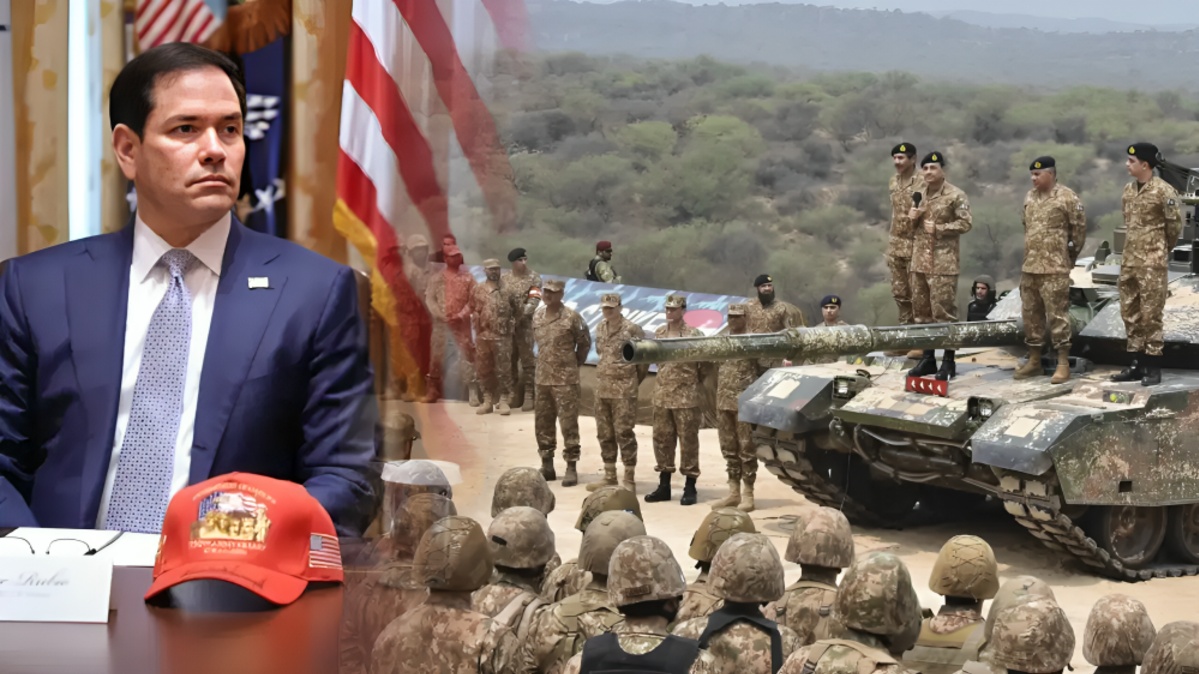
Pakistan has allocated around Rs 3 trillion for defence services in its 2026 to 2027 financial year, representing a substantial increase from the previous year. The rise comes as the country continues to face security challenges along its borders and persistent militant violence.
The proposed defence allocation was announced as part of Pakistan’s federal budget for the new financial year. According to Reuters, the overall federal budget was set at Rs 18.77 trillion, while defence spending was increased as the government sought to maintain military preparedness while also working to meet the requirements of its International Monetary Fund programme.
The increase in defence spending has attracted renewed attention after a US State Department assessment raised concerns about the level of civilian and parliamentary oversight over Pakistan’s military and intelligence expenditure.
The assessment reportedly found that Pakistan’s military and intelligence budgets were not subject to adequate parliamentary or civilian public oversight. The finding has raised questions about transparency and accountability in one of the country's largest areas of public expenditure.
The issue is particularly significant because Pakistan's military plays a major role in the country's national security and foreign policy environment. The armed forces have traditionally received a substantial share of government resources, while defence remains a politically sensitive area.
The US assessment does not necessarily allege that funds have been misused. Instead, it focuses on whether appropriate systems exist for elected representatives and the public to scrutinise military and intelligence expenditure. This distinction is important because a lack of public oversight is different from a finding of financial wrongdoing.
The report also raised broader concerns regarding Pakistan's fiscal transparency. It noted that while the government had made its enacted budget and year end financial information publicly available, it had not published its executive budget proposal within what the assessment considered a reasonable period.
Greater transparency in public finances can allow lawmakers, analysts and citizens to understand government spending priorities. Parliamentary scrutiny can also provide an additional mechanism for assessing whether public funds are being used according to approved allocations.
The concerns over military and intelligence expenditure are particularly relevant because some security related spending may involve sensitive information. Governments commonly restrict the public disclosure of operational details for national security reasons. However, the US assessment has focused on the broader question of whether civilian institutions have sufficient oversight mechanisms without necessarily requiring disclosure of sensitive operational information.
Pakistan's defence allocation for 2026 to 2027 represents a 17.65 percent increase over the previous year's original allocation of Rs 2.55 trillion. Pakistan's government has cited continuing security challenges as an important reason for maintaining higher defence spending.
The increase also comes during a period of economic pressure. Pakistan has been implementing reforms under an IMF programme while attempting to manage government spending, taxation and debt. Balancing defence requirements with spending on development, education, healthcare and other public services remains a major challenge for the government.
The debate over defence expenditure is therefore not limited to military requirements. It also involves broader questions about fiscal priorities and how scarce public resources should be distributed.
Pakistan faces security concerns on multiple fronts. The country has experienced militant attacks, particularly along its border with Afghanistan, while tensions with India have also contributed to pressure on its defence establishment. These security conditions have been cited as factors behind the increase in military spending.
At the same time, Pakistan's economic situation has increased pressure on the government to demonstrate responsible management of public finances. Greater transparency could help strengthen confidence among domestic taxpayers, international lenders and financial institutions.
The US assessment has therefore placed the issue of military spending within the wider context of public financial management. Washington's concerns include not only defence expenditure but also parliamentary oversight, accessibility of budget information and disclosure of government debt.
The call for stronger oversight does not mean that Pakistan's defence budget should necessarily be reduced. Rather, the issue centres on whether the spending is subject to appropriate institutional checks and whether elected civilian authorities have sufficient information to evaluate major allocations.
Parliamentary oversight can take several forms, including budget discussions, committee reviews, audits and reporting requirements. For military and intelligence agencies, these mechanisms may need to balance transparency with legitimate national security requirements.
The latest US assessment could therefore encourage further discussion in Pakistan about the role of Parliament and civilian institutions in monitoring defence and intelligence expenditure.
The Rs 3 trillion defence allocation also highlights the continued importance of the military within Pakistan's national budget. As the country attempts to stabilise its economy, policymakers will need to balance security requirements with fiscal sustainability and public development priorities.
The government is expected to continue defending the increased allocation on the grounds of national security and the country's current security environment. Critics, meanwhile, are likely to focus on transparency and the need for stronger civilian oversight.
For international observers, the combination of higher defence spending and concerns over financial oversight makes Pakistan's budget particularly significant. The country remains dependent on external financial support while simultaneously increasing spending on national security.
Ultimately, the effectiveness of the increased defence allocation will depend not only on the amount of money provided but also on how efficiently it is managed and how effectively civilian institutions monitor the expenditure.
The US assessment has brought renewed attention to that question. Pakistan's defence budget has reached approximately Rs 3 trillion, but the wider debate now concerns how much of that spending can be effectively scrutinised through parliamentary and civilian mechanisms.