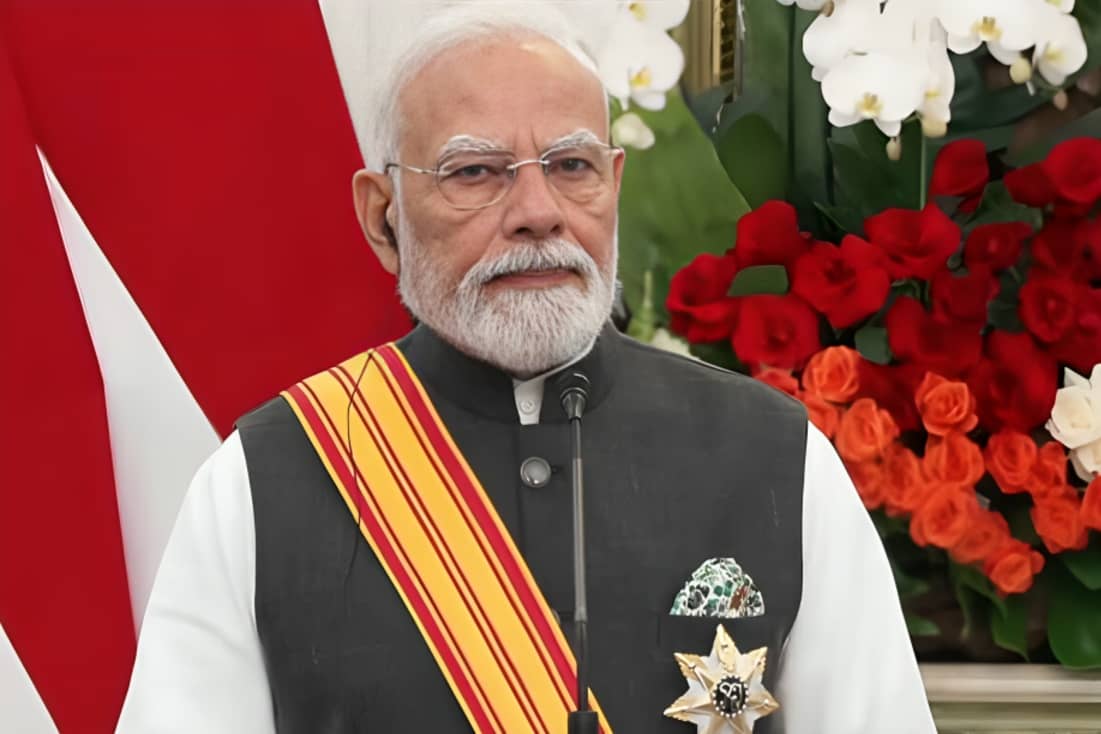

Prime Minister Narendra Modi's visit to the UNESCO listed Prambanan Temple in Indonesia marks another milestone in India's cultural diplomacy and its efforts to strengthen ties with countries that share centuries old historical and civilisational links. The visit highlights India's growing focus on heritage conservation as an important element of its foreign policy and regional engagement.
Over the past several years, the Government of India has supported the restoration, conservation and preservation of historical monuments, temples and archaeological sites in several Asian countries. These initiatives have been carried out through grant assistance, archaeological cooperation, cultural exchange programmes and bilateral agreements aimed at preserving shared cultural heritage.
Prambanan Temple, located in Indonesia, is one of the largest Hindu temple complexes in Southeast Asia. Dedicated to the Hindu Trimurti comprising Lord Shiva, Lord Vishnu and Lord Brahma, the temple stands as a symbol of the deep historical and cultural connections between India and Indonesia. Prime Minister Modi's visit to the monument reflects the importance both countries place on their shared civilisational legacy.
India has expanded its cultural cooperation with several nations across Southeast Asia, South Asia and the Gulf region. Restoration projects involving ancient temples, Buddhist monasteries, historical monuments and archaeological sites have become an important part of India's engagement with partner countries. These efforts are intended to preserve cultural heritage while strengthening diplomatic relationships.
The government has consistently highlighted that cultural diplomacy complements economic, strategic and political cooperation. Heritage conservation projects help promote tourism, academic collaboration, archaeological research and people to people exchanges between countries with shared historical traditions.
Several restoration projects supported by India have focused on preserving monuments that reflect the spread of Hinduism, Buddhism and other cultural traditions across Asia over many centuries. These initiatives are often undertaken in collaboration with local governments, heritage experts and archaeological institutions to ensure that restoration work follows internationally accepted conservation standards.
Apart from heritage conservation, India has also expanded cooperation with Asian countries in areas such as trade, investment, maritime security, digital technology, education, renewable energy and regional connectivity. Cultural engagement has increasingly become an important pillar of these broader diplomatic partnerships.
Foreign policy experts note that cultural diplomacy plays a significant role in strengthening India's soft power by promoting its historical and civilisational links with neighbouring regions. Shared heritage often serves as a foundation for expanding cooperation in multiple sectors while encouraging mutual understanding among people.
Prime Minister Modi's visit to Prambanan Temple comes at a time when India and Indonesia continue to deepen their strategic partnership. Both countries cooperate closely in regional forums and maintain collaboration on issues related to economic growth, maritime security, sustainable development and regional stability.
Officials have stated that preserving shared cultural heritage remains an important aspect of India's international engagement. Through restoration projects, archaeological cooperation and cultural exchanges, India continues to support the protection of historically significant monuments while reinforcing long standing relationships with partner nations across Asia.
The visit to Prambanan Temple highlights the role of cultural heritage in modern diplomacy and reflects India's continued efforts to strengthen international partnerships through shared history, mutual respect and cultural cooperation.